
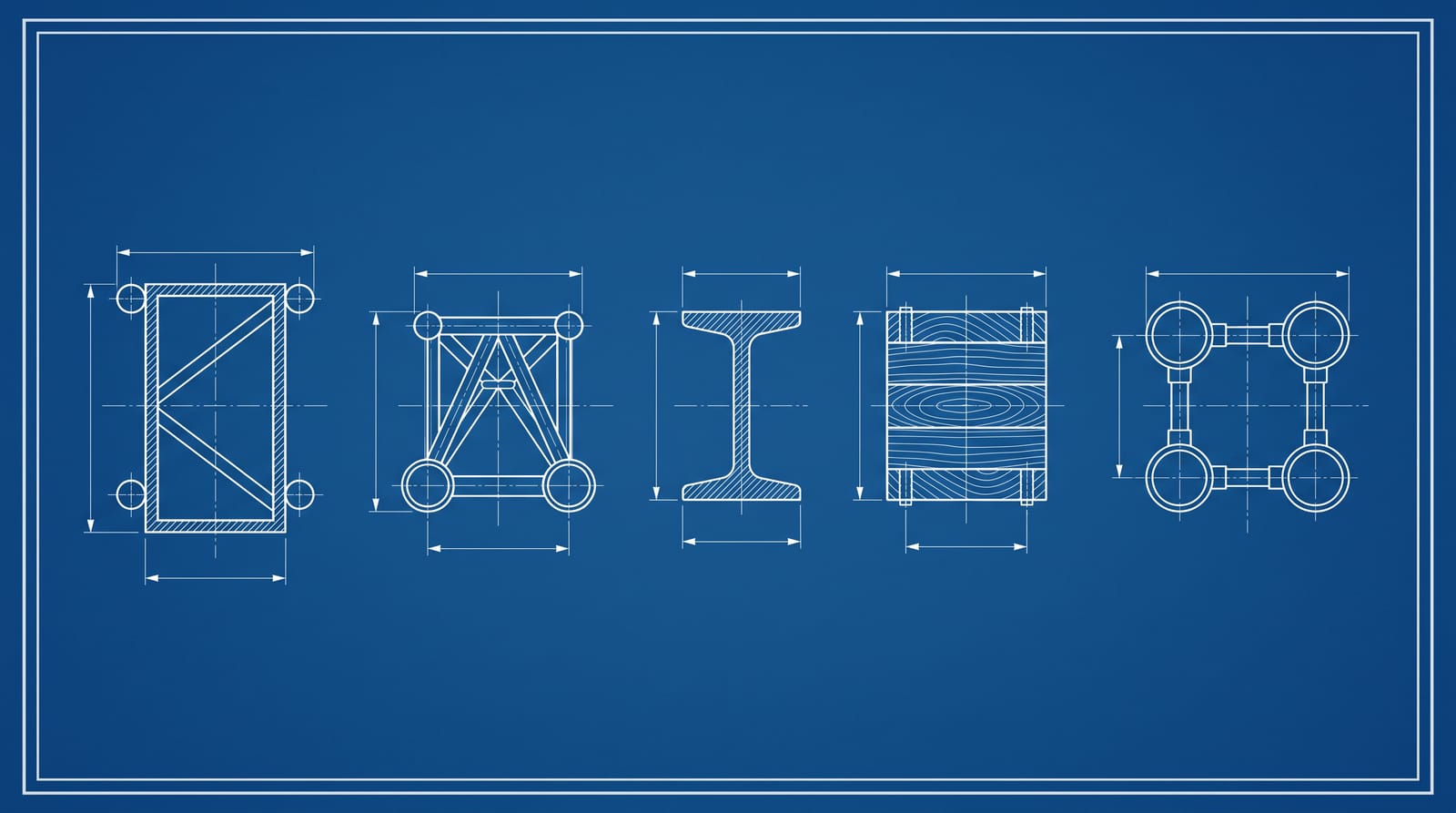
Parks don’t build roller coasters. That surprises people — the ride wears the park’s branding, the park’s theming, the park’s name on the merchandise — but the machine itself comes from a small, fiercely competitive club of specialist engineering firms, most of which you could drive past without noticing. Learn the club’s members and every coaster you ever ride becomes legible: the track shape, the restraints, the way it takes a corner — all of it is a signature.
The short answer: perhaps a dozen companies build most of the world’s significant coasters. The heavyweights are B&M and Intamin (the eternal rivals), Mack and Vekoma (the European veterans), RMC and GCI (the American track specialists), and Gerstlauer and Zamperla (the volume players with thrill ambitions). Everything else follows from knowing which is which.
This is the reference page — the one every future manufacturer story on this site will point back to.
Reading the track
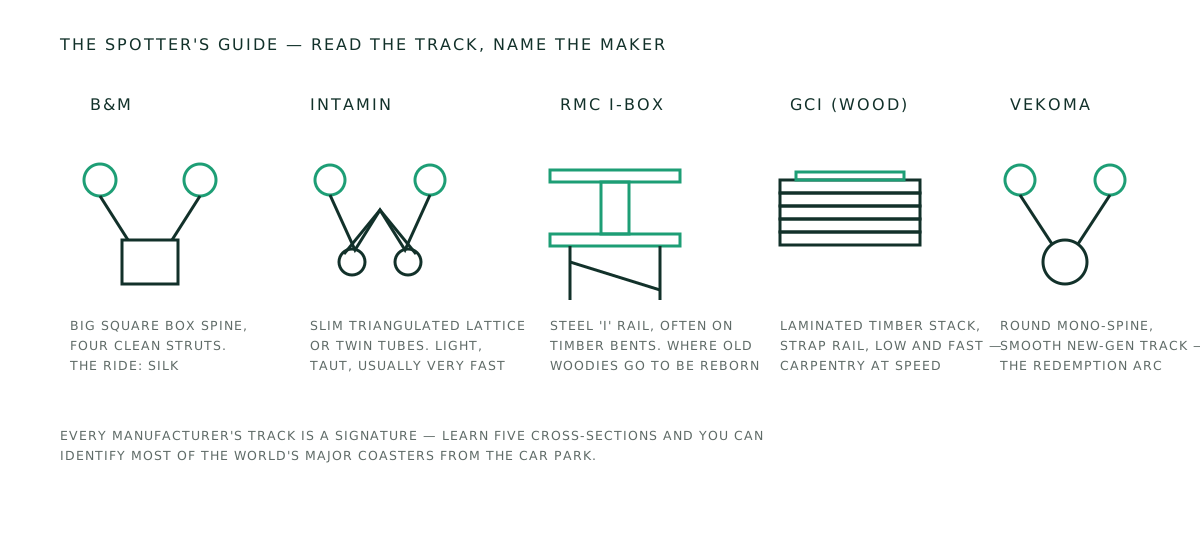
Before the profiles, learn the party trick. Each firm’s track cross-section is distinctive enough to identify from outside the gates:
B&M — the Swiss watchmakers
Bolliger & Mabillard, founded in Monthey, Switzerland in 1988 by two engineers who’d cut their teeth at Giovanola, are the industry’s byword for reliability. The product: immense, immaculate steel coasters on that unmistakable box-spine track — inverted coasters (they invented the genre with 1992’s Batman: The Ride), dive machines, hypercoasters, wing coasters — engineered conservatively and built to run for decades with famously little downtime. Enthusiasts debate whether modern B&M is brilliant or a bit safe; operators, who pay the maintenance bills, do not debate it at all. If a park wants a guaranteed crowd-pleaser that will still be dispatching reliably in 2050, this is the phone number — Tivoli Gardens is currently betting an entire new district on a 22-year-old example still proving the point, and that same box-spine track appears to be rising out of the ground at Energylandia in Poland, a park that hasn’t said a word about it yet. Nemesis, one of the earliest examples, pairs B&M’s hardware with a clothoid loop shaped by Werner Stengel’s design firm — a reminder that the manufacturer and the engineer who draws the track aren’t always the same outfit.
Intamin — the risk-takers
Intamin, headquartered in Schaan, Liechtenstein since 1967, is B&M’s opposite pole and the industry’s default choice for a record attempt. Cable lifts, hydraulic and LSM launches, prefabricated wooden track, some of the world’s tallest drop towers, and — as of Falcons Flight’s triple record — the tallest, fastest and longest coaster on Earth: Intamin builds the firsts. The historical trade-off was reliability; the cutting edge occasionally cut. The modern catalogue has matured considerably, but the reputation persists in the industry’s oldest joke: B&M asks how it can be made safe, Intamin asks how it can be made at all.
Mack Rides — the family firm with its own theme park
Mack Rides of Waldkirch, Germany, has been building things with wheels since 1780 — wagons first, fairground rides later, and today some of the most quietly excellent coasters anywhere: launchers, spinners, water coasters and family rides with a strong reliability record. The unique asset: the Mack family also owns Europa-Park, Germany’s largest theme park, which functions as showroom, test track and marketing department in one. When your prototype’s first customer is your own park, you tend to sort the problems out before selling to anyone else — a feedback loop no rival can match. The export side of that business is visible right now: planning documents suggest Legoland Windsor is lining up a Mack Spinning Coaster to follow the ones already built in Korea and Japan.
Vekoma — the redemption arc
Dutch firm Vekoma (Vlodrop, founded 1926) spent the 1990s as the industry’s volume seller — Boomerangs and SLCs in every mid-sized park on Earth — and the enthusiast community’s favourite punchline, because much of that mass-market catalogue rode rough. Then came the arc: under Japanese ownership (Sansei), Vekoma re-engineered its track and vehicles, and the new generation is genuinely smooth, inventive and increasingly prestigious. The back-catalogue jokes are ageing badly, which is the best thing you can say about any redemption. The current bet on that reputation is the Thrill Glider, a suspended, motorbike-style launch coaster the company patented back in 2016 and is now finally building — including Efteling’s Missie Luminar, due in 2029.
RMC — the disruptors
Rocky Mountain Construction of Hayden, Idaho — founded in 2001, industry-famous since 2011 — did the rarest thing in engineering: invented a category. Their I-Box track turns ageing wooden coasters into world-beating hybrids, and their conversions and ground-up hybrids have colonised the top of enthusiast polls with a speed no builder has managed before or since. A small firm, a short order book, and an outsized share of the world’s favourite rides.
GCI — the case for wood
Great Coasters International (Pennsylvania, 1994) builds new wooden coasters in an era that keeps predicting wood’s extinction — fast, low, twisting woodies with a house style you can identify from the car park. Where RMC replaces wood’s track, GCI perfects it. Every few years someone declares the wooden coaster finished; every few years GCI’s carpenters politely disagree.
Gerstlauer and Zamperla — the volume players
Gerstlauer (Münsterhausen, Germany, 1982) owns a profitable niche: compact coasters with vertical lifts and beyond-vertical drops — Eurofighters and Infinity coasters — that pack headline thrills onto small plots and modest budgets. It’s also the rare manufacturer with a genuinely loyal customer: Germany’s BELANTIS has now built five coasters running, all of them Gerstlauer’s. Zamperla (Vicenza, Italy, 1966) is the giant you’ve ridden without knowing: the world’s flat rides and family coasters, in fairs and parks everywhere, plus a serious recent push into big hardware — most visibly the LSM resurrection of Cedar Point’s Top Thrill Dragster as Top Thrill 2. Volume businesses both, with increasingly sharp thrill credentials.
The map and the family tree
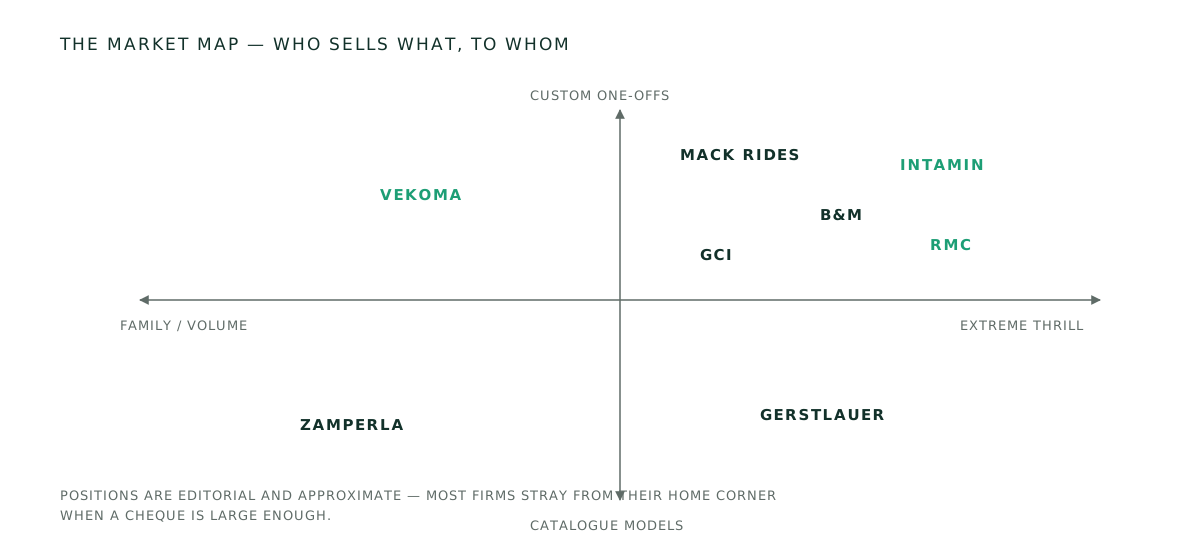
Put the club on two axes — who serves families versus thrill-seekers, who sells catalogue models versus bespoke one-offs — and the industry’s structure appears:
And the history compresses neatly into one line:
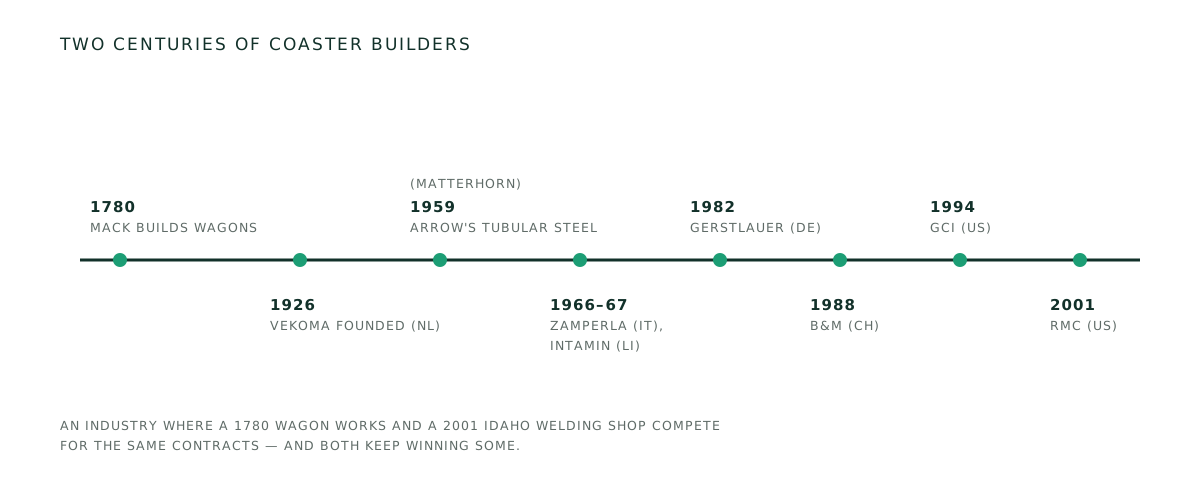
The missing name on the modern map is Arrow Development — the firm whose 1959 tubular steel track for Disneyland’s Matterhorn made the entire steel industry possible, and which collapsed in the early 2000s. Its DNA is in every company above; the industry is small enough that engineers, patents and ideas circulate like a village.
Why this beat matters
Here’s the thing almost no English-language outlet does: cover these firms as companies — order books, patents, pricing pressure, rivalries, succession. Yet the manufacturer explains more about a new ride announcement than any press release. Park announces an Intamin multi-launch? You already know the risk-reward profile. A B&M contract? You know the ride will open on time and run forever. An RMC conversion? You know exactly which coaster in that park was becoming a maintenance liability. The manufacturer is the analysis — which is why this site covers the beat, and why every future piece of it will link back here.
The same logic holds below this top table too. Plenty of rides come from specialists who never touch a headliner coaster at all — Wiegand’s alpine-coaster business is what let it hang a self-propelled Wie-Flyer off a Montenegrin mountainside with none of a normal coaster’s supporting structure. Knowing a firm’s actual specialism explains the ride choice just as reliably at the small end of the market as it does at the top.
The Dispatch verdict
Eight firms, five track shapes, two centuries of accumulated cleverness, and a club so small that everyone has worked with, for, or against everyone else. The parks sell the dream; these companies build the machine — and once you can tell a box spine from an I-Box at two hundred metres, no coaster announcement will ever read the same way again.
Further reading: how launch systems became the battleground, and what wood, steel and hybrid track actually change.