
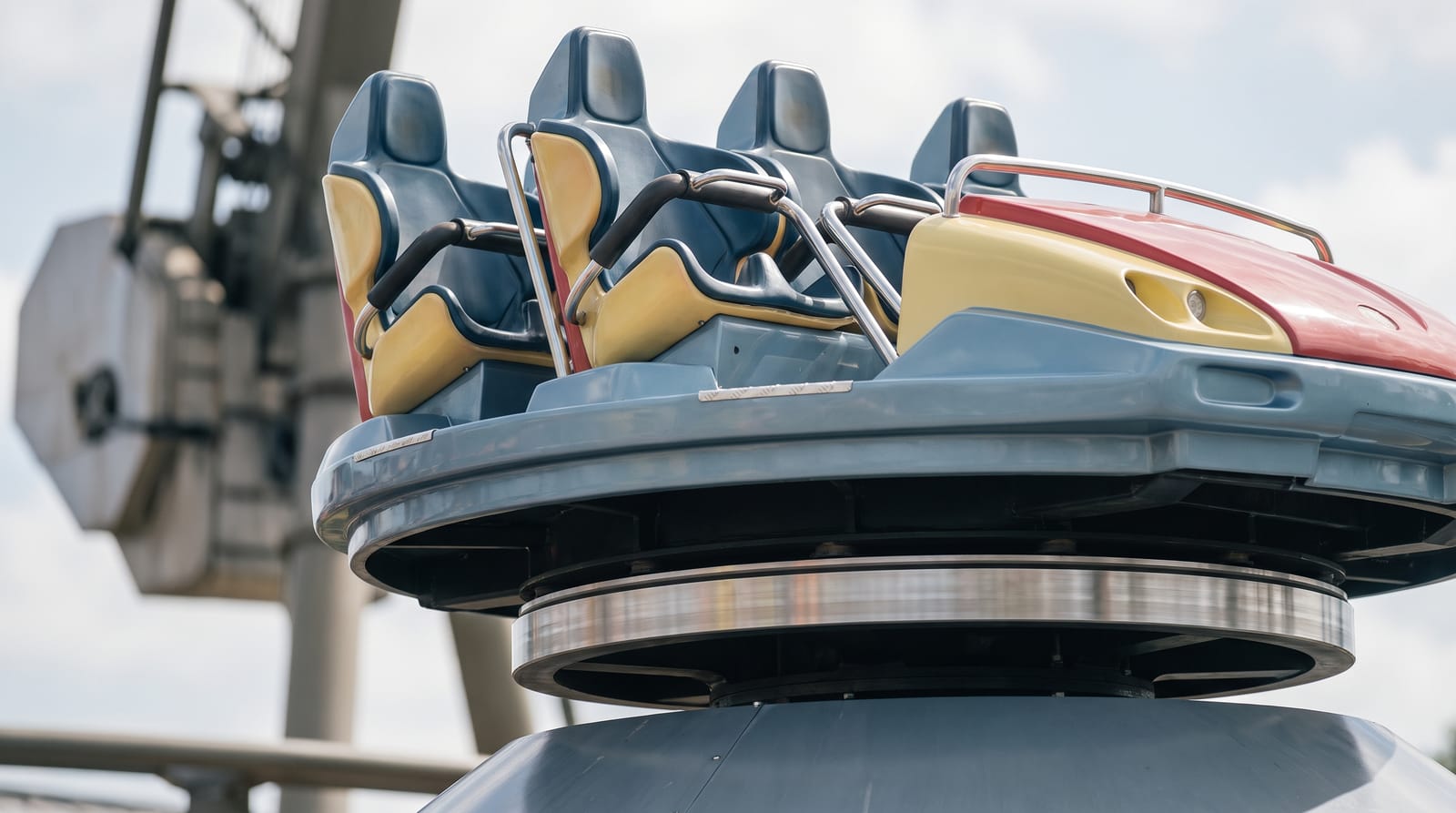
Legoland Windsor doesn’t often break its own news through a Berkshire council planning portal, but that’s where its next coaster turned up this year — not a press release, a document reference number.
What happened
In May 2026, Legoland Windsor Resort submitted an application for a Lawful Development Certificate — council confirmation that a proposed build falls within the park’s existing permitted-development rights, rather than a full planning consent — for a new coaster on the site of Viking River Splash, the log flume the park has now retired. The application’s internal codename: Project Dojo.
The submitted layout matches Mack Rides’ Spinning Coaster model, the same ride that opened as Masters of Spinjitzu at Legoland Korea in 2025 — Merlin’s own press materials called it the first coaster of its kind at any Legoland park worldwide — with a second installation already confirmed for Legoland Japan in 2027. Neither the application nor Merlin Entertainments has named a theme for the Windsor ride or confirmed it as a Spinjitzu clone outright. But the codename, and the plot’s position by the park’s existing LEGO NINJAGO World, are enough that UK enthusiast site Attraction Source, which first reported the filing, treats a third Masters of Spinjitzu as the working assumption. Call it likely, not confirmed.
Viking River Splash’s demolition was separately approved by the Royal Borough of Windsor and Maidenhead in March 2026, following a prior-notification application submitted in February. Work is targeted to finish by November. A further, fuller planning application — covering the queue line, any new building and the theming — is still to come.
The detail
| Spec | Figure |
|---|---|
| Site | Former Viking River Splash, Legoland Windsor |
| Planning route | Lawful Development Certificate (permitted development) |
| Codename | Project Dojo |
| Proposed max height | 19.7 m (65 ft) |
| Manufacturer / model | Mack Rides Spinning Coaster |
| Reference ride | Masters of Spinjitzu, Legoland Korea (2025) — 346 m (1,135 ft) track, up to 57 km/h (35 mph), freely rotating cars |
| Demolition target | Complete by November 2026 |
| Theme | Not confirmed by Merlin; inferred from codename and site |
What it actually means
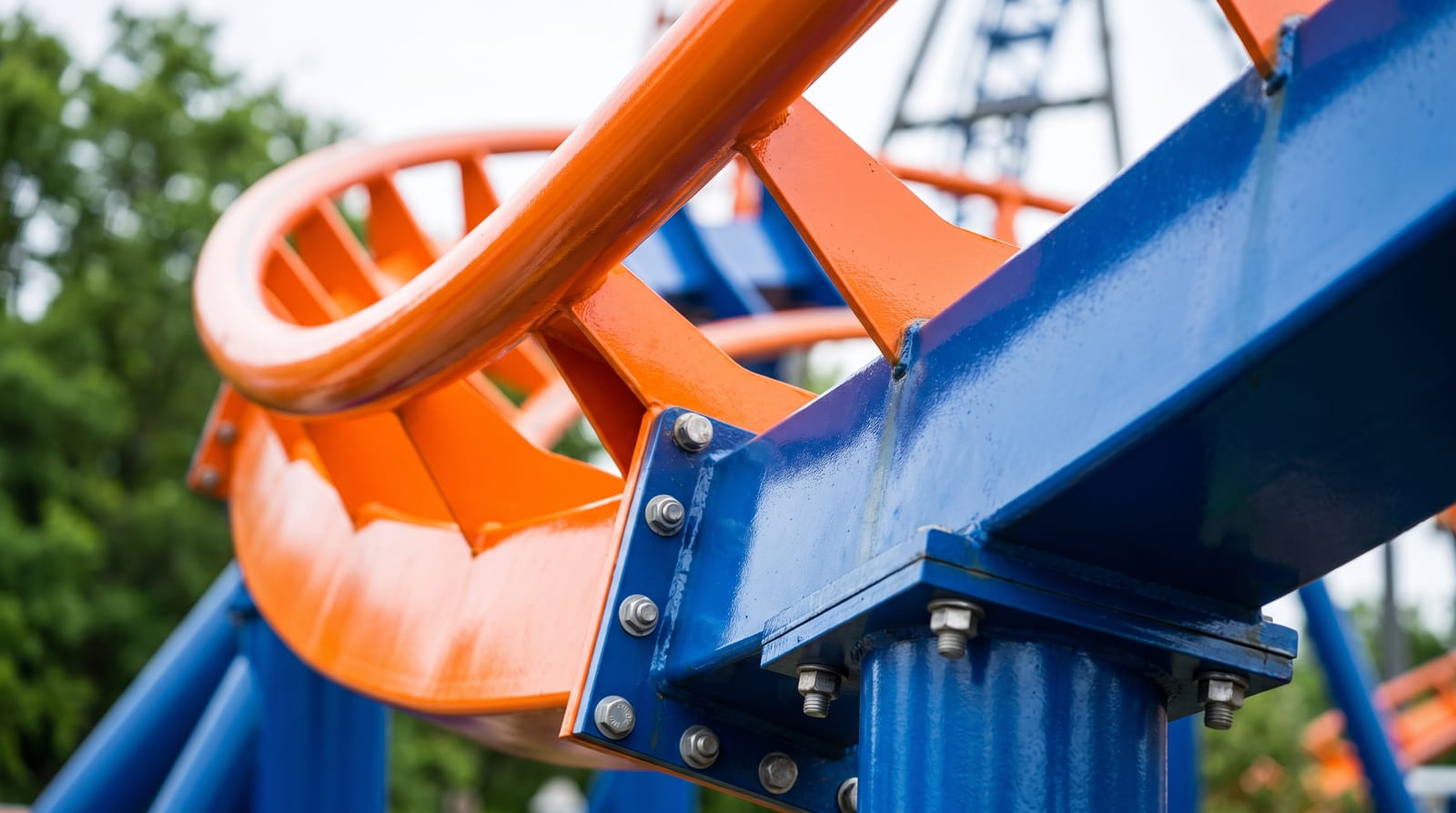
A Mack Spinning Coaster works on a simple trick with a deep payoff: the cars aren’t locked to a fixed orientation like a normal train, they rotate freely on their own axis, and the track is built with twists and banked sections that nudge that spin one way or another as the vehicle passes through. Combine unpredictable momentum with a fixed layout and you get a ride that’s genuinely different lap to lap — the same 346 m of track, a different sequence of spins each time — which is why the model reads as far more disorientating than its modest 57 km/h top speed suggests, and why it works so well as a family ride. The thrill comes from unpredictability and variety, not height or airtime.
That’s also why Legoland keeps building it. A model that plays big on a compact footprint and a modest budget is exactly what a family-focused chain wants: strong perceived value, no need for a record-height plot, and a design Mack can largely repeat park to park with only the theming changing. Korea proved the concept, Japan is already committed, and if Windsor genuinely is next, Merlin will have taken one ride model to three different Legoland parks on three continents inside three years. That’s not a coaster order — it’s a product rollout, and it says more about how Merlin plans its parks than any single ride announcement could. BELANTIS in Germany is running the same instinct in the other direction — one manufacturer, five coasters, no exceptions — proof that repeat-builder loyalty isn’t only a chain-wide strategy.
It’s also, incidentally, the second Mack Rides story out of Europe this summer. The same manufacturer just opened Dønnervind, a multi-launch water coaster at Freizeitpark Plohn — a wildly different ride, built for a wildly different park. One firm, one season, two ends of the catalogue: precisely the range worth watching when a manufacturer is covered as a company rather than ride by ride.
The planning route matters too, because it will come up again on this site. A Lawful Development Certificate doesn’t ask the council to approve a design — it asks the council to confirm that what’s proposed doesn’t legally need approval, typically because it replaces a similar structure on the same footprint. That’s how Legoland can start groundworks on a coaster’s foundations before anyone has publicly confirmed what it will look like or be called: the earthworks are permitted development, the theming isn’t, and the two run on entirely separate timetables.
The Dispatch verdict
Nothing here is confirmed by Legoland itself, and this isn’t being dressed up as if it were. But the underlying facts — the LDC filing, the proposed height, the model match, the demolition timeline — are a matter of public planning record rather than enthusiast guesswork, and together they paint a specific, checkable picture: a Mack Spinning Coaster, roughly Legoland Korea-sized, replacing a flume that’s already coming down. Worth watching for the full application, which should finally confirm the theme this “Project Dojo” naming has been dancing around.
Further reading: our guide to Mack Rides and the rest of the manufacturers, how Mack’s other 2026 European build, Dønnervind, actually works, and how coaster restraints keep riders secure through disorientating moves like a free spin.