
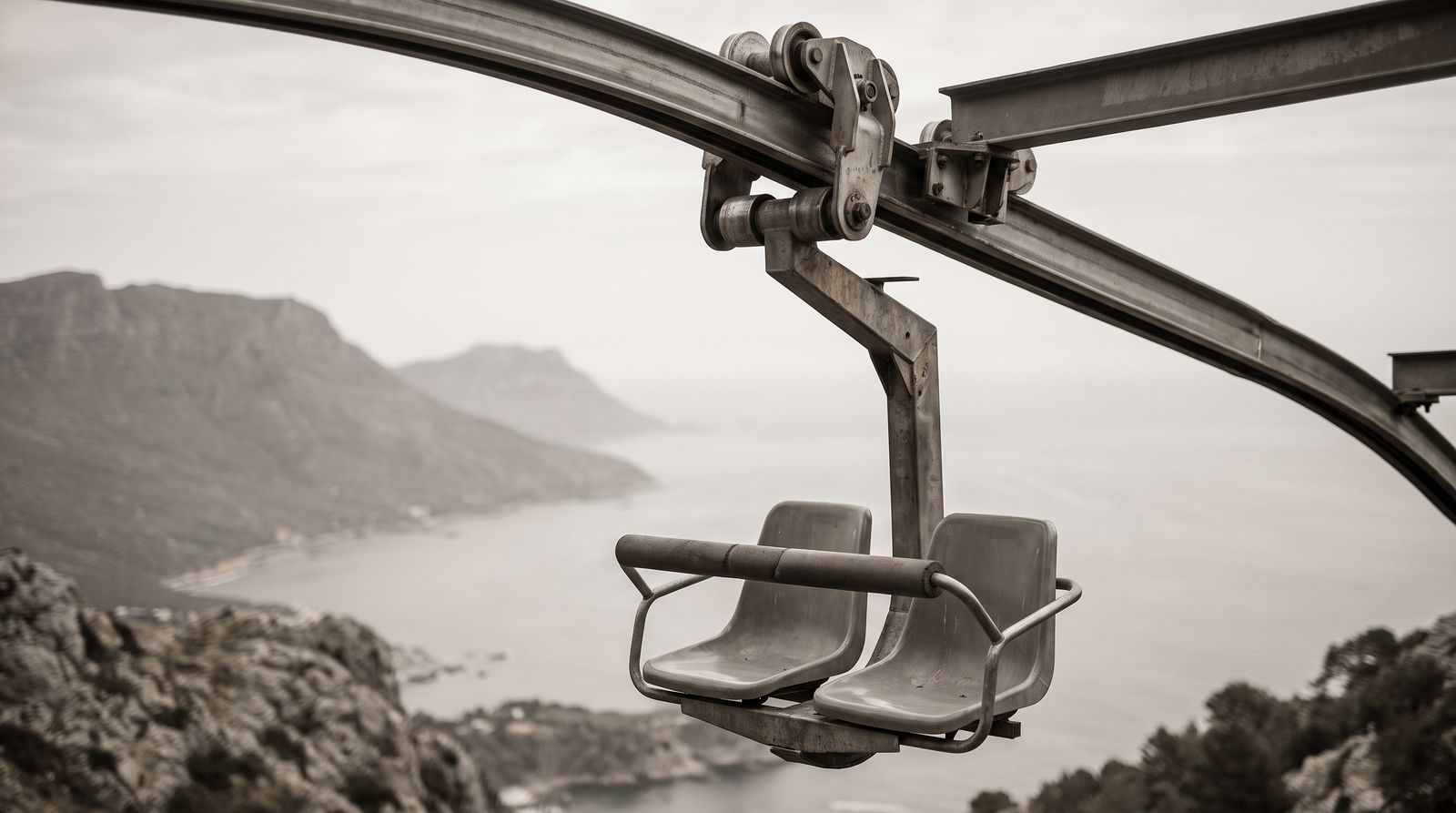
Most coasters spend their first ten seconds paying off a debt: a chain drags you up a hill so gravity can collect later. Wiegand’s newest ride skips the loan altogether — it just flies, on command, whenever you push the stick forward.
What happened
Wiegand, the German manufacturer better known for alpine coasters — those gravity-fed toboggan runs found on hillsides from the Alps to the Appalachians — has opened Falcon Fly at Lovćen National Park in Montenegro, according to Blooloop and Park World. The ride opened to visitors on 3 July, following a phased installation that began in December 2025 and paused over winter for weather.
Falcon Fly sits at 1,316 m (4,318 ft) above sea level on the summit of Mount Lovćen, with views down over the Bay of Kotor — one of the more dramatic settings any coaster manufacturer has been handed. It joins the park’s existing Wiegand Alpine Coaster, a roughly 1.1 km (0.7 mile) gravity toboggan run that opened in 2023, giving the mountain two Wiegand attractions built five years apart from two different sides of the company’s product line.
The detail
Falcon Fly is a Wie-Flyer, a suspended, electrically self-propelled coaster model Wiegand first installed at Inselsberg Funpark in Thuringia, Germany, in 2012. It is not a new invention — Falcon Fly is one of a small handful of Wie-Flyers worldwide, not the first of its kind — but it’s a rare export of the design outside Germany, and a genuinely unusual thing to find on a Montenegrin mountaintop.
| Spec | Detail |
|---|---|
| Manufacturer | Wiegand (Rasdorf, Hesse, Germany) |
| Model | Wie-Flyer |
| Location | Lovćen National Park, Montenegro |
| Elevation | 1,316 m (4,318 ft) above sea level |
| Vehicle | TwinSeater gondola, suspended from an overhead rail |
| Speed control | Rider-operated joystick |
| Top speed | Up to 30 km/h (18.6 mph) |
| Opened | 3 July 2026 |
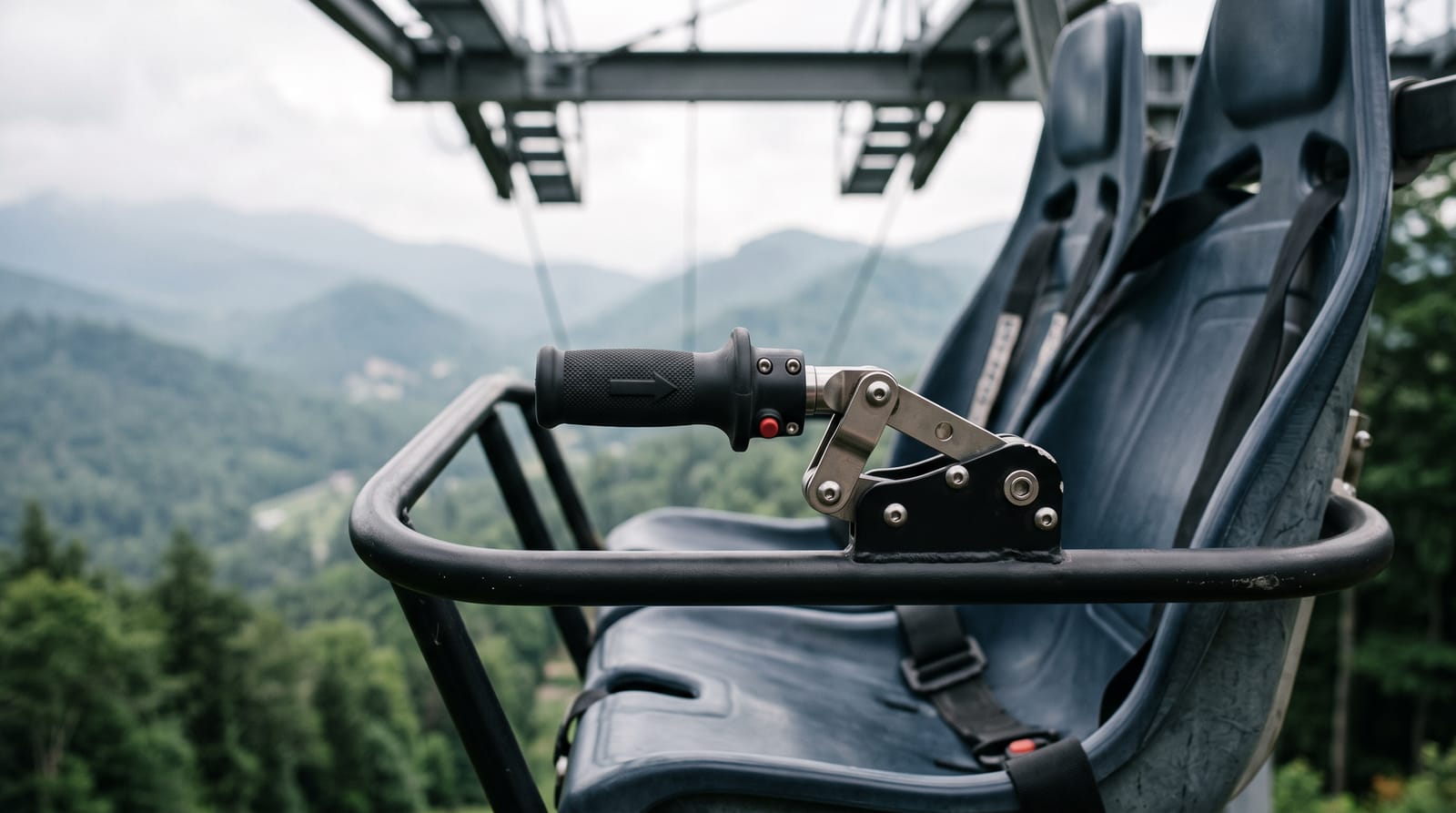
Riders sit in a suspended two-seat gondola and use a joystick to control their own speed as the rail carries them through tight curves, changes of direction and swooping straight sections; electric accelerators built into the track top the gondola back up whenever it slows. Neither Wiegand nor Blooloop has published the track’s exact length, so — in line with this site’s policy — that figure is left out rather than estimated.
What it actually means
The interesting part isn’t the view, it’s what’s missing underneath it. A conventional coaster — even a modest family one — needs a lift hill or a launch to build the energy it spends on the rest of the circuit, and a supporting structure to carry the track and absorb the loads. A Wie-Flyer needs neither. Each gondola carries its own electric drive, drawing power continuously from the rail rather than banking it all at once, which means the ride can start from a dead stop anywhere on the circuit, hold a gondola in place indefinitely without an anti-rollback device, and — crucially for a national park on a mountainside — hang its rail from a comparatively light overhead support rather than a track bed cut into the terrain.
That last point is the real reason this ride exists here rather than at a conventional theme park. Lovćen is a protected natural landscape, not a flat plot with services already run to it; a Wie-Flyer’s footprint is a line of slender posts and cable rather than the concrete and steelwork a normal coaster needs to hold up its own track. Wiegand’s day job — alpine coasters, cable-borne runs, other rides built to survive being bolted onto a mountain rather than a car park — makes this closer to a portfolio extension than a leap. It’s the same logic behind the manufacturer beat generally: firms that specialise in one constraint tend to be the ones who solve it best when a client needs exactly that constraint solved.
The joystick control is a genuine point of difference too. Most coasters give the rider nothing to do but hold on; a Wie-Flyer hands over an actual variable — speed — within limits the electric accelerators and track geometry keep bounded. It’s a lighter-touch version of the same “give the guest real but governed control” idea Toverland is building into its own coaster-track sled ride this winter, and it points at a small but persistent niche: rides that split the difference between a fairground go-kart and a coaster.
The Dispatch verdict
Nobody should mistake Falcon Fly for a record-breaker — it tops out at 30 km/h and won’t trouble any enthusiast’s “biggest and fastest” list. What it does well is match a genuinely clever, low-footprint ride system to a site that couldn’t take a conventional coaster, and hand the rider a real say in how fast it goes. Worth a detour if you’re already driving the Kotor serpentine road; not, on its own, worth planning a trip around.
Further reading: chain lifts, cable lifts and elevator lifts explained, how launch coasters work, and our guide to the roller coaster manufacturers.