
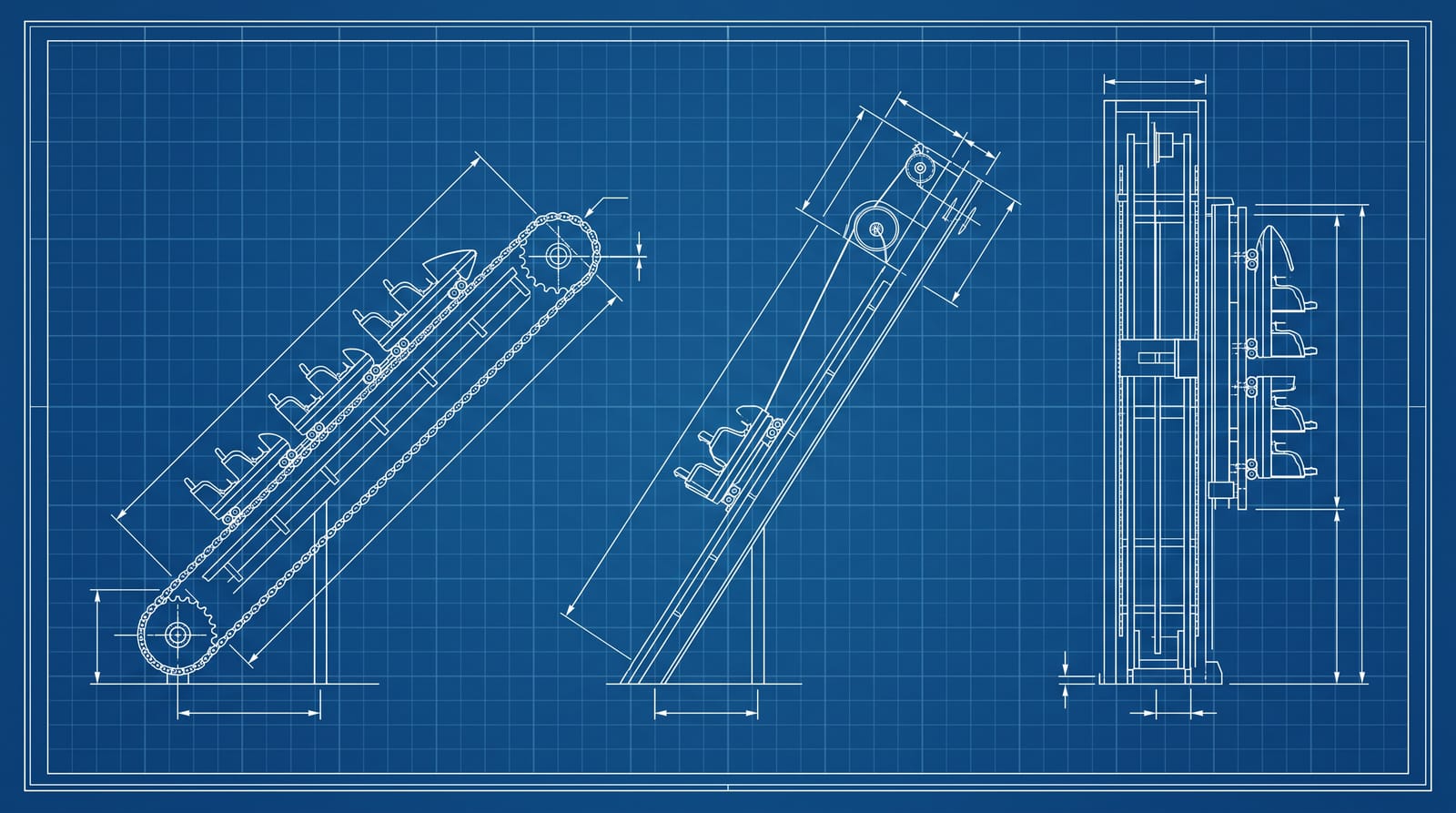
Every gram of thrill a roller coaster delivers on the way down was carried up first. The lift hill is where the ride buys its energy — slowly, noisily, at walking pace — and everything after the crest is just that account being emptied. Which raises a fair question: if the lift matters that much, why do parks build so many different kinds?
The short answer: there are three main families. A chain lift drags the train up an incline with an endless loop of chain — cheap, proven, everywhere. A cable lift winches the train up with a catch car — faster and better for very tall hills. An elevator lift skips the incline entirely and hoists a section of track, train and all, straight up. Each is a different answer to the same bill: how much height do you need, and how much space and money do you have?
The chain lift: escalator logic
The chain lift has run essentially unchanged for over a century, and its persistence is the compliment. An endless loop of heavy roller chain cycles around a sprocket at the bottom of the hill and a motor-driven sprocket at the crest; the drive strand runs up a trough in the middle of the track, the return strand runs back beneath. The train arrives, its chain dog drops into a link, and it’s towed to the top like a very slow, very committed escalator passenger. (The clicking that accompanies the climb is a separate mechanism entirely — the anti-rollback ratchet, which does nothing until the day the chain breaks.)
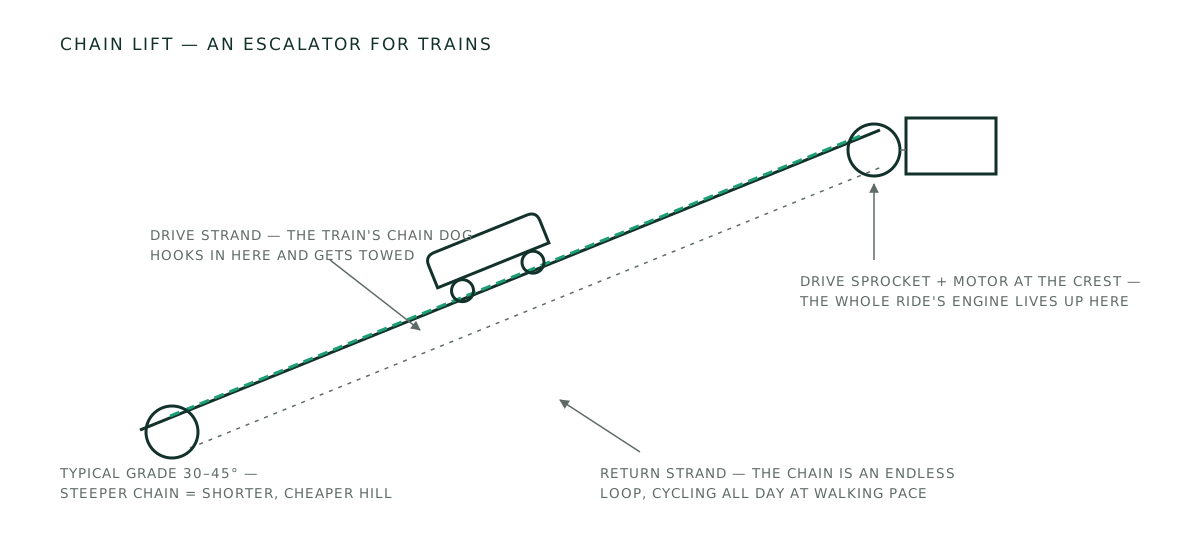
Its virtues are dull and decisive: it’s inexpensive, it tolerates weather, any maintenance team on Earth understands it, and it can hold a train anywhere on the climb — which is what makes the lift such a tidy block section. Its vices are the flip side: chains are heavy, so very tall lifts need monstrous chains moving slowly, and the climb becomes a pacing tax on the whole ride.
The cable lift: the chain’s ambitious cousin
Past a certain height, the chain’s own weight becomes the problem — you’re spending most of the motor’s effort hauling chain rather than train. The cable lift’s answer: replace the loop of steel links with a lightweight cable and a catch car, a winched carriage that grips the train, hauls it up at speeds a chain can’t match, releases it at the crest, and rides back down for the next one.
Cedar Point’s Millennium Force introduced the idea to coasters in 2000, pulling trains up its 94 m (310 ft), 45-degree hill briskly enough that the climb feels like part of the ride rather than an interlude — and it still carries a full set of anti-rollback dogs and slots, because no lift technology gets excused from the fall-back plan.
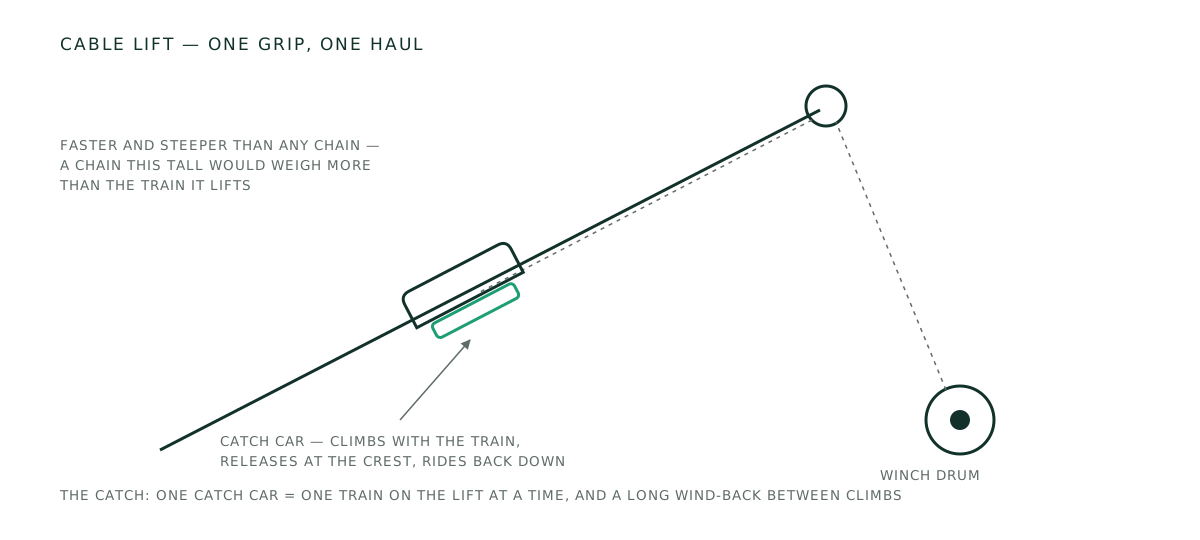
The trade-off mirrors the hydraulic launch’s: one catch car means one train on the lift at a time and a wind-back between climbs, so the cable lift suits rides where the lift is tall, fast and singular rather than a conveyor belt.
The vertical chain lift: straight up the wall
Some parks don’t have room for a hillside. Gerstlauer’s Eurofighter and Infinity coasters answer with a chain lift rotated to vertical — the train hangs on its dogs and climbs a literal wall of track before tipping over a beyond-vertical drop. Saw – The Ride at Thorpe Park climbs this way, and Takabisha at Fuji-Q Highland pairs its vertical lift with a 121-degree drop, the sort of geometry that makes the queue audibly recalculate.
Mechanically it’s still a chain lift — same loop, same dogs, same logic — just one where “hill” has been reinterpreted as “cliff”. The appeal is footprint: a vertical lift plus a compact drop fits big sensations onto a plot the size of a tennis court, which is why space-squeezed parks order them by the dozen.
The elevator lift: don’t climb the track — lift it
The rarest family takes the space argument to its conclusion. An elevator lift places the train on a section of track that is itself the elevator car: the train rolls on at ground level, the whole platform rises up a tower, and the train rolls off at the top. The Lost Coaster of Superstition Mountain at Indiana Beach is the textbook example — a single-platform vertical lift standing in for a hill the tiny lakeside park never had room to build.
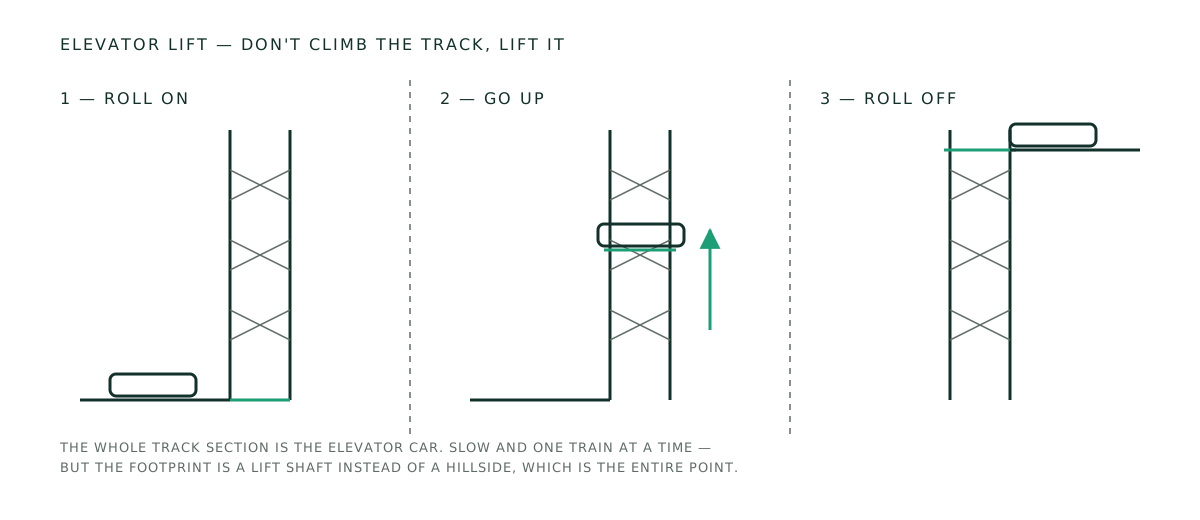
Elevator lifts are slow and strictly one-train-at-a-time, so they’ll never power a high-capacity headliner. What they offer is theatre and thrift: a pause, a hoist, a reveal — and a ground plan measured in metres rather than acres.
The oddballs
Two lift types deserve honourable mentions. Spiral lifts, a Schwarzkopf speciality, corkscrew the train up a helix — on the classic versions the train carries its own small electric motors and drives itself up, which is cheating in the most charming way. And tyre-drive lifts — rows of motorised friction wheels gripping the train — are everywhere on family and spinning coasters: quiet, gentle, cheap, and with one weakness every operator knows, which is that rubber tyres and a rainy day have a complicated relationship.
Choosing a lift
Put yourself in the designer’s chair and the decision tree is short. Modest height, tight budget, multiple trains? Chain — it’s the default for a reason. Very tall, and you’d like the climb over quickly? Cable. Almost no land? Vertical chain or elevator. No hill at all, and the marketing team wants a number for the adverts? That’s not a lift decision any more — that’s a launch, and it comes with its own bargains.
However the train gets its height, the same two systems ride along: the anti-rollback hardware that makes the climb reversible in only one direction, and the block logic that makes the lift a place a train can safely wait. The lift technologies compete; the safety layer underneath them is non-negotiable.
There’s one further oddity worth knowing about, because it breaks the pattern entirely: Wiegand’s Wie-Flyer ride at Lovćen National Park in Montenegro has no lift hill of any kind. Each gondola carries its own electric drive and draws power continuously from the rail, so there’s no height to bank and no anti-rollback dog needed — a genuinely different way of solving the energy problem this whole article has been about.
The Dispatch verdict
The lift hill is the most honest transaction in the park: energy in, thrills out, no shortcuts. What’s quietly impressive is how many shapes that transaction takes — a hundred-year-old chain, a winched catch car, a wall of track, a platform on a tower — all solving the same equation with different constraints plugged in. The next time a coaster hauls you skyward, you’ll know exactly which bargain the designer struck, and what it cost them.
Further reading: why the climb clicks, how the lift works as a block, and what happens when there’s no lift at all.