
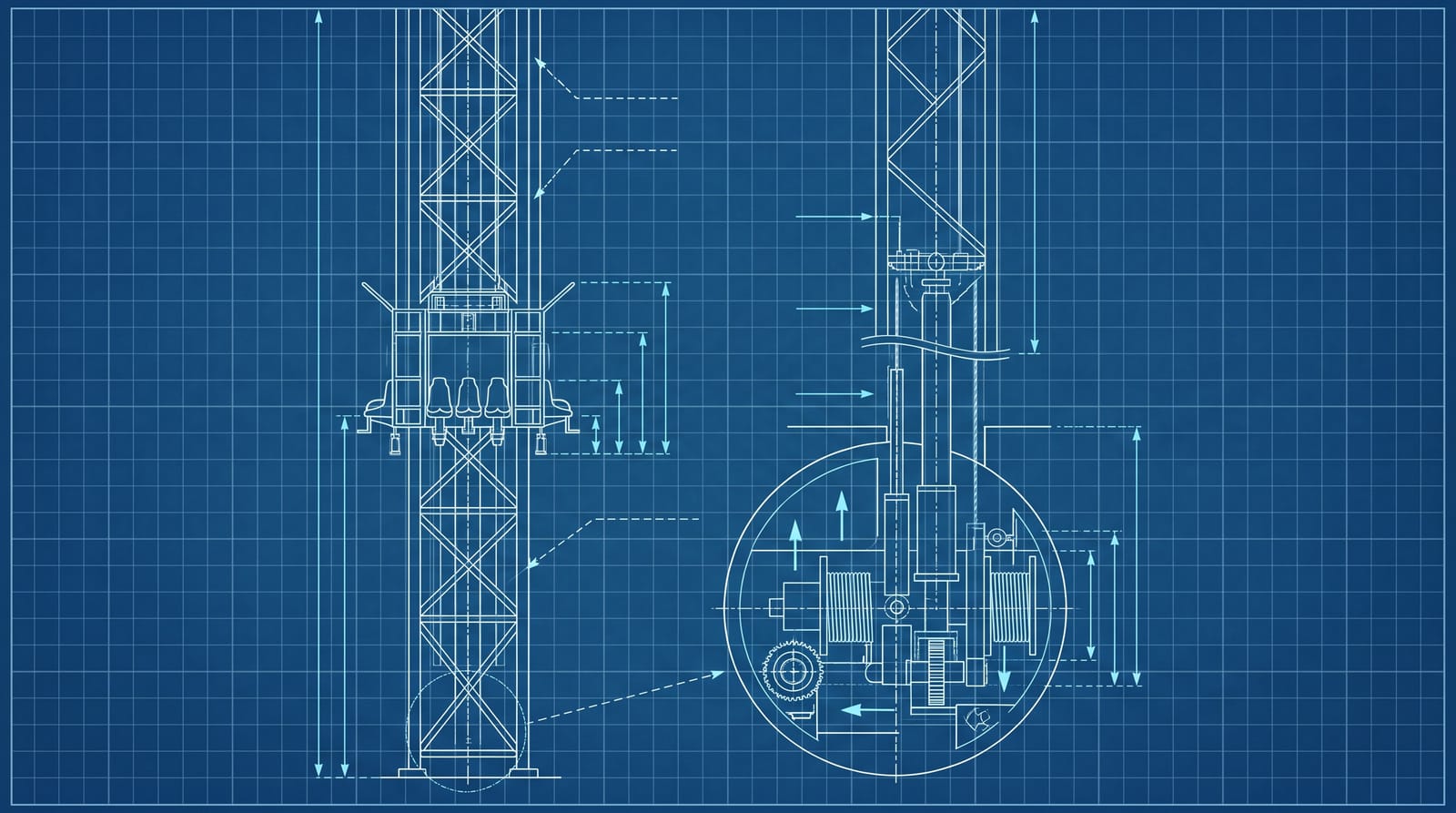
You can spot it from the car park before you’ve bought a ticket: a mast taller than anything else in the park, a ring of seats crawling up it, a pause that goes on a beat too long — and then the whole thing simply isn’t there any more. Everyone who has ever queued for a drop tower has asked the same question at the same moment, usually somewhere around the top: what, precisely, is going to stop me?
The short answer: most drop towers use nothing but gravity. A winch hauls the gondola up, a mechanical catch releases it, and it falls freely until magnets slow it down without ever touching it. A smaller family does the opposite — compressed air fires the gondola upward, then lets it fall and bounce. Both end the ride on exactly the same kind of brake.
Two families, one silhouette
From the queue line, a gravity drop and a pneumatic launch tower look almost identical: a lattice mast, a gondola, a lot of open air. Underneath, they’re opposite machines.
A gravity tower — the Intamin design behind most of the world’s tallest examples — spends its energy going up. A motor winches the gondola to height at a stately pace, then a catch mechanism lets go and physics does the rest, entirely for free. A pneumatic tower, the S&S Worldwide design found on rides badged Space Shot or Turbo Drop, spends its energy going down, or up, or both: compressed air, not a falling weight, does the accelerating, which is what lets some models fire riders skyward faster than gravity could ever manage on the way up.
Knowing which family you’re looking at tells you what the ride will feel like before you’ve read a single sign. Gravity towers give you a long, floating fall — genuine weightlessness, building the whole time. Pneumatic towers give you a hard shove, in whichever direction the air is pushing.
The climb takes longer than the fall, on purpose
On a gravity tower, the ascent is unhurried — thirty seconds to a minute for a tall example — because the ride wants you looking down before it does anything else. At the top there’s a dwell: a pause of a few seconds that exists partly for the view and partly because the control system is running a last check on the release mechanism before it trusts it with your life.
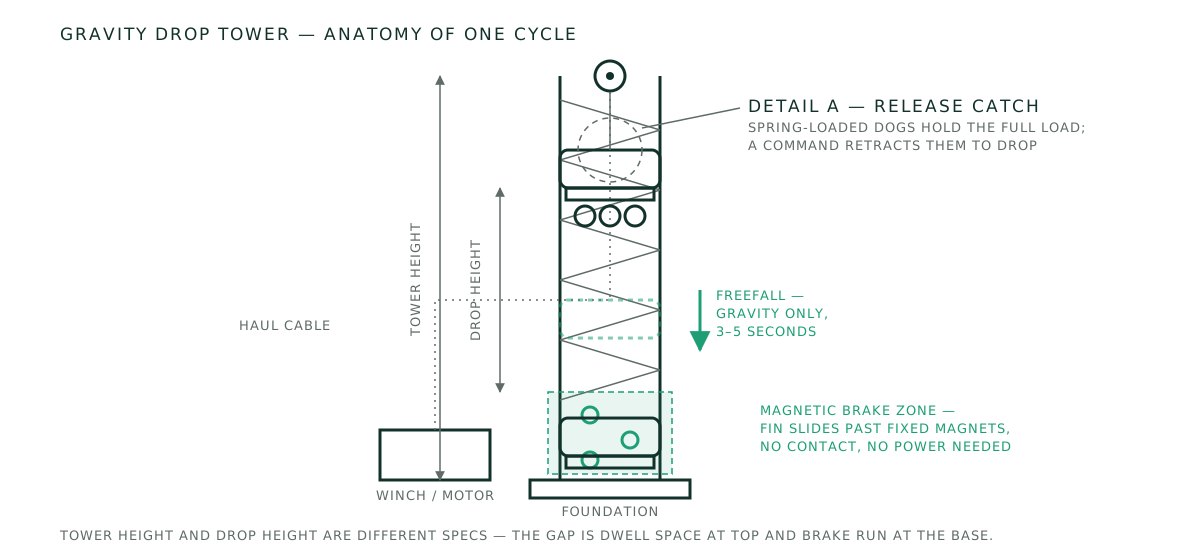
That’s worth pausing on, because it’s a genuinely different number from the one on the height sign. A ride’s tower height includes structure above the highest riding position and brake run below the lowest; its drop height is only the distance actually spent in freefall. AtmosFear at Liseberg is a 116-metre (381 ft) tower with a 100-metre (328 ft) drop — the other 16 metres (52 ft) is headroom and hardware, not thrill.
The release itself is a small, unglamorous piece of engineering doing a very large job: spring-loaded dogs (mechanical catches) grip a bar on the gondola and hold the entire load — gondola, riders, cable slack — until a command retracts them. Design that catch to fail closed, the same way a coaster’s brakes fail closed, and there’s no failure mode where the ride drops you by accident. There’s only a failure mode where it refuses to drop you at all, which is merely a very disappointing wait for the ride mechanic.
The fall: genuine weightlessness, briefly
Once the catch lets go, gravity accelerates the gondola at a constant rate — no track shape to fight, no wheels, nothing pushing back — which is why a drop tower produces a purer kind of airtime than any coaster ever will. On a coaster, negative-g moments are shaped by a curve the train is still attached to; on a drop tower, for three to five seconds depending on the height, you and the gondola are falling at exactly the same rate, and the sensation is honest zero gravity, not an approximation of it.
It doesn’t last as long as it feels like it does. Do the sums on a 100-metre (328 ft) drop and pure freefall from rest would cover it in around four and a half seconds — real towers land a touch under that, because the magnetic brake is already engaged before the bottom. Falcon’s Fury, at Busch Gardens Tampa, quotes roughly five seconds of freefall from its 102-metre (335 ft) height, which is about as generous as the physics allows.
Stopping without touching: the eddy-current brake
Here’s the part that should worry you and doesn’t, once you know how it works. As we found when we took apart a roller coaster’s braking system, a conductive metal fin moving past strong permanent magnets has swirling electrical currents induced in it — eddy currents — and those currents generate their own magnetic field that drags backwards against the motion. No contact, no friction surface, no wear.
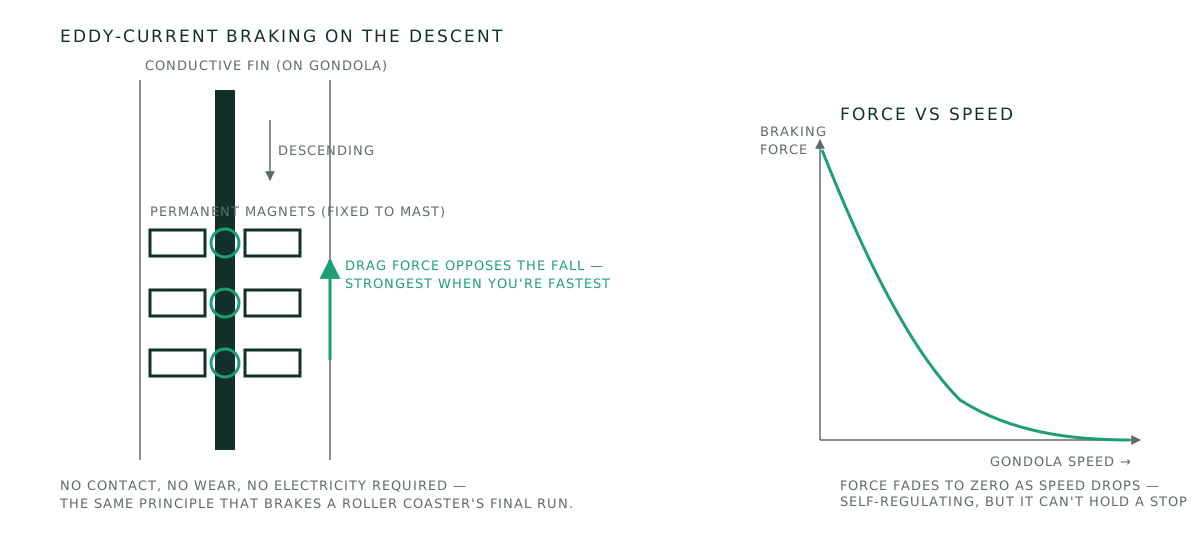
The fin is bolted to the gondola; the magnets are bolted to the mast for the last stretch of the tower, so the two only meet as the gondola arrives at speed. The drag is fiercest exactly when you’re fastest and fades to nothing as you slow, which produces a deceleration that feels firm rather than jarring — and, crucially, needs no power supply at all. A drop tower’s brake works in a total blackout precisely because it isn’t plugged into anything; it’s a lump of metal obeying Lenz’s law, which doesn’t care whether the National Grid is having a bad day.
The one thing eddy currents can’t do is hold a stop — the force disappears as speed reaches zero — so every tower pairs the magnets with a small mechanical catch or friction clamp at the platform to actually park the gondola. The magnets do the dangerous, high-speed work; the clamps do the boring, static work. It’s the same division of labour a coaster’s block brake uses, just rotated ninety degrees from horizontal to vertical.
The pneumatic variant: S&S’s air cannon in reverse
Not every tower waits for gravity. S&S Worldwide’s Space Shot and Turbo Drop models use a sealed vertical air cylinder with a piston inside, connected by a cable over a pulley at the top of the tower to the gondola at the bottom. Pump compressed air behind the piston and it drives down hard; because the cable runs over the top pulley, the piston travelling down hauls the gondola up, at speeds gravity alone couldn’t produce on the way there.
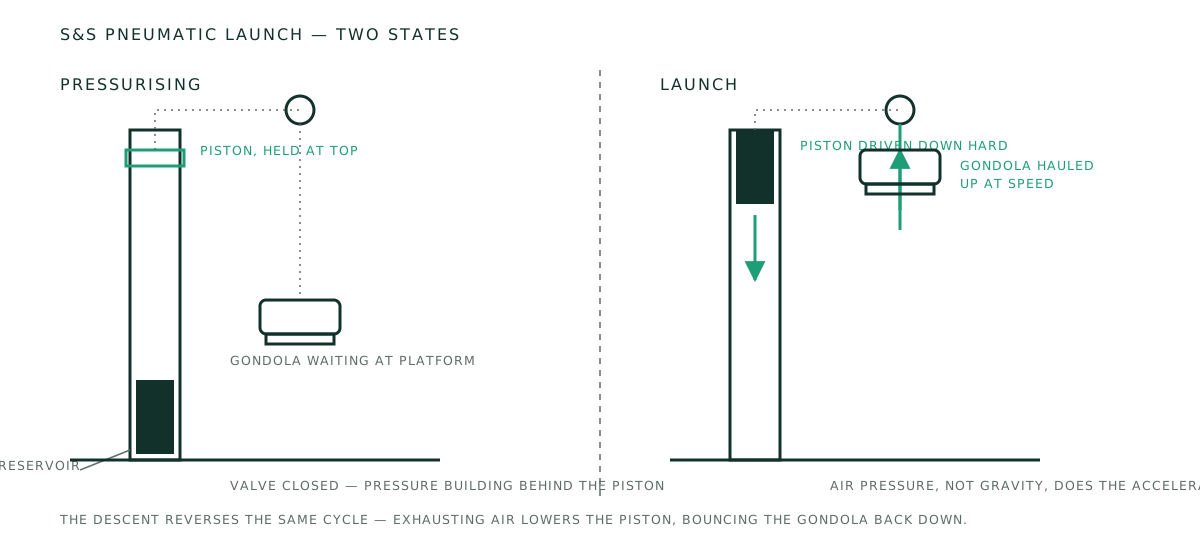
The park’s control system actually weighs the loaded gondola before every cycle and adjusts the air pressure accordingly, so a full load of large adults gets exactly as much push as three lightweight children — a detail that matters more than it sounds, because too little pressure undershoots the ride experience and too much overshoots the structure’s design limits. Coming back down, the same system runs in reverse: air bleeds out of the cylinder, the piston rises, and the gondola descends and bounces, with pressure-relief valves shaving a little more off with each bounce until it settles at the platform. Space Shot models mostly fire up and drift back down gently; Turbo Drop models add real force to the descent too, which is the version that feels like being dropped rather than released.
Tilting, spinning and the variations on a theme
Once you’ve got a mast, a gondola and a release mechanism, manufacturers have spent three decades finding ways to make the basic idea worse for your nerves. Falcon’s Fury tilts its seats forward through 90 degrees at the top of the climb, so you spend the dwell staring straight down at the ground before the drop even starts — a variation built specifically to remove the one mercy a normal drop tower offers, which is not having to look. PortAventura’s Hurakan Condor runs several gondola configurations on the same tower, including a stand-up mode where the seats tilt forward around 15 degrees just before release. And Intamin’s Gyro Drop format rotates the entire ring of seats slowly during the climb for a panoramic view, then keeps it spinning through the fall itself — Intamin’s habit of building the industry’s firsts, covered in full in our manufacturer guide, shows up here as readily as it does in launch coasters.
None of this changes the physics underneath. It’s still gravity or compressed air doing the accelerating, and still a set of magnets doing the stopping — the variations are all in what happens to your body and your view in between.
Where you’ll find it
| Ride | Park | Mechanism | Height | Top speed |
|---|---|---|---|---|
| AtmosFear | Liseberg, Sweden | Gravity (Intamin) | 116 m tower / 100 m drop (381 ft / 328 ft) | 109 km/h (68 mph) |
| Hurakan Condor | PortAventura, Spain | Gravity (Intamin), multiple gondola modes | 115 m tower / 87 m drop (377 ft / 285 ft) | 114 km/h (71 mph) |
| Launch Pad | Blackpool Pleasure Beach, UK | Pneumatic (S&S Worldwide) | 64 m (210 ft) | 130 km/h (80 mph) |
| Detonator | Thorpe Park, UK | Gravity with magnetic brake (Fabbri) | 35 m (115 ft) | — |
| Falcon’s Fury | Busch Gardens Tampa, USA | Gravity, 90° tilt (Intamin) | 102 m (335 ft) | ~100 km/h (60 mph) |
AtmosFear, opened in 2011 by converting Liseberg’s old observation tower, and Hurakan Condor, running since 2005 with five independent gondolas around a central column, are the clearest examples of pure gravity engineering doing the work. Launch Pad reopened at Blackpool Pleasure Beach in May 2025 with a new pressure cylinder, and remains the UK’s fastest drop tower — proof the pneumatic side of the family is still being actively developed, not just a 1990s throwback. Thorpe Park’s Detonator is smaller and gentler than any of the above, a useful reminder that the same mechanism scales down to a family-friendly 35 metres (115 ft) as readily as it scales up to a record-breaker. Falcon’s Fury is currently closed for repairs after a lightning strike in December 2025, with reopening expected later in 2026 — worth checking before you plan a trip around it.
Whichever version you ride, the restraint holding you in is doing familiar work: the same over-the-shoulder principle covered in our restraints deep dive, tightened before the climb and released only once the gondola is safely down. Efteling’s triple-tower Hooghmoed, which opened in May 2026, is among the rides fitted with SafeStrap from October 2026 — proof that a freefall tower’s forces need their own accessibility sign-off, separate from a coaster’s. And because a drop tower’s whole cycle — load, climb, dwell, drop, brake, unload — can run in two to three minutes with a fraction of a coaster’s track, parks get surprisingly strong hourly capacity out of a machine that occupies barely any footprint at all.
The Dispatch verdict
A drop tower is one of the few rides in the industry that tells you exactly what it’s going to do to you before you get on — up, pause, down — and still works, because the engineering hiding inside that simple promise is genuinely clever. A catch that can only fail safe, a brake that needs no power to stop you, and in the pneumatic versions, a computer quietly weighing you before deciding how hard to throw you skyward. It’s the rare ride where explaining the mechanism doesn’t dull the thrill at all.
Further reading: how eddy-current magnetic brakes work on a roller coaster, and why Intamin keeps building the industry’s firsts.