
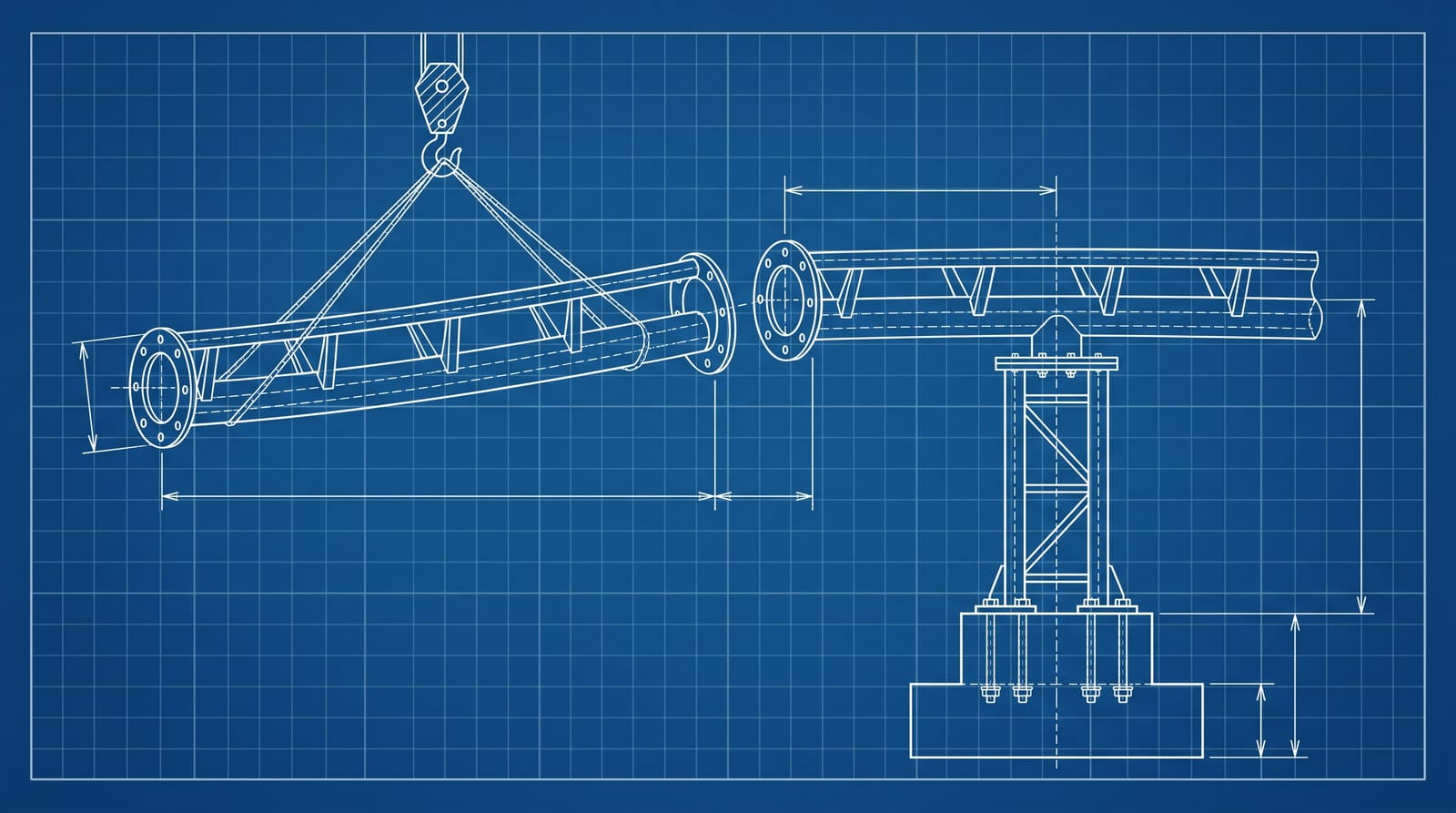
When a park closes a roller coaster and a different park opens it, the obvious question is: how do you actually pick up a thing that large and put it down somewhere else?
The short answer is that you don’t move the ride, you move its parts. The track is unbolted into numbered sections, every wearing component is tested or replaced, the steel travels on lorries and in containers, and the ride is then rebuilt on brand-new foundations and certified from scratch at the other end.
Why bother moving a coaster at all
Because a second-hand coaster is usually cheaper than a new one, and it arrives with a known design. A park that wants a looping coaster on a modest budget can buy a proven layout rather than commission one. Parks that close, or simply need the land, are often happy to sell.
It is also, increasingly, an internal affair. The Pinfari coaster we covered when Angry Octo opened at Boudewijn Seapark moved between two parks owned by the same operator. Moving within a portfolio removes the haggling, though not the engineering.
Some designs are far easier to move than others. Shuttle coasters and compact, modular layouts from builders such as Vekoma and Pinfari travel well. RCDB, the coaster database, lists 53 Vekoma Boomerangs, 23 of them relocated, which makes the model one of the most-moved designs in the business. A hand-fitted, site-specific wooden coaster is a different proposition, as we’ll see.
Step one: take it apart in the order you’ll put it back
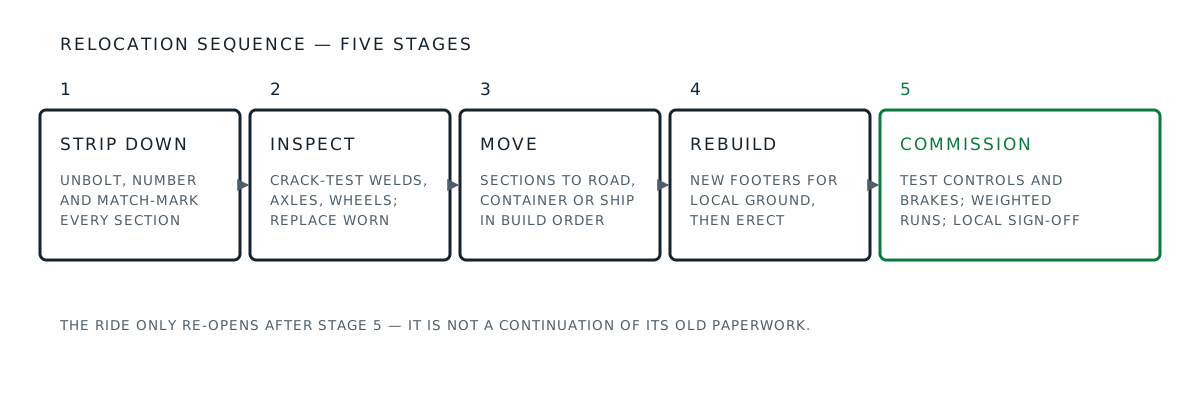
A relocation is planned backwards from the reassembly. Before anything is unbolted, the track is surveyed and each section is given a number, and matching marks are made on the sections either side of every joint.
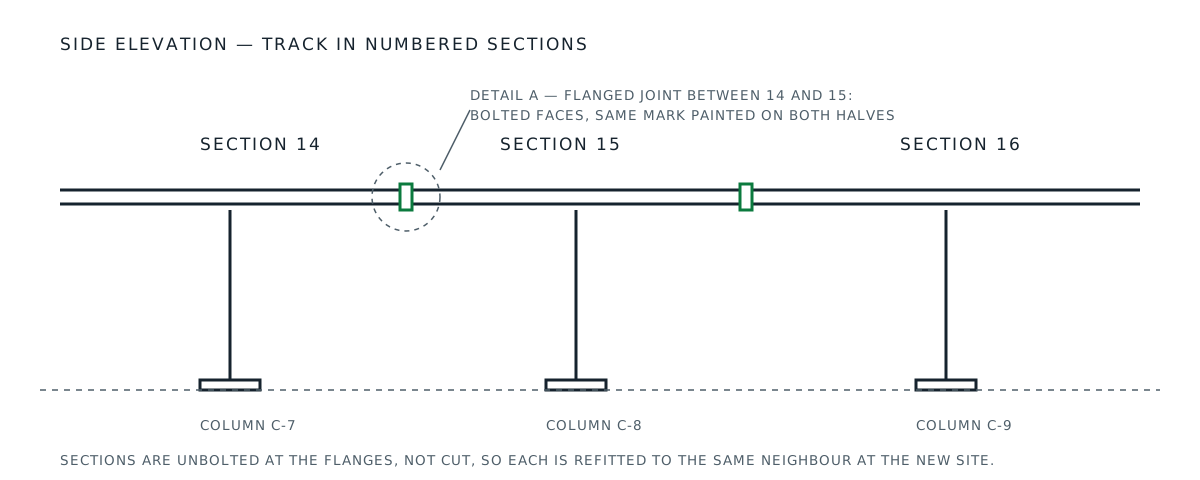
Most tubular steel coasters are built from track sections fabricated in a factory and bolted together on site, usually at joints over a support column or between them. That is what makes relocation feasible: the ride was, in effect, designed to be assembled. Taking it apart means reversing the build, section by section, with a crane holding each piece while the bolts come out.
The support columns, the lift chain, the trains, the brake runs and the station equipment are all separated and catalogued in the same way. Nothing is thrown into a skip pile marked “miscellaneous”.
Step two: find out what thirty years has done to it
Dismantling is the best inspection opportunity a coaster ever gets. Components that are normally buried in the structure or hidden behind covers are suddenly on the ground in front of an inspector.
This is where the non-destructive testing used in routine safety inspections earns its keep. Welds, axles and wheel assemblies are checked for cracks that cannot be seen by eye, using methods such as magnetic particle and ultrasonic testing. Worn wheels are replaced, which is routine, and the wheel assemblies that grip the rail are among the first things to be renewed.
Anything that fails is repaired or remade. This is a quiet advantage of the exercise: a relocated coaster has often had a more forensic examination than the one it left behind.
The motors and drives get the same scrutiny, and often a rebuild. A motor that has run for decades is not something you install in a new park and hope for the best.
Step three: moving thousands of pieces
Transport is the least glamorous stage and probably the most logistical. Track sections travel on flatbed lorries or, if short enough, in standard shipping containers; trains and small components are crated. Abroad, the whole lot goes by sea.
Sections are loaded and labelled in the order they will be needed. Reassembly goes from the foundations upward and from the station outward, so a stack that arrives in the wrong order costs days of crane time.
Oversize loads are the practical limit on how much can be sent in one piece. Long, wide or tall sections need escorts and road permits, which is why designers (and the people moving them) tend to prefer short sections that fit a container or a lorry bed without special arrangements.
Step four: new concrete, same steel
The foundations are never moved. Every column of a coaster stands on a concrete footer designed for the ground at its original site, and the ground at the new site will be different.
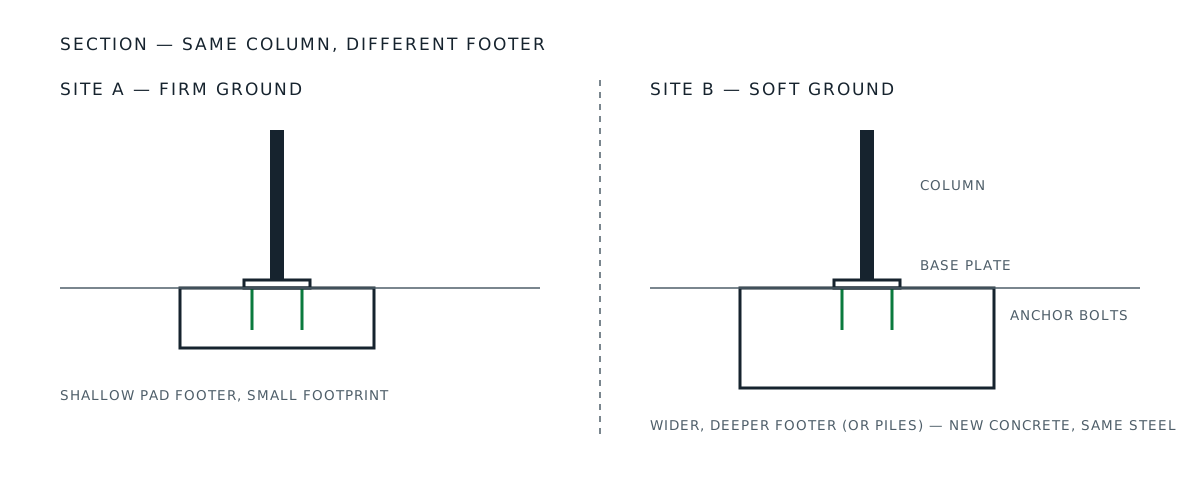
A geotechnical survey of the new site tells engineers how much load each column footer must spread, and the footers are then designed accordingly: wider, deeper, or sunk on piles where the ground is soft. Anchor bolts set into the fresh concrete must line up with the base plate of the existing column, so the footing drawings are produced to match the steel that already exists.
In this respect a relocation is much like a new build, only the fabrication has already been done. The cranes, the surveyors and the concrete gangs are all the same.
Then the ride goes back up, following the numbers. Columns first, then track, then lift, brakes and station equipment, with the trains last. Fresh paint is a bonus, and a new colour scheme is usually the first thing visitors notice about a relocated coaster.
Step five: the bit that cannot be skipped
A reassembled coaster is not an operating coaster. It has to be commissioned: the control system is tested, the block sections and brake runs are proved with empty trains, and then with weighted ones, before anyone rides.
Sensors, wiring and control software often need updating. Older rides may have had relay-based or early computer controls that no current inspector would accept as they stand, so a modern programmable logic controller is fitted and the safety logic written afresh.
Then comes regulatory sign-off, and this depends on where the ride lands. Britain, Belgium and the rest of the EU, and the US states each have different rules, so the ride answers to the inspection regime where it now stands and not where it came from. Angry Octo had to pass from Britain’s ADIPS-based approach to Belgium’s EN 13814 framework, as our report on it described.
Where you’ll find it
Four rides show how varied the process can be.
Corkscrew at Silverwood Theme Park in Idaho is an Arrow Dynamics double-corkscrew coaster that ran at Knott’s Berry Farm in California from 1975 to 1989, then reopened at Silverwood in 1990. RCDB lists it at 21 m (70 ft) tall and 381 m (1,250 ft) long, with a top speed of 74 km/h (46 mph) and two inversions. It is a fine example of a steel looper that outlived the park it was built for, and of a mid-sized park buying a proven attraction.
Aftershock at Silverwood was previously Déjà Vu at Six Flags Great America, which opened in 2001 and closed in October 2007; Wikipedia’s Giant Inverted Boomerang table records that it reopened at Silverwood on 21 July 2008. It belongs to the Vekoma family discussed above, a model built in very small numbers but moved repeatedly.
Goliath at Six Flags New England had been Déjà Vu at Six Flags Magic Mountain, whose last operating day as Déjà Vu was 16 October 2011 according to the same table. It opened in Massachusetts on 25 May 2012 with a new Premier Rides train, which is a good illustration that a relocation can change the rolling stock as well as the location.
Angry Octo at Boudewijn Seapark completes the set: a Pinfari RC40 on its fourth park, assembled from short bolted sections. Our Angry Octo report gives the full trail.
Wooden coasters are the awkward case. Their structure is built from thousands of timbers cut and fitted on site, and it is common for the process to be partly a rebuild rather than a move: steel parts are numbered and reused, and much of the timber is replaced. Anyone claiming a wooden coaster has been “moved” is usually describing something closer to a reconstruction.
What can go wrong
Moves fail for dull reasons: the new site cannot get planning permission, the budget turns out too thin for the foundations, or the ride arrives and its design is a poor fit for its audience. A relocated coaster is only as good as the planning behind it.
There is also the matter of reputation. A ride with a troubled mechanical record does not become reliable by changing postcode. If the original weakness was in the design, the ride takes it with it, and an honest buyer finds that out by reading its history before signing.
The Dispatch verdict
What’s clever about a relocated coaster is how little of it is clever in the glamorous sense. The engineering is bookkeeping: numbered parts, matched joints, tested welds, redesigned concrete and a commissioning schedule that nobody can talk their way past.
That is also its strength. A ride that has been taken apart, examined piece by piece and put back together is, in many cases, better understood than one that has simply been left running. The next time a park announces a “new” coaster with a 30-year-old pedigree, don’t groan. Ask which parts were replaced and who signed it off.
Further reading: how roller coaster safety inspections work, how block systems keep trains apart, how coaster wheels grip the track, the roller coaster manufacturers guide, and Angry Octo’s journey to its fourth park.