
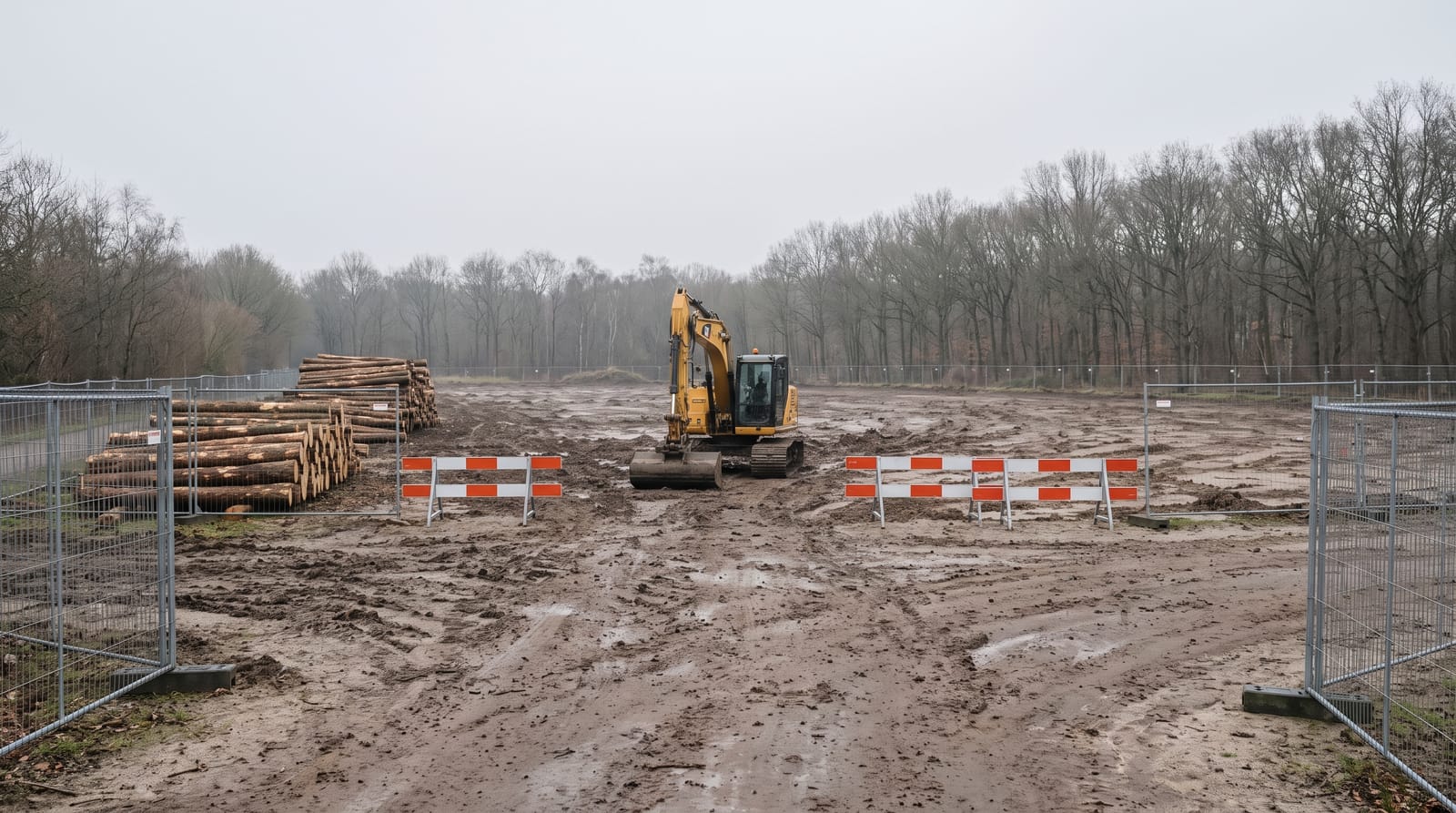
Efteling’s front gate now looks out over a building site. By early September the plot behind Efteling Theatre had been stripped to bare earth — the first physical evidence of the Dutch park’s most expensive attraction in its 74-year history.
What happened
Dutch enthusiast site Looopings published aerial photographs on 7 September showing the site largely cleared: trees and undergrowth removed, the park’s old bicycle storage relocated to the P2 car park, and the clubhouse of amateur football side DESK torn down. The plot sits on what Efteling calls the LEM terrain (Logistiek Evenementen Magazijn — “logistics and events warehouse”), immediately behind Efteling Theatre and next to the main entrance.
This is the coaster Efteling announced in July as Missie Luminar: a €50 million attraction, the largest single investment in the park’s history, scheduled to open in 2029 on the Island of the Five Senses. “This type of roller coaster is completely new for Efteling,” general director Fons Jurgens said at the announcement, adding that the ride’s prominent position by the main gate would make it “unique and special.” Efteling’s own materials don’t name a manufacturer, but Dutch trade press — Looopings and regional outlet L1 Nieuws, which covers the area around Vekoma’s Vlodrop factory — both identify the builder as Vekoma, and the description matches a model the manufacturer has been developing since at least 2016 under the internal codename “Dragonfly”: riders straddle a motorbike-style seat that hangs directly beneath the rail, legs free in the air, rather than sitting inside a train.
Before any steel goes up, there’s a less glamorous job. The LEM terrain was used as a landfill in the 1950s, with waste linked to the area’s former shoe and leather industry still in the ground. Efteling has to excavate and remove the contaminated material before the site counts as bouwrijp — construction-ready — a process expected to run through the end of 2026.
The detail
| Park | Efteling, Kaatsheuvel, Netherlands |
| Manufacturer | Vekoma (reported; unconfirmed by the park) |
| Launch system | LSM (linear synchronous motor) |
| Top speed | 80 km/h (50 mph) |
| Ride time | More than two minutes |
| Investment | €50 million — the park’s largest ever |
| Location | Island of the Five Senses, by the main entrance |
| Scheduled opening | 2029 |
What it actually means
Skip the theming for a moment and two genuinely interesting engineering decisions sit underneath this announcement.
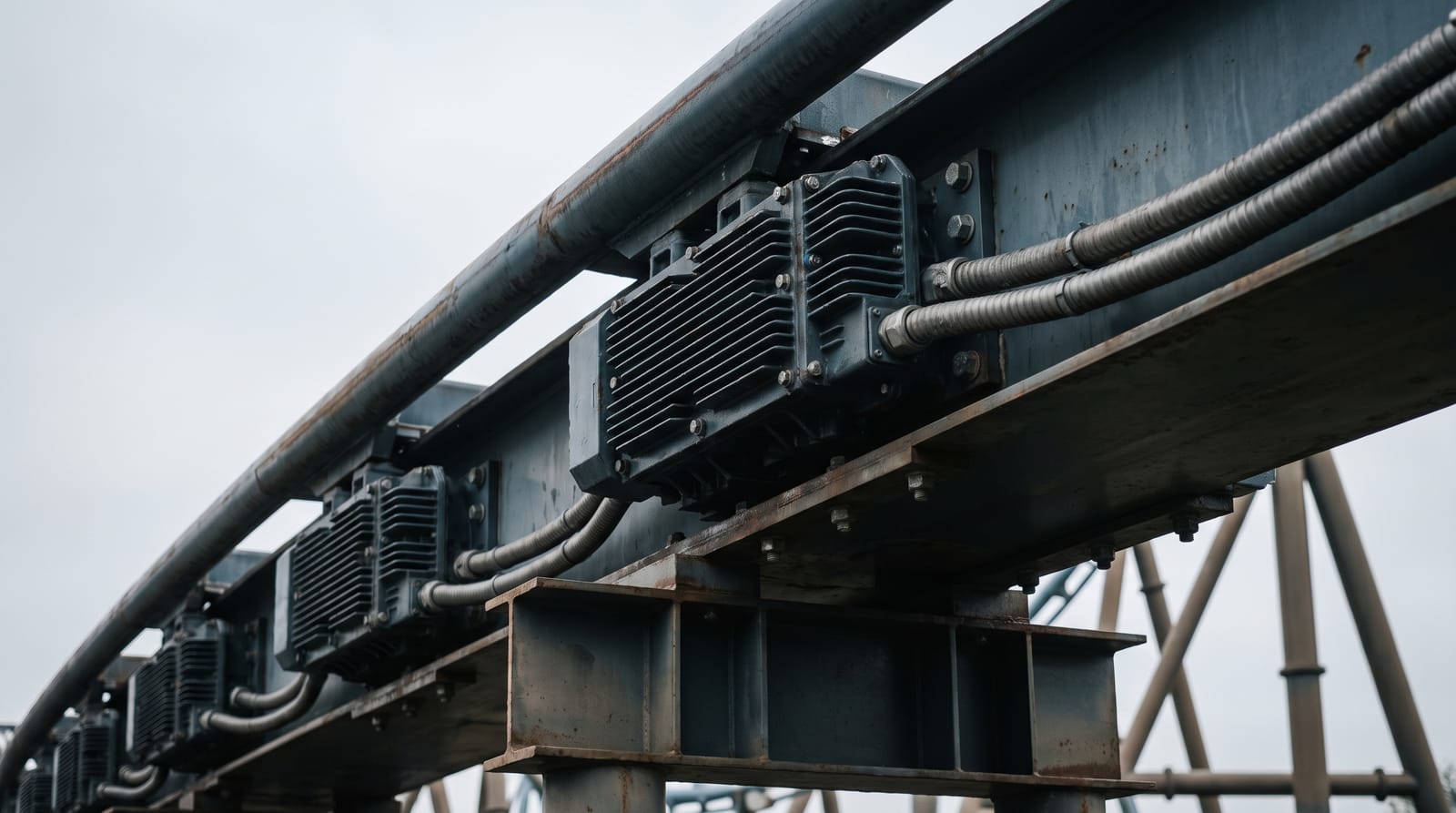
The first is the launch. Missie Luminar uses an LSM — the same electromagnetic system that now holds every major coaster speed record, having quietly outpaced the hydraulic winches that used to dominate. There’s no cable to wear out, no winch drum to service, and no single point of failure that takes the whole ride down; the train just fails towards a stop on a flat section, which the block system treats like any other hold. At 80 km/h (50 mph), Missie Luminar won’t trouble any record board — this is a mid-range launch by 2026 standards — but LSMs scale down as happily as they scale up, and reliability, not raw speed, is clearly the point here.
The second is the vehicle. A rider hanging beneath the rail on a straddled, motorbike-style seat is a genuinely different format from either a conventional suspended coaster (bench seating, swinging gondola) or an inverted coaster (over-the-shoulder harness, seated posture). Vekoma isn’t inventing the concept from nothing — the manufacturer has held a patent on this configuration since 2016 — but Missie Luminar is one of the first paying customers for it actually going into the ground, which makes it a real test of a decade-old idea rather than a trade-show sketch. That matters for Vekoma specifically: a company that spent the 1990s as the industry’s rough, mass-market punchline is now debuting an entirely new coaster category at one of Europe’s most-visited parks. Landing that commission is as much a statement about Vekoma’s rebuilt reputation as it is about Efteling’s ambitions.
Worth flagging what Efteling isn’t claiming: nowhere in the park’s own announcement does the word “first” appear in a global sense — Jurgens calls it new for Efteling, full stop. That restraint looks wise once you check what else Vekoma has sold. A second installation of the same model is under construction at Six Flags Magic Mountain in California, originally pencilled in for 2026 and now pushed back to 2027 because of the ride’s complexity. If that date holds, Six Flags — not Efteling — ends up opening the world’s first of these two years ahead of Missie Luminar. Given Magic Mountain’s project has already slipped once, that’s not guaranteed either. But it’s exactly the kind of “world’s first” arithmetic worth doing before anyone else does it for you, and right now, neither park has any hardware running.
The Dispatch verdict
There’s a refreshing honesty to a park announcing its biggest-ever investment without reaching for “world’s first” — because on the evidence so far, it wouldn’t be true. What’s actually on offer is a sensible bet on new hardware from a manufacturer that’s earned some trust back, in a location Efteling clearly wants to make a statement with. The catch is timing: three years is a long wait, and the first twelve months of it are being spent digging up somebody else’s rubbish, not laying track. Worth watching when the diggers move from clearing the site to actually building on it.
Further reading: how LSM and hydraulic launches actually work, our guide to the roller coaster manufacturers, and how roller coaster restraints keep riders in place.