
Turn a roller coaster train upside down through a loop and gravity has one job: pull everything, riders included, straight down and off the track. It doesn’t happen. The train stays clamped to the rail through the entire rotation, as calmly as it rides a straight section of track at ground level. Nothing about that is obvious the first time you actually think about it.
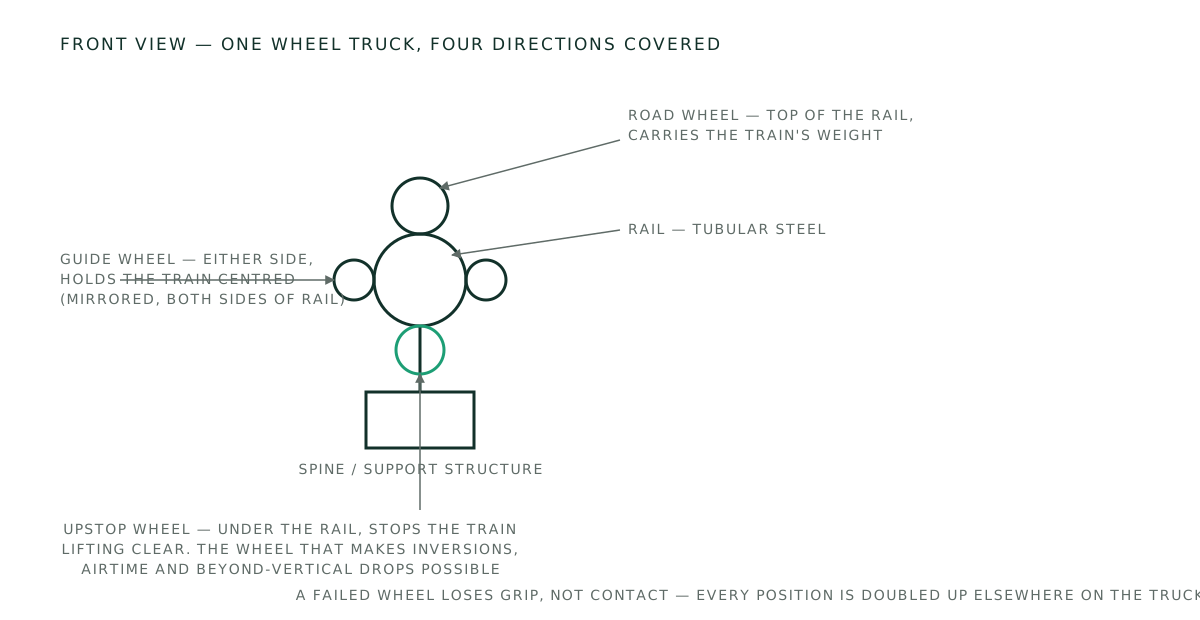
The short answer: every wheel on a coaster train works as part of a set of three, wrapped around the rail from three directions at once — one on top to carry the weight, one on each side to keep the train centred, and one underneath to stop it lifting clear. That underneath wheel is the one doing the work you’d never guess exists, and it’s the reason inversions, airtime and beyond-vertical drops are possible at all.
Here’s how a hundred-year-old idea keeps a multi-tonne train glued to a few centimetres of steel, whichever way up the track happens to be.
One wheel truck, four jobs
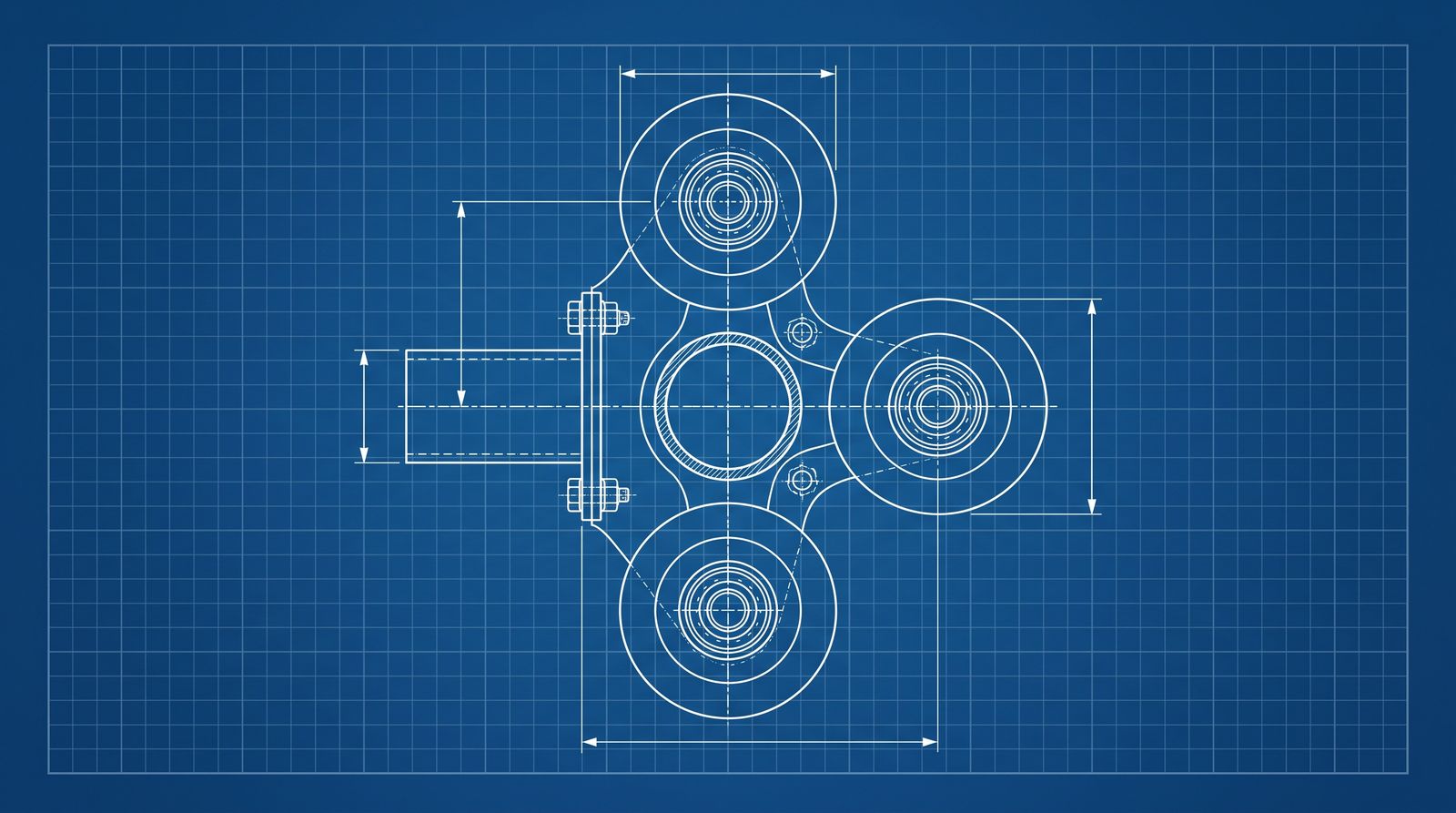
Every wheel on a modern steel coaster belongs to a wheel truck (also called a wheel carriage or wheel assembly) — a bracket bolted to the train’s chassis that wraps three separate wheels around the rail at every mounting point. Each one has a single job, and between them they cover every direction a rail could conceivably let go.
The road wheel (sometimes “running wheel” or “load wheel”) sits on top of the rail and does the boring, constant work: carrying the train’s weight, the way a car wheel carries a car. It’s usually the largest of the three, because it takes the biggest and steadiest load.
The guide wheel (or “side-friction wheel”) is mounted sideways, pressing against the rail from the inside or outside edge. Its job isn’t holding the train up at all — it’s keeping the train tracking dead centre through every curve, the way a groove keeps a drawer running straight.
The upstop wheel — also called the underfriction or uplift wheel — sits underneath the rail, pressed up against its underside. For most of a ride it does almost nothing, spinning along in contact with the rail but carrying no real load. Then a hill crests, or the track rolls the train upside down, and for a few seconds it becomes the only thing standing between the train and empty air.
The invention that made it possible
This arrangement has a named inventor and a specific year, which is unusual for a piece of engineering this fundamental. John A. Miller, the American ride designer whose anti-rollback ratchet still clicks up every lift hill on Earth, patented the underfriction wheel in 1919 — the “Miller Underfriction Wheel,” as the paperwork called it.
Before that patent, coaster trains rode on top of the rail alone, held down by nothing but their own weight. That’s fine on gentle hills, but it hard-caps what a designer can draw: too steep a drop, too tight a curve, or too much speed over a crest, and the train simply leaves the rail on its way over. Every early coaster’s profile was, in effect, negotiated with gravity rather than engineered against it.
Miller’s third wheel changed the negotiation. By adding a wheel that gripped the rail’s underside as well as its top, a train could no longer be lifted clear by its own momentum — the track was physically holding on to it from both sides at once. Steeper drops, sharper transitions, real airtime and, eventually, full inversions all became structurally possible the day that patent was filed. Historians call Miller the father of the modern high-speed coaster for good reason: the ratchet keeps you from rolling backwards, but the underfriction wheel is what let designers stop being timid going forwards.
What’s actually gripping the rail
Strip the paint off a wheel and there isn’t much to it: an aluminium hub with a tyre bonded around the outside, running on a sealed bearing. The tyre material is where the real engineering choice sits, and it’s a genuine trade-off rather than a simple upgrade path.
Polyurethane tyres are the softer option — they flex slightly under load, which damps vibration and produces a noticeably smoother, quieter ride. The cost is rolling resistance: a polyurethane-wheeled train bleeds off a little more speed to friction than a harder wheel would. Nylon tyres are the harder, older alternative — less give, more noise, faster wear on the rail, and in exchange a train that carries its speed more efficiently through a circuit. Most modern coasters lean towards polyurethane for the ride quality; older installations and some specific wheel positions still use nylon where speed retention matters more than comfort.
That grip is also not constant, which is worth knowing if you’ve ever wondered why a coaster feels different lap to lap. Cold wheels grip harder than warm ones; a freshly lubricated or rain-slicked wheel grips less than a dry one on a hot afternoon. It’s the same variability that makes trim brakes necessary in the first place — a ride’s fastest possible lap and its slowest possible lap, on the same track, can differ by a meaningful margin, and the wheels are a large part of why.
Turn the ride upside down
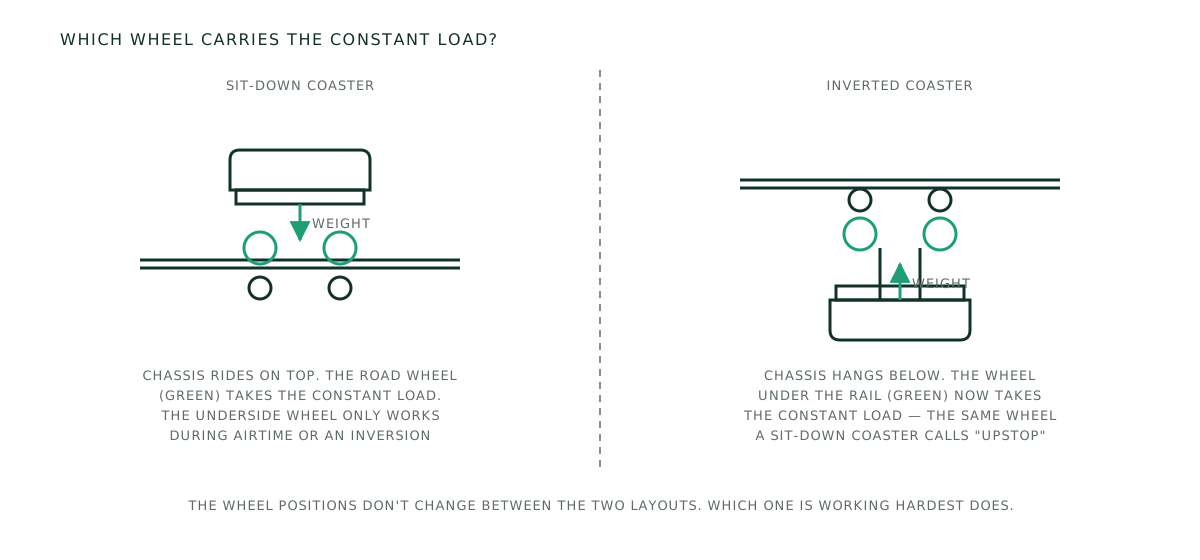
Here’s the detail that rewards actually thinking about wheel positions rather than just naming them: on an inverted coaster — where the train hangs below the rail instead of sitting on top of it — the job each wheel does doesn’t change, but which one is working hardest flips completely.
On a standard sit-down coaster, the chassis rests on top of the rail, so gravity constantly loads the road wheel and the upstop wheel only earns its keep during airtime or an inversion. Hang the same chassis below the rail instead, and gravity is now permanently trying to pull the train away from the track in the opposite direction. The wheel resisting that pull, every single second the train is running, sits underneath the rail — the exact position a sit-down coaster calls “upstop.” The name doesn’t change. The workload does.
B&M’s Nemesis at Alton Towers is the standing demonstration. Opened in March 1994, 13 m (43 ft) tall with a 81 km/h (50 mph) top speed and four inversions, the entire train hangs from its rail through the whole 716 m (2,349 ft) circuit — including a below-ground trench section, one of the ways the park works around its listed estate’s height restrictions. Every metre of that ride, the wheels doing the unglamorous, unceasing work are holding the same rigid harness we’ve covered elsewhere — a textbook safety backup, working continuously rather than occasionally.
The rail shapes the wheel
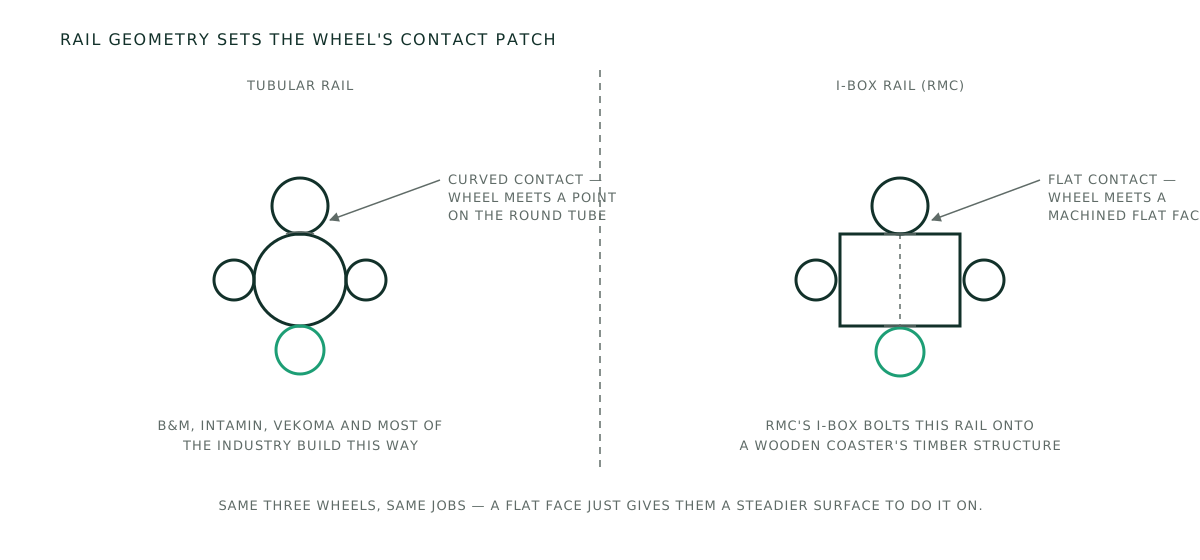
Not every coaster gives its wheels the same surface to grip. Standard tubular steel rail — the industry default from B&M, Intamin, Vekoma and most of the field — is round in cross-section, so every wheel meets it at a single curved point of contact. It works, and a century of coasters prove it, but a point contact concentrates load and transmits every tiny imperfection in the rail straight into the wheel.
Rocky Mountain Construction’s I-Box track takes a different approach: a box-section steel rail with flat, precision-machined faces on top, bottom and both sides. The wheels ride flat surfaces instead of a curve, spreading the contact patch and giving the train a steadier, quieter ride over the same three-wheel principle.
Energylandia’s Zadra is the reference example: 62.8 m (206 ft) tall, 121 km/h (75 mph), and three inversions ridden on nothing heavier than a lap bar, because RMC’s heartlined track shaping keeps the forces running through the rider’s centreline rather than sideways. None of that heartlining works without the flat-faced I-Box rail underneath it giving the wheel truck a precise, repeatable surface to hold.
Built to fail one wheel at a time
A single coaster car typically carries somewhere in the region of a dozen wheels across its trucks, and a full train — several cars coupled together — can easily carry over a hundred. That’s not excess; it’s the safety architecture. Every load-bearing position on the truck is effectively doubled, so a single worn or damaged wheel loses some grip at that one point rather than dropping the train’s contact with the rail entirely.
Parks lean on that redundancy rather than trust to eyesight. Wheels get checked weekly for wear and correct alignment, and the trains themselves come off the track for a full strip-down at least annually, wheels and bearings included. Many operators track wheel life by cycle count — replacing a set after a fixed number of rotations — rather than by the calendar, on the reasoning that a wheel doesn’t know what month it is; it only knows how many times it’s turned.
The rides that skip this system entirely
Not every ride needs any of this, and the contrast is instructive. Classic alpine and bobsled-trough rides don’t run wheel trucks on a captive rail at all — the sled simply free-rolls inside an open steel or concrete trough, held in only by the trough’s own walls and gravity. There’s no upstop wheel because there’s nothing underneath to grip; the sled could theoretically bounce clear at the top of a bank, which is exactly why these rides stick to gentle turns and never invert.
Toverland’s new “swinging bobsled,” opening this winter in partnership with ETF Ride Systems, is a genuinely interesting departure for precisely this reason. It keeps the rider-operated speed lever guests know from a classic bobsled ride, but drops the sled onto conventional steel coaster rail instead of a free trough — trading the open trough for a captive wheel truck, and gaining the banked, speed-linked swinging sections that only a properly gripped rail can deliver.
Where you’ll find it
| Ride | Park | What the wheels are doing |
|---|---|---|
| Nemesis | Alton Towers, UK | Inverted B&M — the “upstop” wheel carries the train’s full weight, continuously, for the whole 716 m (2,349 ft) circuit |
| Silver Star | Europa-Park, Germany | B&M hyper coaster, 73 m (239 ft), 127 km/h (79 mph) — a textbook three-wheel truck earning its keep over camelback airtime hills |
| Zadra | Energylandia, Poland | RMC I-Box, 62.8 m (206 ft), 121 km/h (75 mph), 3 inversions — flat-faced rail, same three wheels, smoother contact |
The Dispatch verdict
The clever part of a coaster wheel isn’t any single wheel — it’s the arrangement. Three simple rubber-and-aluminium wheels, aimed in three different directions around the same few centimetres of steel, turn a rail into something a train genuinely cannot leave, right way up or upside down. It’s a hundred-year-old idea that nobody has needed to fundamentally replace, only refine — smoother tyres, flatter rails, better redundancy — because Miller’s basic geometry already solved the problem completely.
Next time a train sweeps you through a loop, spare a thought for the wheel doing the least glamorous job on the entire ride, quietly pressed against the underside of the rail, holding up your idea of down.
Further reading: how block systems keep coaster trains apart, wood vs steel vs RMC hybrid track, why the lift hill clicks, and what a vehicle with no rail at all looks like on a river rapids ride.