
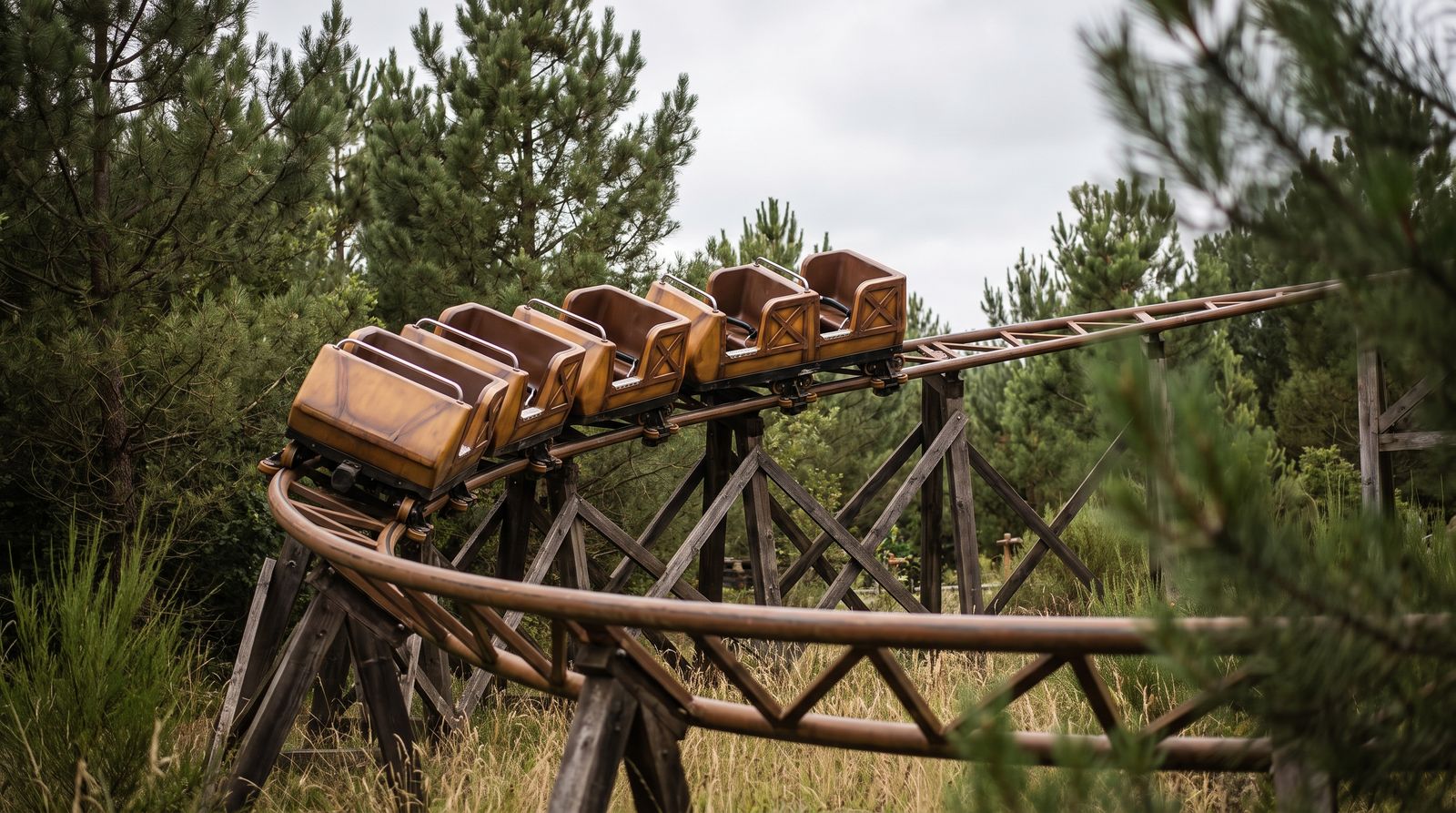
A park that has run for a quarter of a century without a roller coaster is about to get one, and the choice of coaster tells you a good deal about what its owners are building.
What happened
O’Fun Park, in Le Bernard in France’s Vendée, will open Mine Discovery in May 2027, according to Zamperla’s announcement at IAAPA Expo Europe in London, reported by Blooloop on 23 September. It will be the park’s first roller coaster. The Italian manufacturer is supplying it alongside three smaller rides that open earlier, on 3 April 2027: Drift Box (eight two-seat cars racing round an oval track), Giant Citern (a 6 m / 20 ft drop tower styled as a Wild West water tank) and Rodeo Wagon (a rotating, tilting family ride).
The park’s operator, Oceano Loisirs, has put a figure on the programme. Zamperla’s release says €6 million goes into 2027, the park’s 25th anniversary, and trade magazine EAP reported in December 2025 that the group plans to invest €20 million by 2030. A miniature railway, due in 2028, is already under construction.
The detail
The headline numbers are Zamperla’s, as relayed by Blooloop. We have cross-checked them against RCDB, the standard coaster database, which lists Mine Discovery as under construction.
| Metric | Imperial | |
|---|---|---|
| Track length | 155 m | 508 ft |
| Top speed | 26 km/h | 16 mph |
| Inversions | None | |
| Opening | May 2027 | |
| Lift | Booster wheels (per RCDB) | |
| Layout | Single helix (per RCDB) |
One detail does not match. Blooloop’s write-up of Zamperla’s announcement describes a train of eleven two-seat carriages and a capacity of nearly 750 riders per hour. RCDB lists a single train of six cars, two riders across, so twelve riders. Both cannot be right, and the park has not said which is. We have not repeated the hourly figure as fact; it depends entirely on the train.
What it actually means
Start with the speed, because 26 km/h (16 mph) is not a typo. This is a family coaster: a low, gentle ride designed so that a six-year-old and a nervous grandparent can share a train. There are no inversions, and the single helix (a spiral of track that winds round on itself) packs a lot of track into a small plot. RCDB files it under Zamperla’s “Family Coaster” model, which suggests an existing product rather than a bespoke design, though Zamperla has not said so.
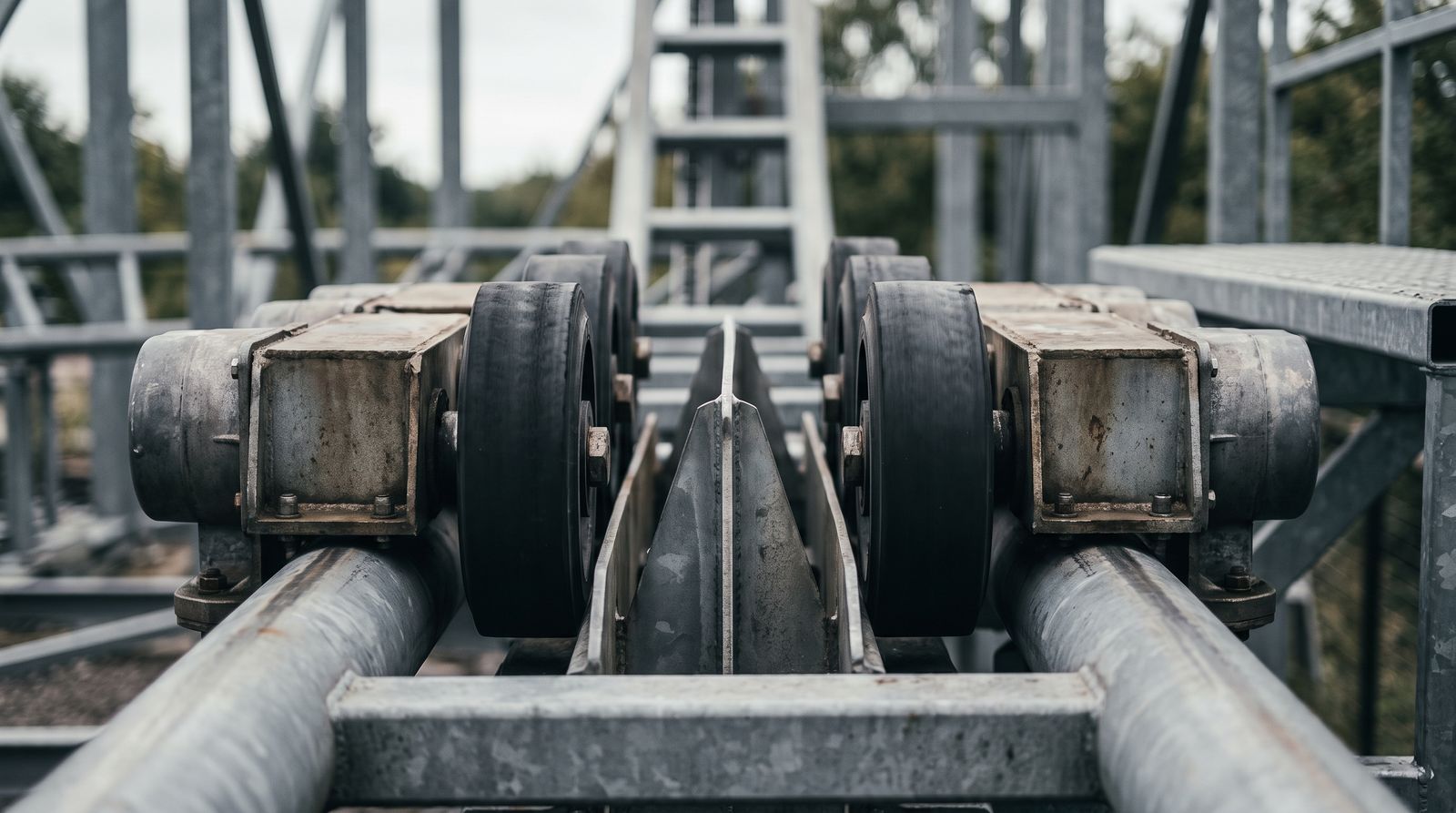
RCDB lists the lift as booster wheels. These are rows of motor-driven rubber tyres that grip a fin under the train and push it up the climb, rather than a chain hauling it. We cover the family in how roller coaster lift hills work. They are quiet, gentle and cheap to run, and they suit a ride whose whole job is to start slowly.
Why does the choice matter? Because the order of rides is a strategy. Oceano Loisirs describes its park as a “hybrid” of outdoor activities and classic attractions, and has re-themed it as a Wild West destination. A first coaster aimed squarely at families, rather than a thrill machine, extends the park’s audience without changing its character. That is our reading rather than the park’s stated reason. Zamperla’s record here is the opposite of the headline-grabbing launch coasters it has recently begun building, such as the Double Heart at Lotte World Adventure Busan. Our guide to the roller coaster manufacturers explains where each builder sits.
For the reader, the practical point is capacity. Whether the train carries twelve or twenty-two, a ride this size lives or dies by how quickly it loads, which is why we wrote about theme park ride capacity.
The Dispatch verdict
This is not a record-breaker and does not pretend to be, which is refreshing. It is a sensible, well-understood family coaster for a regional French park with a plan, and non-US coverage of the type is rare. The questions worth watching are the train size and the real hourly capacity, and whether the park uses the soft-opening period to settle both before May.
Further reading: how roller coaster lift hills work, Zamperla’s Double Heart at Lotte World Adventure Busan, a guide to the roller coaster manufacturers, and theme park ride capacity.