
Until this month, a visitor to Efteling with a leg prosthesis who wanted to ride Baron 1898 had two options: hand the limb to a member of staff at the station and ride without it, or stay in the queue line and watch. That’s not a design oversight so much as a direct consequence of how restraint engineering works — and on 9 September, the Dutch park announced the device built to close the gap.
What happened
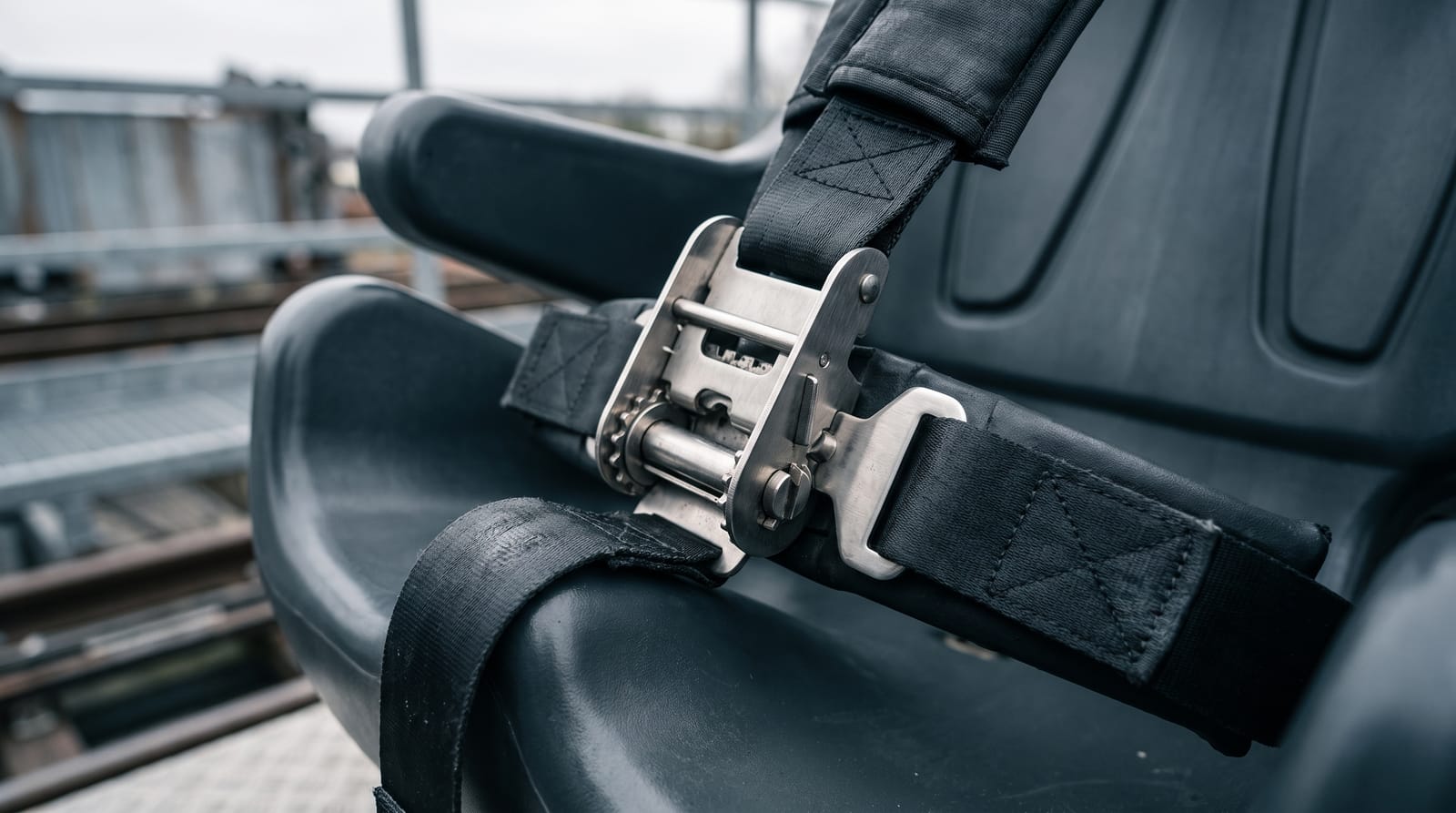
Efteling has launched SafeStrap, a safety strap designed to hold a leg prosthesis securely in place for the duration of a ride, so wearers no longer have to remove it beforehand. The park confirmed the device in a press release and public demonstration on 9 September, where several prosthesis users rode the Baron 1898 dive coaster wearing both their prosthesis and the strap.
The project traces back to a single rider. Veerle, a prosthesis user and self-described roller coaster enthusiast, raised the problem with her rehabilitation physician, Iris van Wijk of De Hoogstraat Rehabilitation in Utrecht, who brought it to patient organisation KorterMaarKrachtig, Efteling and TU Delft (Delft University of Technology). India Hoekman, a TU Delft graduate, designed SafeStrap as her graduation project, working directly with prosthesis users, healthcare professionals and Efteling’s engineers throughout. “This innovation demonstrates what becomes possible when prosthesis users are involved from the start,” the project team said at launch. Edge Safety manufactured the physical strap; TÜV NORD Nederland, the technical inspection body that certifies ride hardware across much of continental Europe, carried out the safety assessment.
Efteling isn’t keeping SafeStrap to itself. The park says the device is now available worldwide to other theme parks and prosthesis users, though each installation still needs sign-off from the ride’s own local regulator before it can be fitted — Efteling’s own rollout, below, shows why that isn’t a formality.
The detail
SafeStrap arrives at Efteling in stages, starting with the rides that were part of its development and testing:
| Ride | Type | Manufacturer | SafeStrap available from |
|---|---|---|---|
| Swing rides (zweefmolens) | Chair swing | — | 1 October 2026 |
| Baron 1898 | Dive coaster | B&M | 1 October 2026 |
| Hooghmoed | Triple freefall tower | Zierer | 1 October 2026 |
| Ravenring | Rotating wing flight ride | — | December 2026 |
Baron 1898, the ride used for the launch demonstration, is a B&M dive coaster that opened in 2015: 30 m (98 ft) tall with a 37.5 m (123 ft) near-vertical drop, a 501 m (1,644 ft) track, two inversions and a top speed of 90 km/h (56 mph). Hooghmoed, which opened in May 2026, is a cluster of three 12 m (39 ft) Zierer freefall towers lifting riders to 9.5 m (31 ft) before release. Ravenring, due in December as part of the reworked Raveleijn area, spins eighteen wing-shaped vehicles around a central axis, with riders using a hand lever to control how steeply their own vehicle tilts.
What it actually means
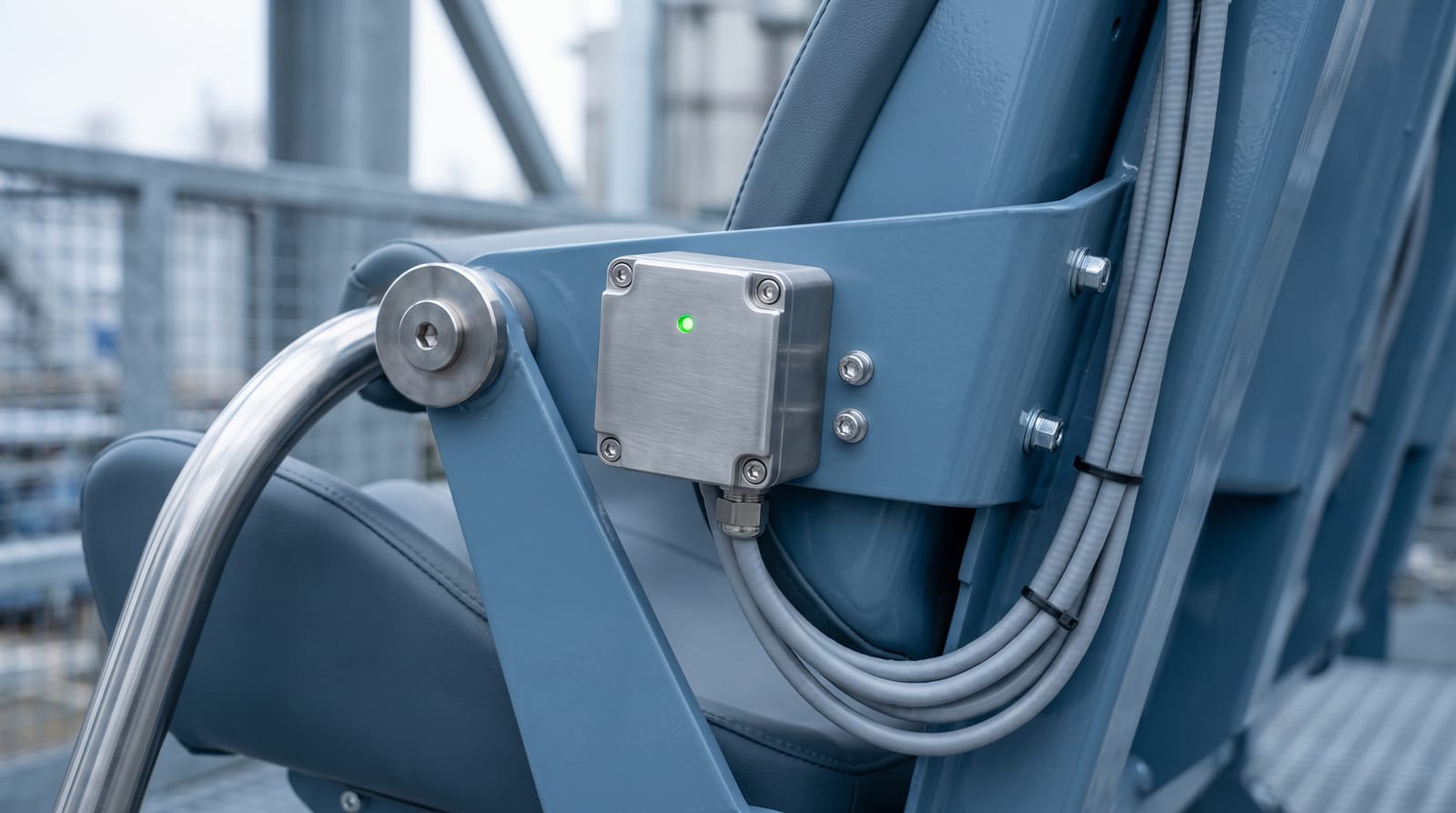
The reason this took a graduation project and a rehabilitation physician to solve, rather than being standard kit already, is that a restraint system isn’t certified in the abstract — it’s certified against an assumed rider, and that certification logic is unforgiving of anything that doesn’t fit the assumption. A modern lap bar or harness locks via a ratchet or hydraulic piston that can only tighten, and a sensor at each seat reports “locked” to the ride’s control system before dispatch is permitted at all. That system has no concept of “mostly secure” — a limb that can shift, rotate or detach mid-ride is a loose object exactly as far as the dispatch logic and the physics are concerned, whether it’s a phone that should have gone in a locker or a prosthesis that never had anywhere else to go. Under an inversion or a sustained negative-g moment, an unsecured mass doesn’t just risk the wearer — it risks whoever it hits on the way past.
That’s also why SafeStrap couldn’t simply be declared safe once and fitted everywhere. Each ride in Efteling’s rollout puts different forces through a rider’s legs: Baron 1898 combines a near-90-degree drop with genuine inversions; Hooghmoed is pure vertical freefall and a hard magnetic deceleration; Ravenring adds rider-controlled tilt to sustained rotation; the swing rides are a simple pendulum. TÜV NORD’s assessment, and the staggered October-to-December rollout that follows it, is the visible evidence of a certification exercise run separately against each force profile rather than assumed to transfer. Efteling hasn’t published load ratings or attachment specifications, and neither will we — but the rollout schedule tells you the engineering: this was never one approval, it was four.
There’s a wider point underneath the specific device, too. Accessibility hardware for theme parks has mostly meant queue policy and boarding aids — Efteling has form here, having trialled a seat-on-wheels concept with Vekoma for getting riders into a vehicle, not for what happens once it moves. SafeStrap is rarer: genuine restraint engineering, developed with the people who need it rather than around them, that changes what a rider can do once the train has left the station. If it holds up in service, other parks now have a design to license rather than invent from scratch.
The Dispatch verdict
The genuinely good part of this story isn’t the device, it’s the process: a rider raised a real problem, a physiotherapist and a patient group took it seriously, and a park treated a graduation project as worth building and certifying properly rather than filing as a nice idea. The staggered rollout across four completely different ride types is the unglamorous proof that nobody cut a corner to get there quickly. Worth watching whether a UK or US park is next to license it, given how much of the industry still solves this problem with a member of staff and a plastic bag.
Further reading: how roller coaster restraints actually work, how drop towers stop without touching the gondola, and Efteling’s other big 2026 investment, the Missie Luminar suspended coaster.