
The headline items in Parc Astérix’s 2027 announcement are two family rides and a very large restaurant. The sentence that matters to anyone who cares about machinery is tucked in at the end, and it concerns a 29-year-old wooden coaster that is quietly ceasing to be one.
What happened
Parc Astérix, the Compagnie des Alpes park at Plailly, 30 km (19 miles) north of Paris, published its 2027 plans on 2 November 2026. The Greek area gains a lakeside extension, put at roughly 5,000 m² (54,000 sq ft) by Sortiraparis, on ground that used to hold a small water-play area and picnic tables. The park’s newsroom says it opens in spring 2027.
Two family rides lead it. Tournikotis Tournikotas is a pair of family drop towers that, in the park’s words, take riders through “a series of successive rises and falls”. La Flotte de Poséidon puts riders in one of eight boats that “spin and rise around a central pillar”. The park gives a combined theoretical capacity of 800 riders per hour. Alongside them come L’Aire de Jeu d’Ulysse, a water-play area, and La Table de Dionysos, a table-service restaurant with 460 seats, 350 indoors and 110 on a terrace, which the park calls its largest.
Then the line we came for. The park says Tonnerre 2 Zeus, its wooden coaster, had its course “rehabilitated” this season for a noticeably smoother ride, and that the work “continues, allowing a complete retracking for the 2027 season”. The English version of the same release says the circuit will be “100%” redone by the start of 2027.
The park has not named the manufacturers of either new ride. Coasterpedia and French enthusiast coverage list Zamperla for the boats and Zierer for the towers; treat both as unconfirmed until the park or the builders say so.
The detail
| Tonnerre 2 Zeus | Figure (source) |
|---|---|
| Opened | 5 April 1997, as Tonnerre de Zeus (Wikipedia) |
| Original builder | Custom Coasters International; designers Dennis McNulty and Larry Bill (RCDB, Wikipedia) |
| Height | 30 m (98 ft), chain lift (RCDB) |
| Original track length | 1,233 m (4,044 ft) before the 2022 rebuild (RCDB) |
| Rebuild | The Gravity Group, three off-seasons from winter 2018–19; reopened 9 April 2022 (Wikipedia) |
| Trains | Two Gravitykraft Timberliners, 14 single-row cars, 28 riders (RCDB) |
| Steel retrack | RMC 208 ReTraK, announced 29 November 2025 (ThemeParkNews, RCDB) |
| Phase 1 | 5 January to 8 March 2026; the park’s own page says 370 m (1,214 ft) renovated (Parc Astérix, Androland) |
When the RMC work was announced in November 2025, ThemeParkNews reported a two-winter plan: about 350 m (1,150 ft) in early 2026, from the top of the first drop through the turnaround and the lowest part of the layout, then roughly 180 m (590 ft) more in the 2026–27 off-season, up to the tunnel entrance. That is around 530 m (1,740 ft), which the same coverage put at roughly 60 per cent of a layout now just under 1 km long.
The 2 November release does not say 60 per cent. It says complete. Either the scope has grown since last winter, or “complete” means the planned programme rather than the whole circuit, and nothing the park has published settles which. Its own attraction page still speaks only of the 370 m already done. We will update this piece when the second winter’s scope is confirmed.
What it actually means
Start with what a wooden coaster’s track actually is, because that is what is being removed. A traditional woodie runs on a stack of laminated timber planks, typically eight layers, with a flat steel strap along the top for the wheels. The structure beneath is timber too. The whole thing flexes, swells in the wet, shrinks in a dry summer and is never quite the same shape two seasons running, which is both the charm and the maintenance bill.
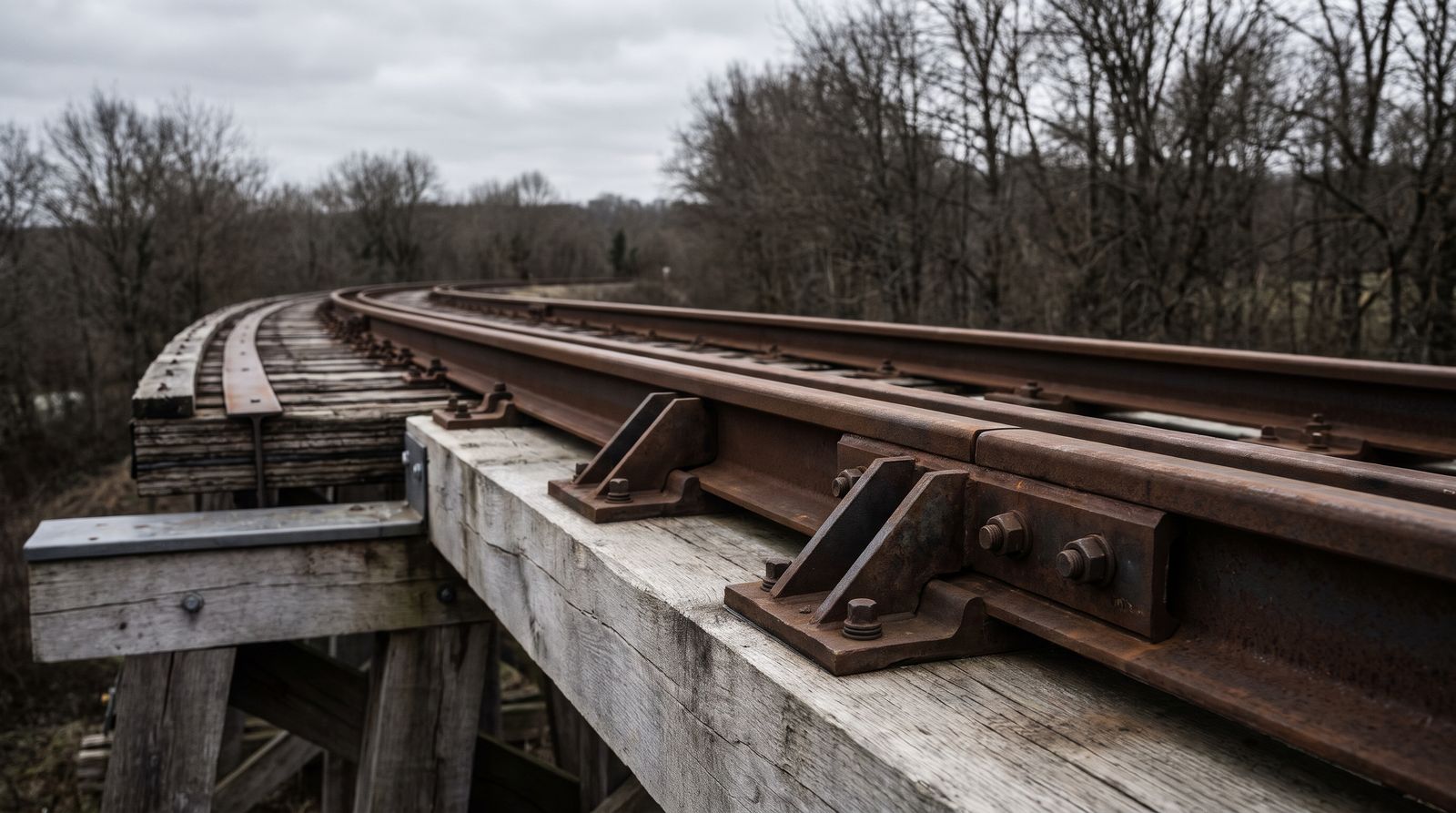
RMC’s 208 ReTraK replaces that laminated stack with a steel I-section rail, a close relative of the I-Box track the firm uses on its full hybrid rebuilds. RMC says the rail is cut and welded to a laser survey of the existing ride, supplied in weathered steel that rusts to a brown and needs no paint, and bolted to the existing timber with new splice blocks at the joints. The structure stays. The layout stays. The trains stay. Only the surface the wheels touch changes, and that is enough to change the ride.
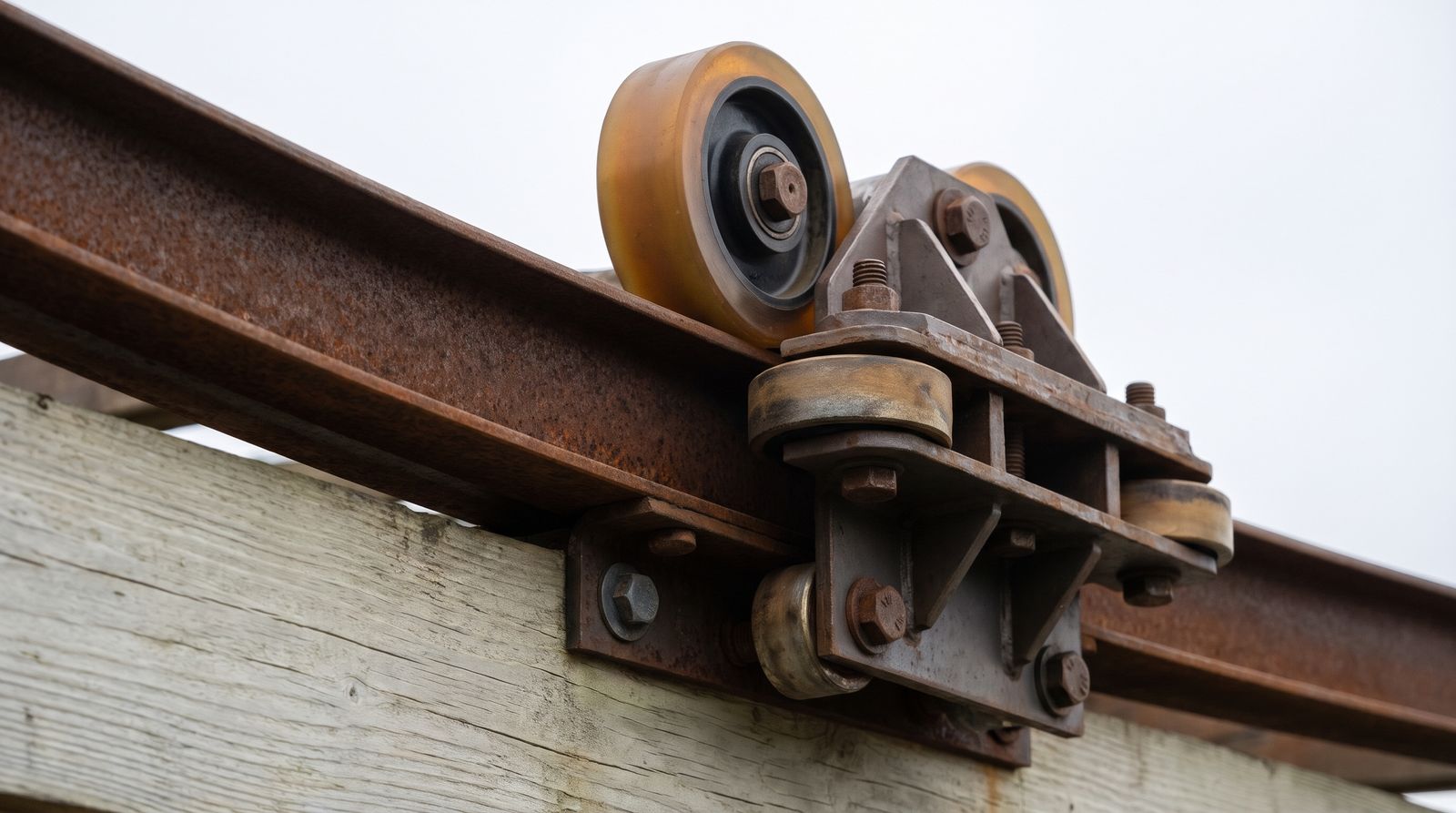
Why it changes the ride is tolerance. A wooden stack is built by hand to a few millimetres, then moves. A steel rail is built by machine to a fraction of that, then does not. Coaster wheels running on a surface that is the same shape every morning do not hammer, which is why RMC lists “improved wheel longevity” next to smoothness, and claims the rail lasts “up to five times longer” than wooden track. For the park, the attraction is the end of the permanent carpentry programme: a steel rail on timber bents pushes the maintenance down to the structure, which deteriorates far more slowly than the running surface.
This is not RMC’s first go at the format, which is what makes the choice sensible rather than brave. Coasterpedia lists 208 ReTraK installations from Silverwood’s Timber Terror in 2022 through Everland’s T Express in South Korea and Michigan’s Adventure’s Shivering Timbers, with Tonnerre 2 Zeus and Great White at Morey’s Piers both getting first sections this year. Partial retracks are the norm: parks buy the troubled sections first and add more as budgets allow, which RMC’s “300 feet at a time” line openly invites. Walibi Belgium is doing the other thing, replacing Loup-Garou’s layout outright in I-Box. Parc Astérix is keeping the ride it has and changing what it runs on.
That matters because of the money already spent. The Gravity Group’s three-phase rebuild between 2019 and 2022 replaced, by Wikipedia’s account, around 85 per cent of the track and structure, re-profiled the turns and put new Timberliner trains on the rails. Four years later the park is retracking again, in steel. That is less a verdict on the Gravity Group’s work than an admission about wood: even a freshly rebuilt wooden track in northern France is a wooden track, and the park has decided it would rather not keep paying for that.
On the new rides, hold on to the 800 riders per hour lightly. That is a combined theoretical capacity for two family attractions, and family rides with small children and parents taking photographs do not run at theoretical capacity. The park’s point stands anyway: both rides exist to pull families out of the queue for Pégase Express, not to set records.
The wider frame is the €250 million plan Compagnie des Alpes announced for the park in autumn 2025: Egypt reworked for 2026, Greece in 2027 alongside a 300-room fourth hotel, L’Odyssée, opening on 26 March 2027, and a Britain-themed area called Londinium in 2028. Greece is the modest middle year, and the park has not pretended otherwise.
The Dispatch verdict
Two family rides, a large restaurant and a play area is a sensible, unglamorous year for a park saving its big swing for 2028. The park has published what it knows and left out what it does not, which is more than most manage.
The story is the coaster. Tonnerre 2 Zeus has gone from wooden track, to a Gravity Group rebuild, to a partial RMC steel retrack, to a release that says “complete”, in four seasons. If that word means the whole circuit, the park will have a steel-railed coaster on a timber frame by spring, and the argument about whether it still counts as a woodie can begin in earnest. We will believe the percentage when the park publishes one.
Further reading: wood vs steel vs RMC hybrid, and what actually changes, Walibi Belgium’s full RMC rebuild of Loup-Garou, how coaster wheels keep trains on the rail, how parks calculate ride capacity, and our guide to the roller coaster manufacturers.