
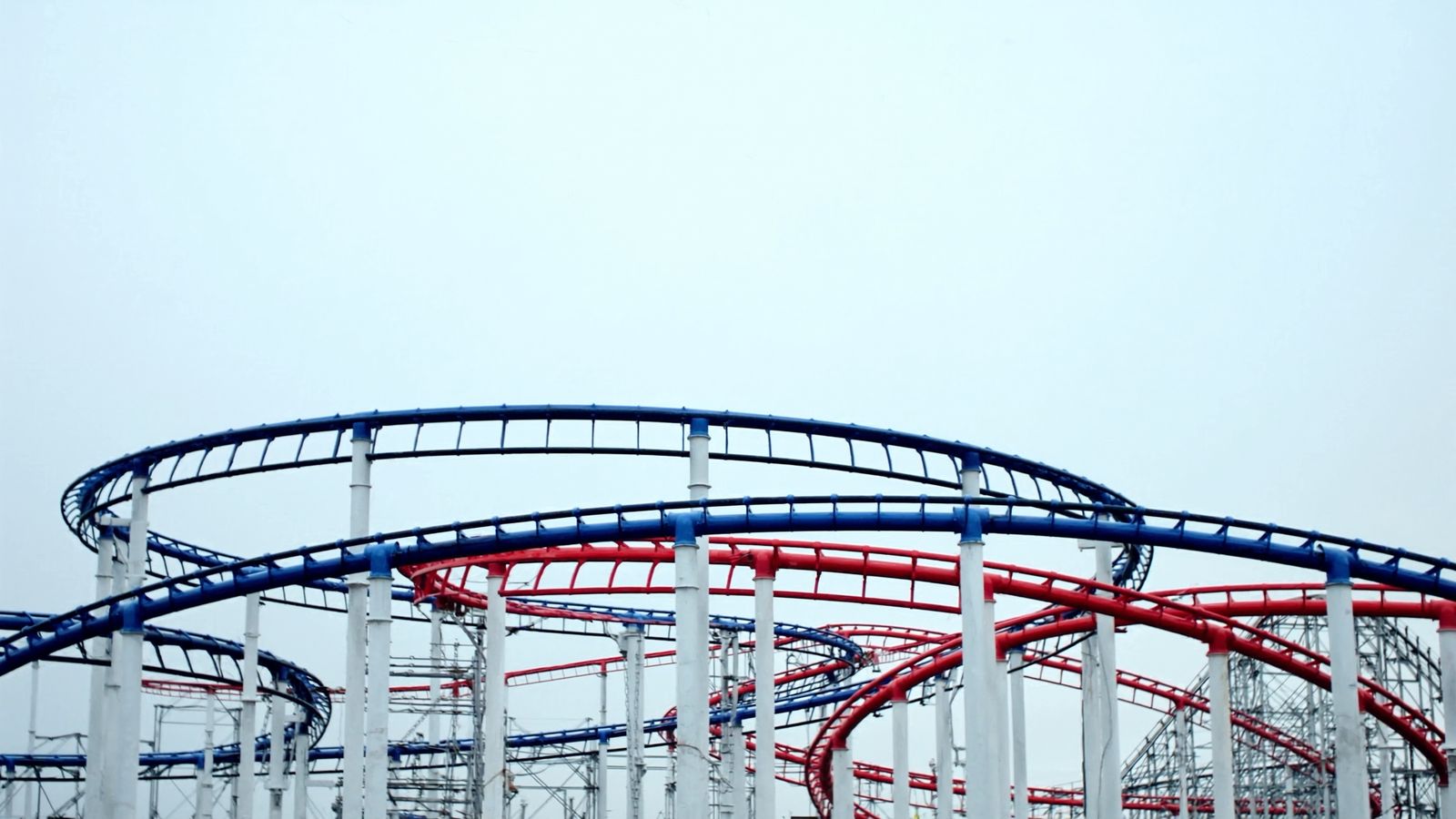
A ride that normally lasts 75 seconds kept 20 people in the air for nearly three hours on Wednesday, after Legoland Billund’s newest coaster stopped dead partway around its circuit with nowhere for anyone to climb down.
What happened
Minifigure Speedway, the Zierer-built dueling coaster that opened at Legoland Billund in March 2026, stalled at around 10 m (33 ft) above ground shortly after 5.15pm local time on Wednesday 5 August, according to Danish outlet Ekstra Bladet and Dutch trade site Looopings. The train’s stopping point had no adjacent platform or walkway, so guests could not simply be walked off the track. The fire department sent specialist high-angle rescue crews, who lowered all 20 riders one at a time; the last of them was on the ground shortly after 8pm.
No one was injured, and Legoland said there was no panic on board, though riders were exposed to wind at height for the duration. The park’s own statement, reported by Looopings, described it as “a technical problem, whereby the safety systems functioned properly” — and said the precise cause was still under investigation. Looopings separately reported, without official confirmation, that a wheel assembly on the train had broken. That detail should be read as reported, not confirmed: Legoland itself has not named a specific component. Affected guests were given complimentary tickets for a future visit, and the ride stayed closed pending full inspection.
The detail
| Spec | Detail |
|---|---|
| Ride | Minifigure Speedway |
| Manufacturer | Zierer — Dueling Reverse Coaster |
| Park | Legoland Billund, Denmark |
| Opened | 28 March 2026 |
| Track | 263 m (863 ft) per side, two tracks, run forwards then backwards |
| Height | over 16 m (52 ft), per Legoland’s own listing |
| Top speed | 57 km/h (35 mph) |
| Propulsion | booster wheel lift hills at both ends — no chain lift |
| Trains | one per track, 10 cars, 2 riders across, 20 riders per train |
| Restraints | lap bars |
| Stall height | approx. 10 m (33 ft) |
| Riders stranded | 20 (one full train) |
| Time stranded | c. 5.15pm–8pm, nearly three hours |
It’s worth being clear about what kind of machine this is, because “roller coaster stranding riders at height” conjures something rather more dramatic than the reality. Minifigure Speedway is a family ride: two intertwining tracks, one red for Team Legends and one blue for Team All Stars, routed head-on at each other rather than side by side, with trains styled as LEGO race cars and lap bars rather than shoulder harnesses. The minimum height is 110 cm accompanied, 130 cm alone.
Nor is it a one-off design. The same Zierer model already runs under the same name at Legoland Windsor, where it opened in April 2024 — the UK park where, coincidentally, Merlin’s next coaster is already working its way through the planning system. Billund’s version, at roughly five months old, was still well inside its first season when it stalled.
What it actually means
Take Legoland’s own phrase seriously, because it’s mechanically accurate rather than PR spin: a coaster that stops is very often a safety system succeeding, not failing.
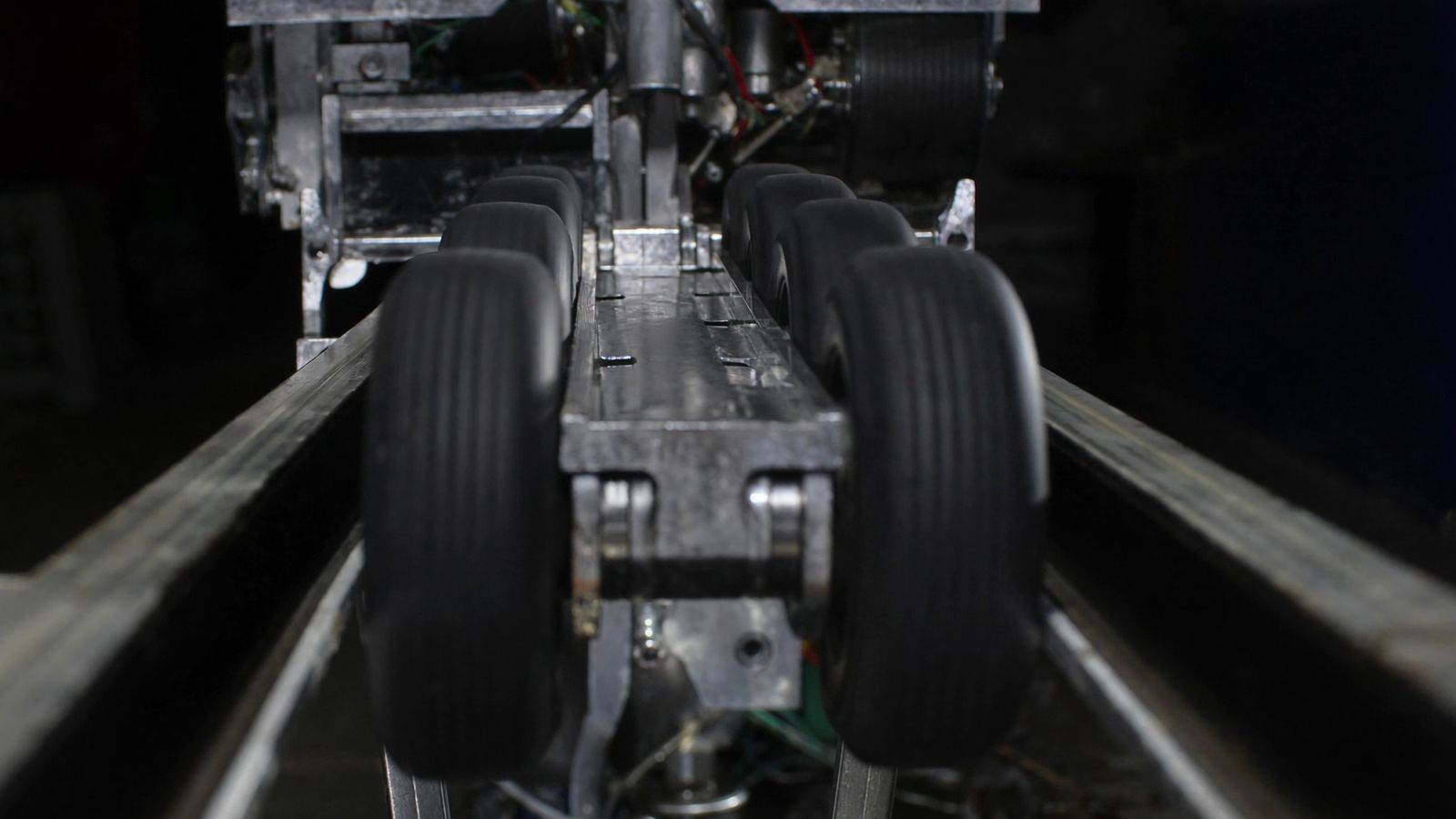
The propulsion is the thing to understand here. Minifigure Speedway has no chain lift and no gravity-fed circuit full of trains chasing each other. Each track carries a single train, hauled by booster wheel lift hills at either end — banks of powered rubber tyres that grip the train and drive it up the incline by friction, backwards first, then forwards on the return leg. That means the train is under powered control for a far larger share of its 75 seconds than on a conventional coaster, and it means a fault in the running gear or the drive is something the system can detect directly rather than infer.
The fail-safe control logic that keeps trains apart on a multi-train circuit governs a shuttle like this just as strictly, even with only one train per track: the system will not drive a train onwards unless the sensors read healthy. If something reads wrong, the correct response — the only response a fail-safe design is built to give — is to stop the train where it stands and hold it there with brakes engineered to close, not open, when anything fails. Stopping 10 m up an incline is not the system misbehaving. It is the system refusing to move a train it isn’t certain about.
That’s also precisely why the rescue took so long. A coaster isn’t built on the assumption that a train might need emptying partway up a lift — there’s no walkway threaded along a Zierer dueling coaster’s track for the simple reason that nobody expects to need one there. Getting 20 people down safely from an unplanned stop, 10 m up, with no platform beneath them, is a job for fire-service rope-access specialists working one rider at a time, not a park operations team. Nearly three hours sounds alarming next to a 75-second ride; set against what a proper high-angle rescue of 20 people actually involves, it’s closer to routine.
The genuinely open question is the one Legoland hasn’t answered yet: why a five-month-old ride, still inside its first season, developed a mechanical fault at all. New coasters go through extensive commissioning and technical rehearsals before a single paying guest boards, precisely to catch this category of problem early. A failure this far into revenue service — rather than during testing — points either to a component defect that testing didn’t surface, or to wear accumulating faster than the maintenance schedule assumed. Both are answerable by Legoland’s coming inspection report; neither is answerable from a single press statement.
The Dispatch verdict
This isn’t a story about a dangerous ride — the block system and the brakes did exactly what they’re built to do, and every rider went home unhurt. It’s a story about what “safety systems functioned properly” actually costs when they trigger somewhere the track was never designed to be walked: three hours, twenty uncomfortable guests, and a coaster now closed until Zierer and Legoland can say precisely what broke and why. Worth watching for the inspection findings — a mechanical failure this early in a brand-new installation’s life is the kind of detail that either turns out to be a fluke, or turns out to matter for the other park running the same Zierer platform.
Further reading: how the block system stops trains meeting on the track, how coaster brakes fail safely by design, and why new rides run technical rehearsals before opening.