
You’ve seen the phrases, usually attached to something you’d very much like to ride: technical rehearsal, soft opening, “this attraction may operate today”. They read like hedging, and they are — but the hedge is one of the more interesting processes in the industry, and understanding it will change how you plan a visit to any park with a new ride.
The short answer: a new attraction isn’t finished when construction ends; it has to be commissioned — proven through thousands of test cycles with weighted dummies, then run with staff, then run with real guests under no-promises conditions. A technical rehearsal is that last phase: the ride operates for actual people while the park explicitly reserves the right to close it at any moment, because finding problems now is the entire point.
The public tends to treat a soft opening as a sneaky free preview. Operationally, it’s the final rung of a test programme — and you’re the instrumentation.
From steel to certified: the ladder
A ride climbs a ladder of proof, and each rung exists to catch a different species of problem.
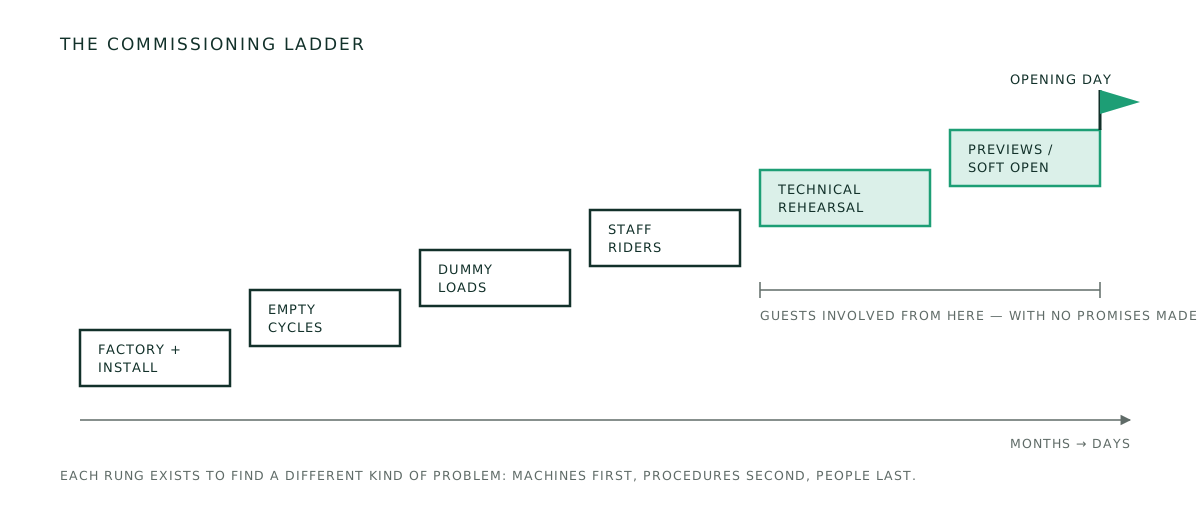
It starts before the parts even arrive — manufacturers test components and sub-assemblies at the factory. On site, the ride runs empty cycles: hundreds, then thousands of laps with nobody aboard, while engineers watch the control system do its work, tune sensors, and let every bearing and brake bed in. Then the passengers arrive — sort of.
Water dummies: the passengers who can’t complain
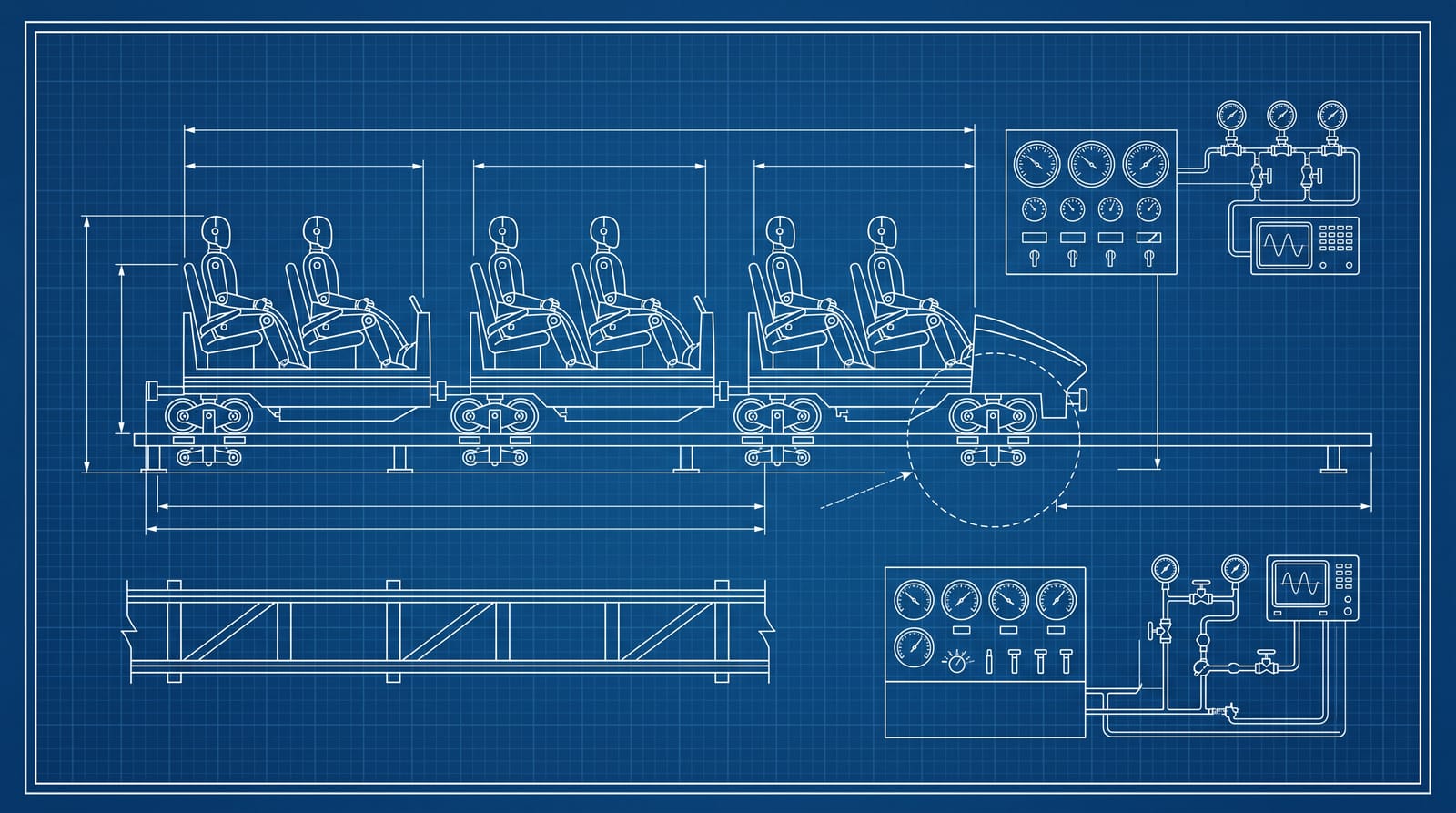
You can’t test a ride’s loaded behaviour without load, and you can’t use people, so the industry uses water dummies — human-sized containers strapped into the seats and filled to whatever weight the test calls for. They’re the unsung stars of every new-coaster testing montage: rows of stoic torsos riding the same inversion four hundred times.
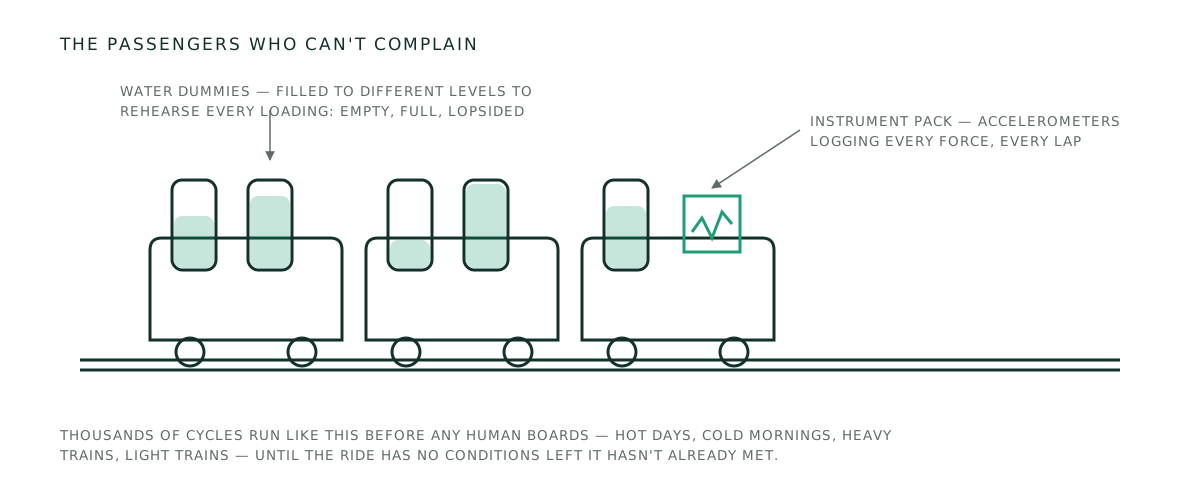
The variable filling is the clever bit. A fully loaded train and a nearly empty one run at genuinely different speeds — heavier trains carry more energy through the course — so commissioning runs the full matrix: full, empty, front-heavy, back-heavy, hot afternoon, cold morning. Instrument packs riding along log accelerations at every seat, verifying the forces match what the designers calculated (and feeding the calibration of things like trim brakes). By the time a human boards, the machine has already met every condition it will ever face in service, several hundred times each.
The technical rehearsal: testing the humans
Here’s the part guests misread. Once the machine is proven, the remaining unknowns are mostly human: how long does loading really take with actual families, buggies and dropped phones? Do the grouping and queue systems work? Can the crew run an evacuation smoothly from every stop point? During staff previews and technical rehearsals, parks deliberately stop rides to drill exactly that — a breakdown on purpose, with a forgiving audience, is worth ten in the dark on opening week.
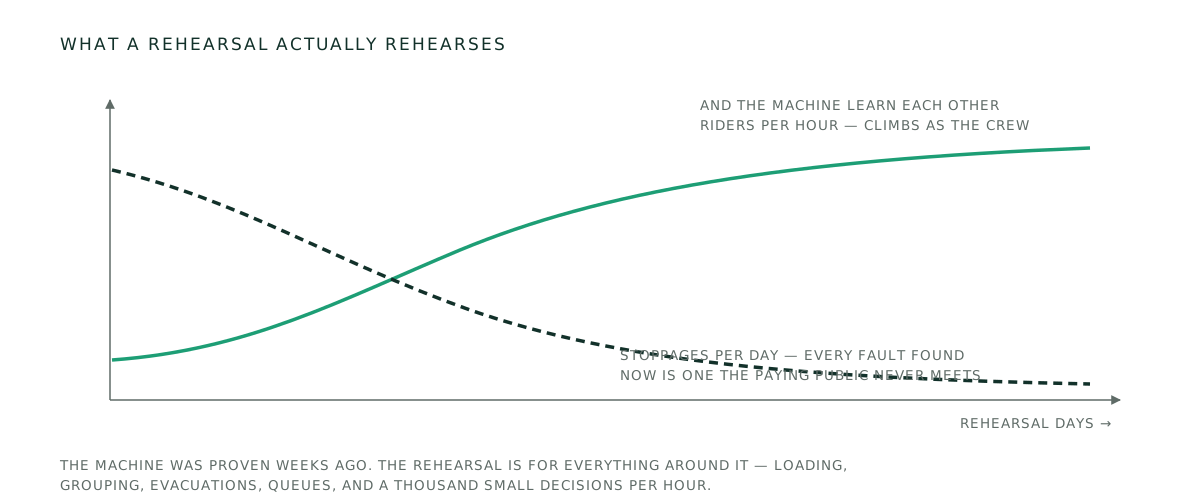
This is why the “may operate” language is non-negotiable. The moment a park promises the ride, every stoppage becomes a broken promise and every fault must be fixed under pressure. Under rehearsal conditions the same stoppage is the process working as intended. Universal’s Epic Universe ran precisely this playbook before its May 2025 opening — team-member rehearsals, then passholder previews, with rides dropping in and out of service as the crews drilled — following the same ladder the resort used for Hagrid’s Magical Creatures Motorbike Adventure and VelociCoaster before it.
Why parks don’t just say all this
Because expectation management is the whole game. A soft opening only works if attendance stays modest and moods stay generous — which is why parks announce them quietly, or not at all. The enthusiast telegraph does the rest: “it’s been running previews all week” travels through forums and Discords faster than any advert, delivering exactly the audience a rehearsal wants — keen, informed, and delighted rather than furious when the ride shuts for an hour.
There’s also an honest commercial layer. A headline attraction is a marketing asset with one detonation: opening day. No park wants to spend it on a ride still finding its feet. The rehearsal period lets the operation reach performance level before the cameras arrive — so the version of the ride the world meets is the one running at full capacity, not the one still learning to load a train in under two minutes.
How to use this as a visitor
Practical translations, in descending order of luck required. If a park you’re visiting has a ride in technical rehearsal: go, arrive early, and treat any ride you get as a bonus — you may ride a headliner weeks “early” with a short queue, or you may watch it sit silent; both outcomes are the system working. Never plan a trip around an unopened ride, whatever the forums reckon about dates. And if you do ride during a rehearsal and something stops — congratulations, you’ve been promoted to test equipment. The data you just generated is the product.
The Dispatch verdict
The soft opening is that rare thing: an industry practice that’s simultaneously careful engineering, shrewd marketing and free entertainment, depending on which side of the fence you stand. Underneath the branding, it’s just the last phase of a proof: machines, then procedures, then people, each tested with a safety margin of low expectations.
“This attraction may operate today” isn’t the park hedging its bets. It’s the sound of a ride being finished properly — in public, with volunteers.
Further reading: the block systems being commissioned behind the scenes, the brakes being bedded in, and a five-month-old coaster that hit a wheel-assembly fault well after opening.