
A roller coaster that runs on a single steel beam, propelled by rubber tyres rather than magnets, is coming to a Danish theme park better known for its Viking-themed water rides than for pushing the industry’s engineering edges.
What happened
Djurs Sommerland has confirmed Midgårdsormen, a new coaster for its Vikingeland area opening in 2027, built by Intamin on the Swiss-Liechtenstein firm’s Hot Racer platform — a single-rail track system that has only ever been installed once before in Europe. The park’s chief executive, Henrik B. Nielsen, called it “a significant evolution of our coaster lineup, as we introduce an entirely new ride type,” and confirmed it will be the park’s first coaster with inversions in Djurs Sommerland’s history.
Named for the sea serpent of Norse mythology, Midgårdsormen sits inside a 15,000 m² (161,000 sq ft) expansion of the park’s Vikingeland zone, developed with Dutch theming firm Leisure Expert Group and built alongside new dining, a playground and retail space around the existing Thor’s Hammer coaster. The investment, per the park’s own announcement, runs to more than DKK 100 million (roughly £11.5 million).
The detail
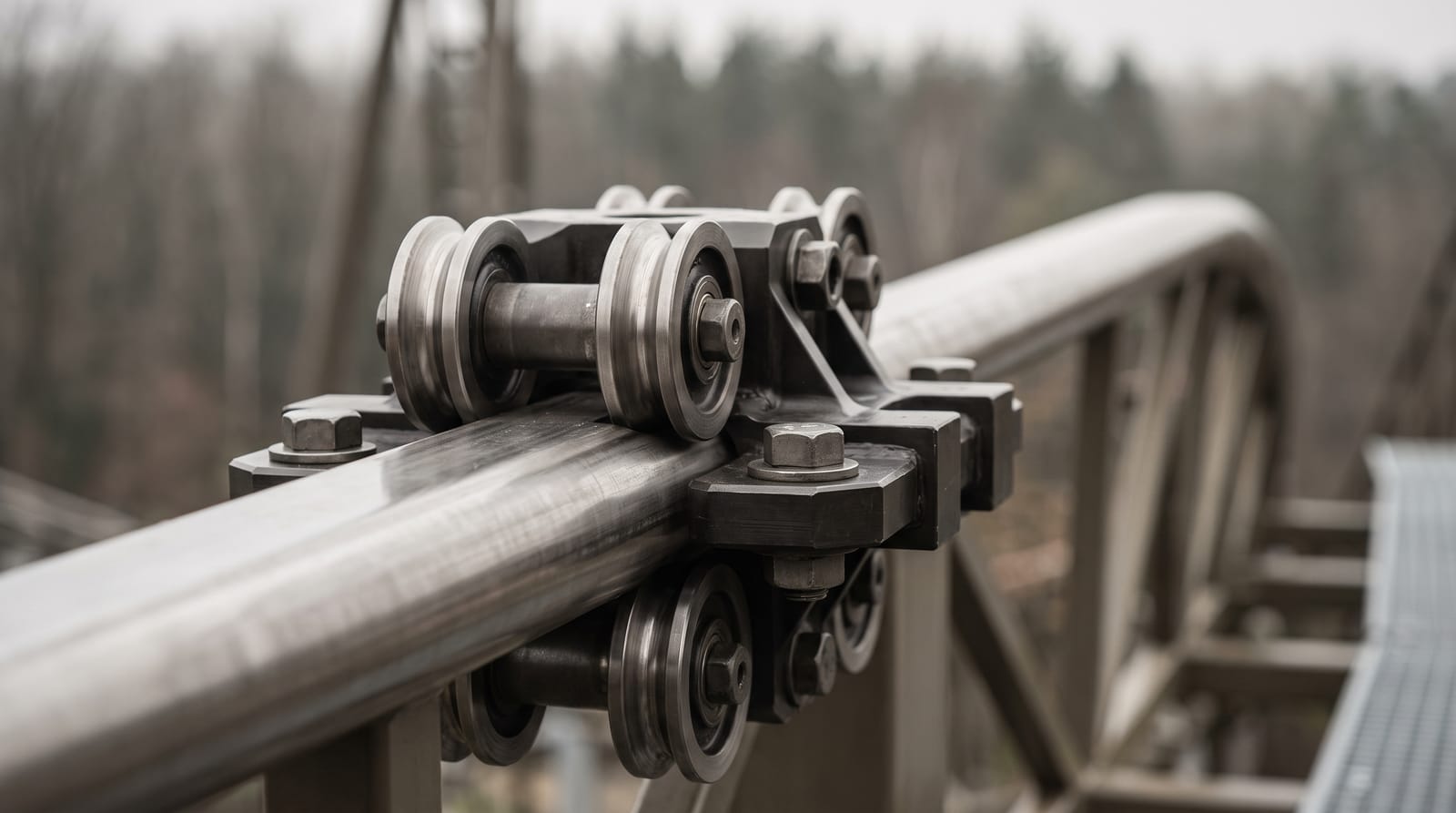
Hot Racer trains run single-file, one rider per row, straddling a single rail rather than sitting either side of a conventional pair of rails — the same basic idea as Rocky Mountain Construction’s Raptor track in North America, arrived at independently by a different manufacturer. Riders are held in place by an over-the-shoulder lap bar rather than a full harness, similar in spirit to the lap-bar-with-shoulder-pads restraint Intamin already uses on Taron at Phantasialand.
| Spec | Detail |
|---|---|
| Manufacturer | Intamin (Hot Racer platform) |
| Track type | Single rail, in-line single-seat trains |
| Height | 23 m (75 ft), per Djurs Sommerland’s announcement |
| Top speed | 75 km/h (47 mph) |
| Track length | 603 m (1,978 ft) |
| Launches | 2 |
| Inversions | 3 |
| Minimum height | 120 cm (3 ft 11 in) |
| Opening | 2027 season |
Djurs Sommerland and Intamin are both calling Midgårdsormen “Europe’s tallest and fastest Hot Racer” — a claim worth checking rather than repeating. It’s accurate, but it’s a smaller boast than it sounds: the only other Hot Racer on the continent is Mahuka, which opened at Walibi Rhône-Alpes in France in 2024 and stands 18 m (59 ft) tall with a 67 km/h (42 mph) top speed. Beating a field of one isn’t nothing — Midgårdsormen genuinely is bigger and quicker than its only European sibling — but “tallest and fastest” here means “the newer, larger of two,” not a continent-wide field toppled. The platform’s only other installation anywhere is Big Dipper, which opened at Luna Park Sydney in December 2021.
What it actually means
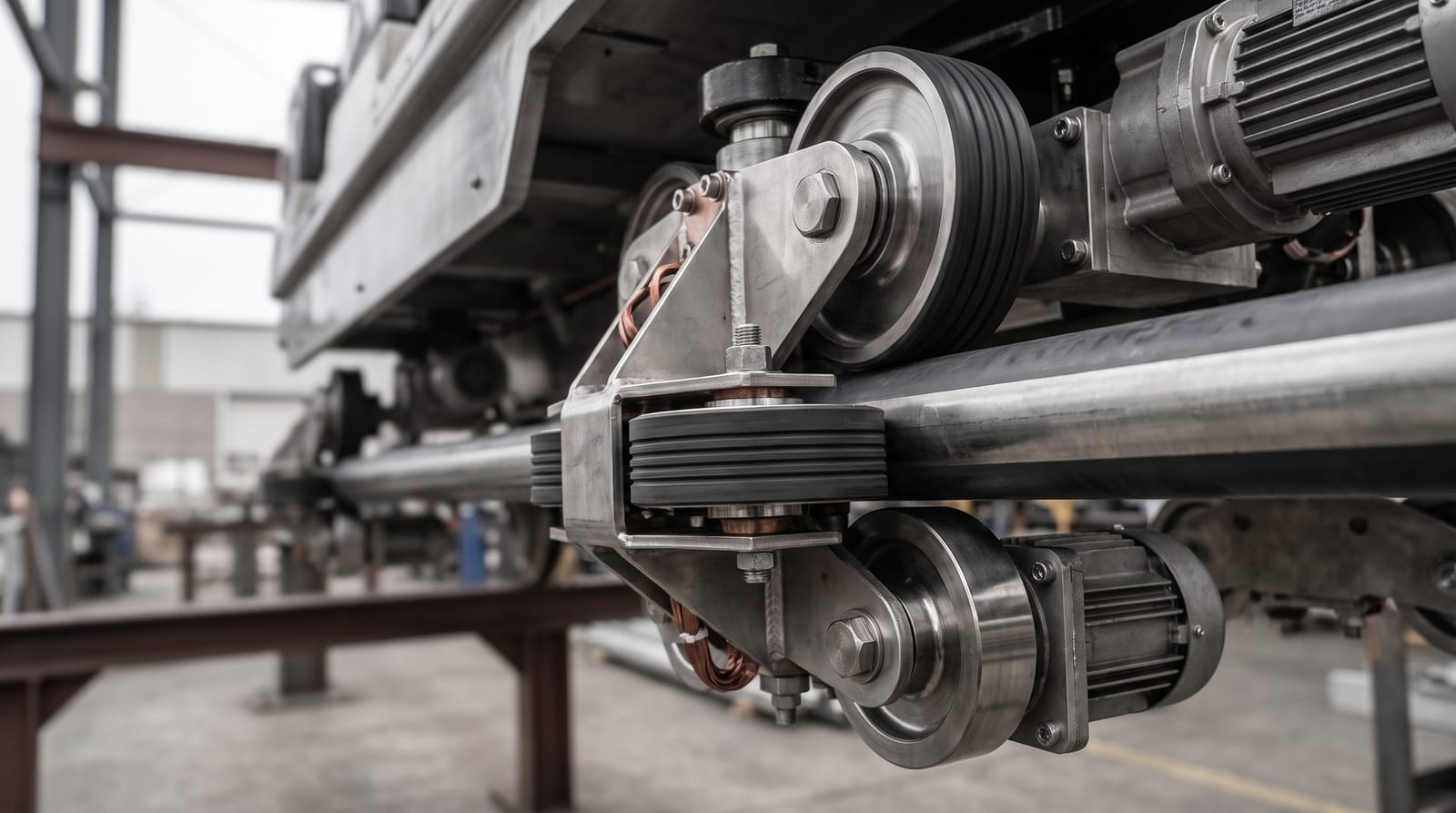
Launch coasters usually mean one of two systems: a hydraulic winch for a single violent shove, or LSM electromagnets for a repeatable, computer-switched push. Hot Racer uses neither. Intamin’s own product literature specifies friction-wheel propulsion — spinning rubber tyres gripping the underside of the train and accelerating it by friction, the same basic principle Gerstlauer already uses on family launch coasters like Hansa-Park’s Cornwall Coaster in Germany. It’s a humbler, cheaper technology than LSM: lower top-speed ceiling, simpler maintenance, no water-cooled stator banks to run. That makes it the sensible choice for a family-thrill platform rather than a record-chaser, and it’s the reason Hot Racer trains can be light enough to run single-file on a beam rather than a full twin-rail chassis.
The single rail itself is the more interesting decision, because it isn’t really about the ride experience — it’s about the footprint. A “backboned” single-beam structure needs fewer support columns than a conventional dual-rail track, which lets a manufacturer thread a genuinely twisty, inverting layout — three inversions here, in 603 m (1,978 ft) — into a site that couldn’t take a full-width steel coaster. That’s the same problem RMC’s Raptor track was built to solve in North America, arrived at from a different direction: Intamin’s version launches, RMC’s mostly don’t, but both exist because parks keep asking for looping thrills on plots that were never going to fit one.
For ride capacity, single-file inline seating is the trade-off nobody advertises: two nine-seat trains cycling gives Midgårdsormen roughly 650 riders an hour on paper, well short of what a wider dual-track family coaster manages. Djurs Sommerland’s bet is that a genuinely novel ride — the park’s first with inversions, and the only one of its kind within several hours’ drive — pulls its own queue-management weight regardless.
The Dispatch verdict
This is a smart, narrow piece of manufacturer strategy dressed up as a park announcement: Intamin taking a platform it’s tested twice — once in Australia, once in France — and placing it somewhere it becomes the only one of its kind for an entire region. Denmark’s coaster scene has never lacked ambition, but it has mostly built with familiar hardware; a single-rail Hot Racer with three inversions is a genuine change of character, not just a bigger number. Worth watching whether Intamin sells a third and fourth Hot Racer once Midgårdsormen is running, because that’s the real test of whether this platform is a product line or a one-off experiment repeated twice.
Further reading: LSM vs hydraulic launch, and how coasters go 0–60 without a hill, our guide to the roller coaster manufacturers, and how roller coaster restraints actually work.