
Most people movers are trains that have been told to behave. Maurer Rides’ newest one is a roller coaster that has been told the same thing, and only half listened.
The Munich manufacturer has launched the Spike PM360, a rail-guided passenger transport system built on the drive technology from its Spike coasters. Its trick is a cabin that hangs from a pivot and stays level while the track beneath it climbs, tips over vertical, or runs upside down. Maurer is taking it to IAAPA Expo in Orlando this week, where the show floor opens on 17 November.
What happened
Maurer announced the PM360 on 27 October and says it is now open for project enquiries. The company describes the idea as “transportainment”: a transport link that is also, in principle, an attraction. Seven weeks earlier, on 7 September, it had reorganised its whole product range into what it calls the Spike Platform, a set of shared modules covering track, drive, vehicles and controls. The PM360 is the platform’s passenger-transport product, aimed at moving people rather than thrilling them.
Jörg Beutler, Maurer Rides’ chief executive, set out the pitch in the launch announcement: “Operators often face the challenge of connecting areas at different elevations.” With the PM360, he said, “the track can even run vertically while passengers remain seated upright,” which allows “a transport connection to become a standalone attraction in its own right.”
Maurer suggests resort shuttles, urban routes and standalone signature rides as uses. It has not named a customer, and the images released with the launch are concept renderings, which trade magazine InPark notes are AI-enhanced.
The detail
Maurer’s product page gives only a handful of hard numbers, and we have not added any it doesn’t publish.
| Spike PM360 | Maurer’s figure |
|---|---|
| Top speed | 60 km/h (37 mph) |
| Capacity, single cabins | more than 1,000 passengers per hour |
| Capacity, two coupled cabins | more than 2,000 passengers per hour |
| Drive | Rack and pinion, motor on the vehicle |
| Cabin | Hangs from a damped 360° pivot, self-levels under gravity |
| Track | Horizontal, steep, vertical and overhead sections |
There is no maximum gradient, cabin size, route length or price, and no word on how electricity reaches the vehicle. Maurer says each vehicle carries its own drive, brakes and control system, so the track needs no motors or brakes of its own, and that the electric drive recovers energy when it brakes.
What it actually means
Two separate pieces of engineering are doing the work here, and neither of them is new on its own.
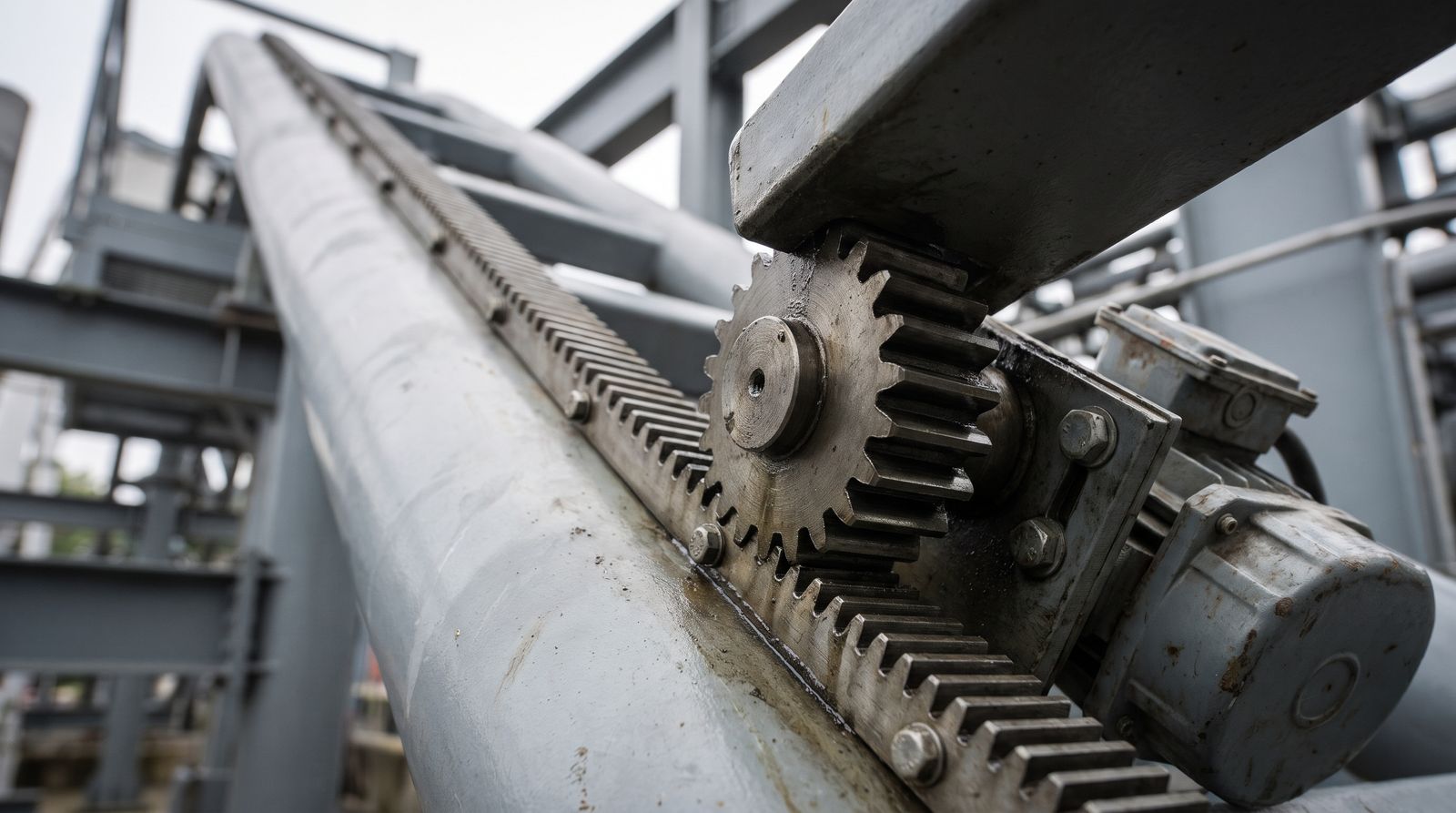
The first is the drive. A normal train, and the tyre-driven booster wheels on many coasters, push the vehicle using friction: a wheel or tyre presses on a surface and grips it. Friction runs out as the slope steepens, because less of the vehicle’s weight presses the wheel onto the rail. A rack and pinion avoids the problem altogether: a toothed gear on the vehicle (the pinion) meshes with a toothed strip along the track (the rack), so the drive is a mechanical engagement, not a grip. Mountain railways have used it since the 19th century. Maurer’s version sits on the vehicle itself, which is why a Spike coaster car can speed up, slow down or stop anywhere on the circuit, rather than only where the track has a chain lift or a bank of launch motors.
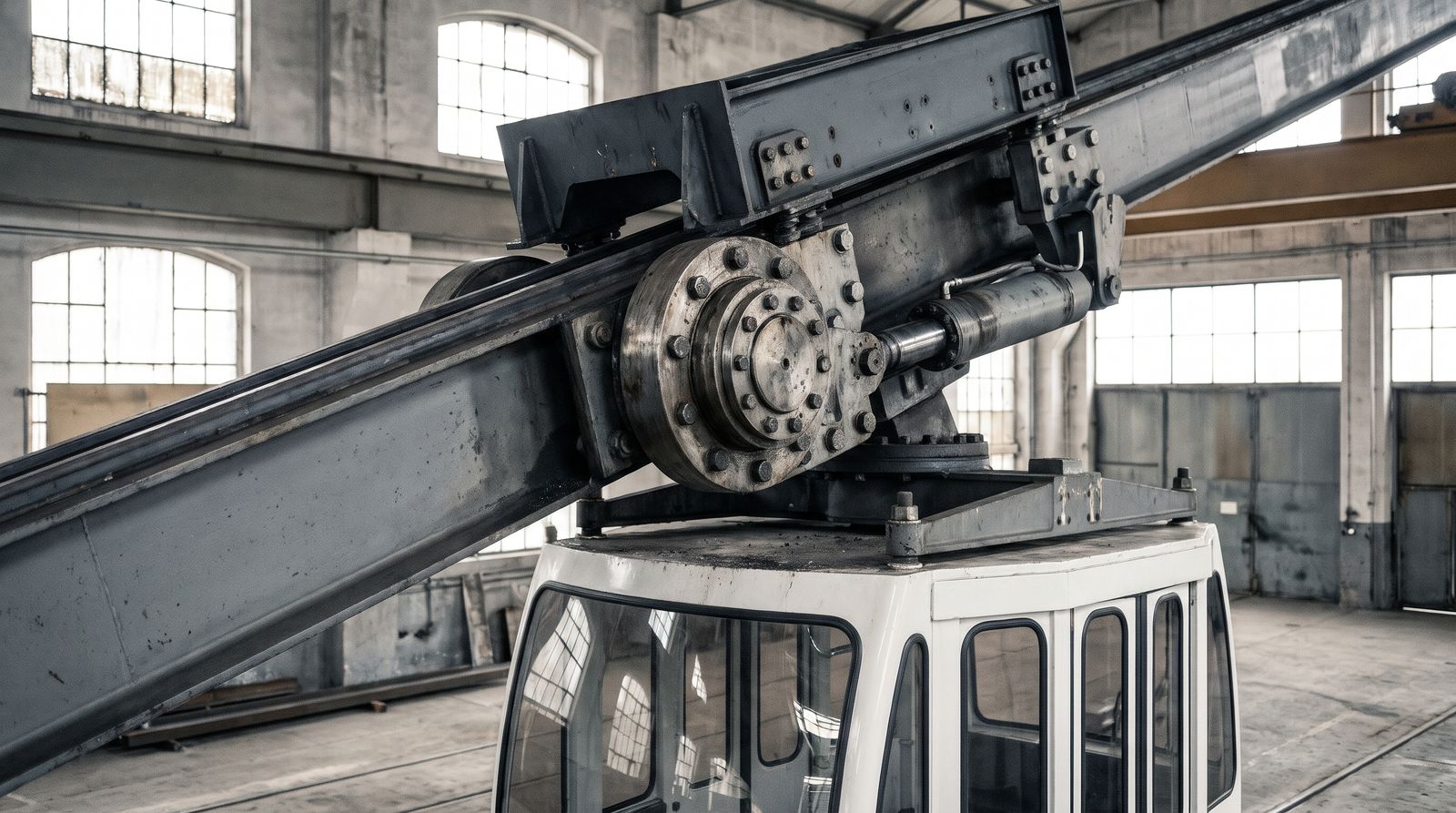
The second is the cabin. Level-floored vehicles on steep track already exist. Switzerland’s Stoosbahn, which opened in December 2017 with gradients of up to 110% (47.7°), has cylindrical cabins that are rotated hydraulically as the slope changes. Maurer’s approach is cheaper and simpler: the cabin hangs on a pivot and gravity sets the angle. The catch is the same one Wuppertal’s suspended railway has had since 1901. A free-hanging cabin doesn’t settle at true vertical. It hangs along whatever direction the combined push of gravity, acceleration and cornering is acting, so it leans back when the vehicle accelerates and outwards in a curve. That is why the word “damped” in Maurer’s description matters: the damper is what stops a level cabin turning into a gentle pendulum ride.
Put the two together and you get the product’s real selling point. A cable funicular or an inclined lift has to run in a straight line between two stations, because it is pulled by a rope. A self-propelled rack vehicle with a hanging cabin can, on paper, follow a curving three-dimensional route around buildings and up cliff faces, which is exactly where a resort would want it.
The track record is thinner than the brochure. RCDB lists four roller coasters under the Spike model. Spike installations include Sky Dragster at Allgäu Skyline Park in Germany, which opened in 2017, and Bolt, which became the first roller coaster at sea on Carnival’s ship Mardi Gras in 2021. Maurer says more installations are open or under construction worldwide, but none of them is a transport system, and none carries a passenger cabin hanging from a pivot. Running a public transport link also means daily service in all weathers, and evacuating passengers from a vertical section of track. Maurer has said nothing yet about that second point.
The Dispatch verdict
The PM360 is a clever recombination rather than an invention. It joins a proven mountain-railway drive to a hanging cabin, and puts both on coaster-grade track from a company that knows how to bend it. Read the launch figures with care: “more than 2,000 passengers per hour” is a manufacturer’s ceiling, not a measured result, and “transportainment” is a marketing word that must one day survive a rainy Tuesday commute. Until a park or resort signs up, this is a well-engineered idea, not a working system. It is still one of the more interesting things a coaster manufacturer is taking to Orlando this year.
Further reading: how launch coasters go from 0 to 60 without a hill, chain, cable and elevator lifts explained, how coaster track is bent and built, including Maurer’s XBend system, and who builds the world’s roller coasters.