
Efteling asked the public what should happen to Fata Morgana, its 40-year-old Arabian Nights boat ride, and the public answered in bulk. An Efteling spokesperson told the Dutch site Looopings on 22 November that the survey was completed nearly 20,000 times in two weeks. The full survey took about half an hour to complete.
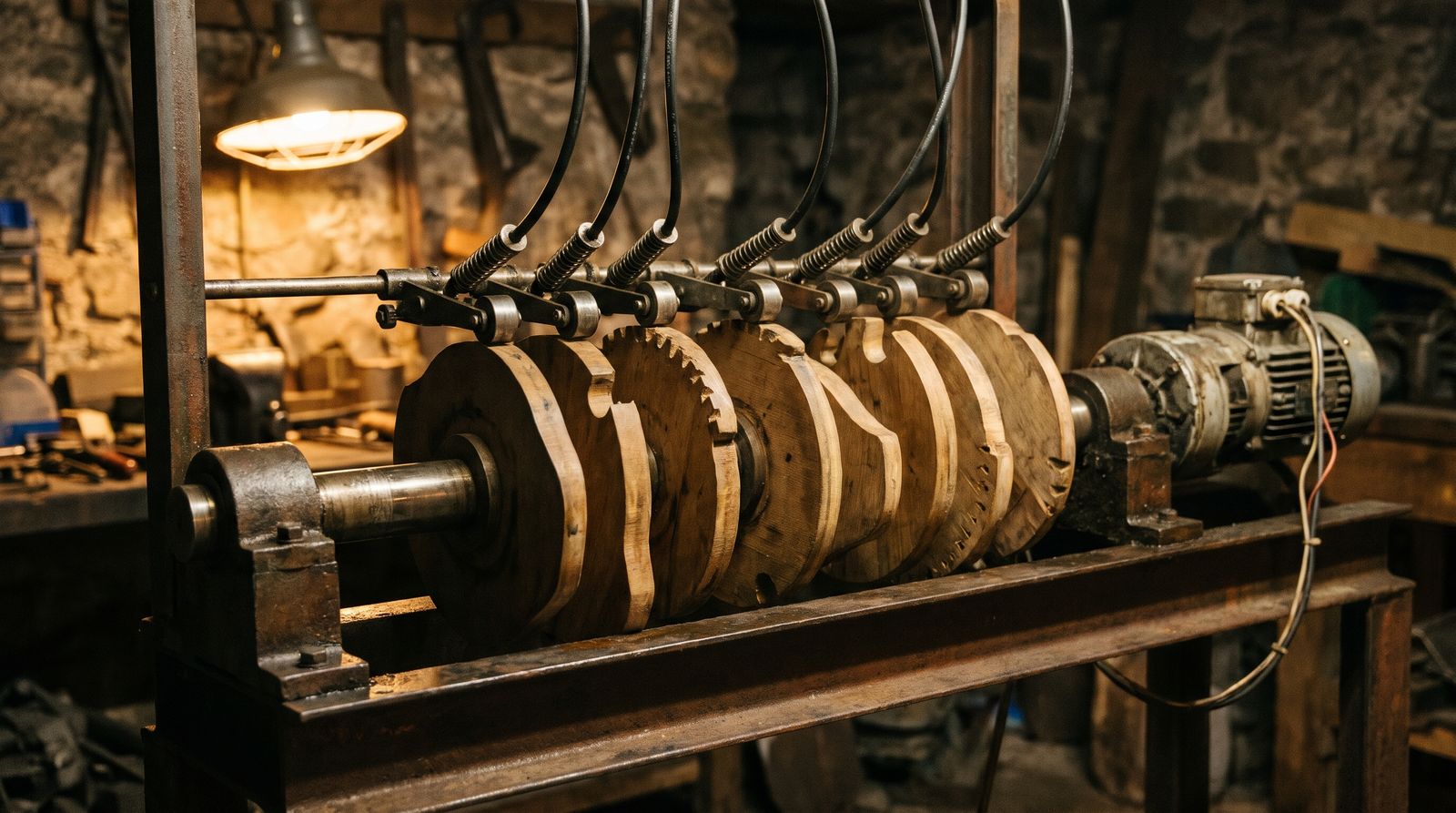
The number is striking. What sits under the ride matters more, though: a cellar of motor-driven wooden discs that has been working its figures since 1986.
What happened
The survey ran from 26 October to 8 November, and Efteling invited fans, staff and neighbours to take part. Part one asked respondents to grade each of the ride’s 17 scenes, from the crocodile tunnel to the treasure chamber with its giant Djinn. It also asked about the music, smells, queue, and how the ride portrays different cultures. Part two set out six scenarios. They ran from “keep and maintain the current scenes”, through partial and major renewal that keeps the boat ride and theme, to replacing it with a different attraction of the same theme. The last option was clearing the ride and its surrounding area altogether.
Efteling was careful about what this means. At the survey’s launch a spokesperson told Looopings there is “no plan to remove or replace Fata Morgana”. The park says major maintenance will be needed eventually but isn’t yet scheduled. According to Looopings, the park says the exercise is a response to Spookslot. That was the haunted-castle walk-through Efteling closed on 4 September 2022 and replaced with Danse Macabre in October 2024. The park admitted it had underestimated how attached people were to a ride that few visited.
The ride itself
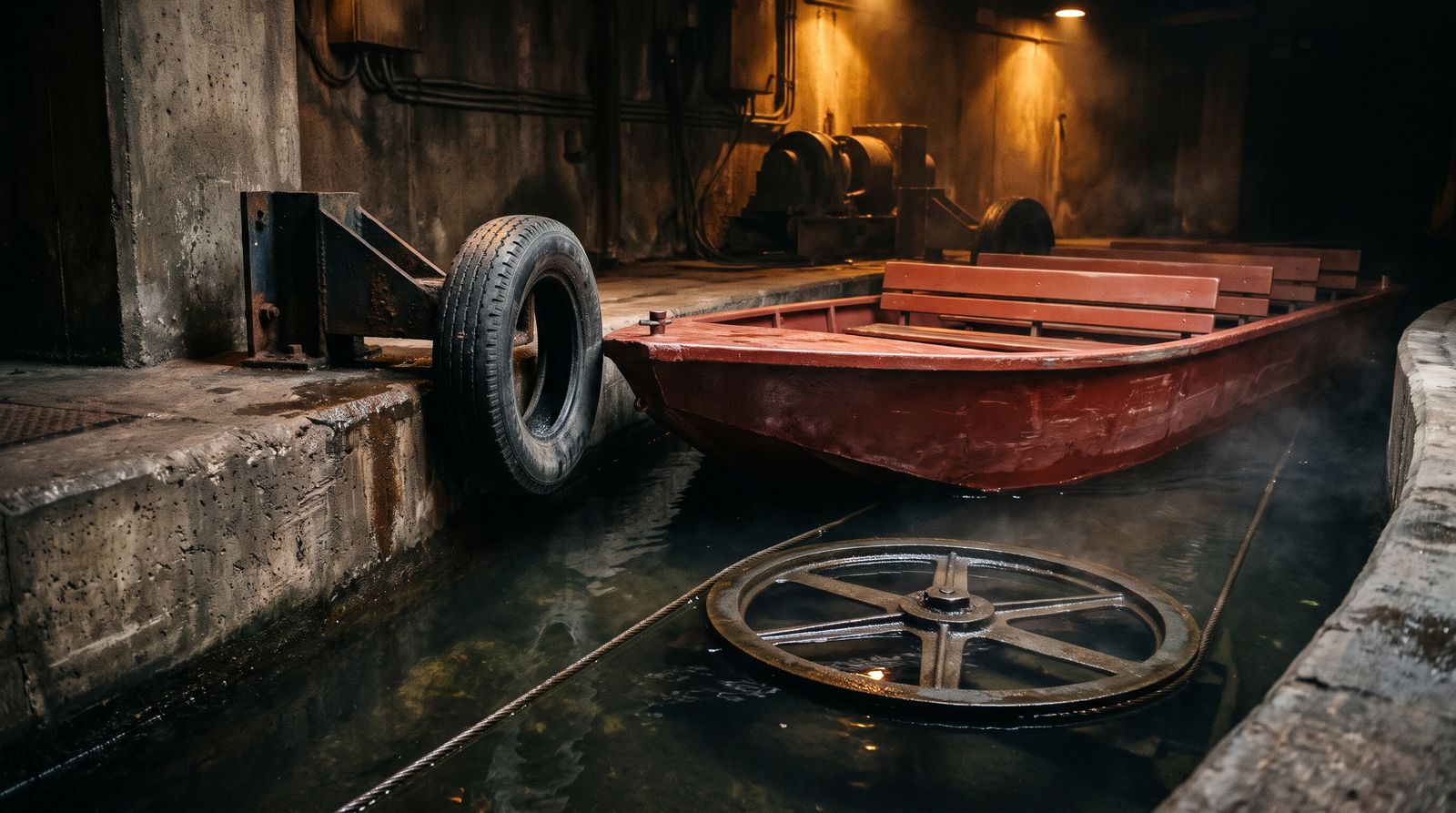
Fata Morgana was designed by Ton van de Ven, with Jan Verhoeven responsible for the layout. Its boats don’t float freely. The Swiss manufacturer Intamin supplied a tow boat ride: a steel cable under the water pulls the line of boats, and steel guide wheels at each turn keep cable and boats on course. Guests board from a turntable that rotates at the boats’ speed, so the ride never stops to load. Efteling’s other boat ride, the Gondoletta, uses the same Intamin system.
| Fata Morgana | |
|---|---|
| Opened | 1986 |
| Ride system | Intamin tow boat ride (underwater cable) |
| Route length | approx. 285 m (935 ft) |
| Boat speed | approx. 2 km/h (1.2 mph) |
| Ride time | approx. 8 minutes |
| Moving figures | approx. 140 (sources give 137–140) |
Sources: Wikipedia, Eftepedia and Coasterpedia. Figures are rounded where the sources disagree. We’ve left out the boat count and hourly capacity because they differ between sources.
What it actually means
Strip away the questions about smells and costumes, and the six scenarios are really asking how much of the original engineering should survive. That engineering is unusual.
Most of Fata Morgana’s figures are not driven by computers. They run on cam discs, which Efteling calls nokkenschijven. According to Eftepedia, wooden discs about 70 cm (28 in) across sit in frames in the cellar beneath the scenes. A motor turns them all together. A small wheel rides the edge of each disc, and when it drops into a notch it pulls a Bowden cable, the same sheathed steel cable as a bicycle brake. The cable runs up about two metres into a figure and moves an arm, a head or a jaw. The “programme” is the shape of the wood. To change a movement, you cut a new disc. One turn of the discs takes slightly less time than a boat needs to pass a scene, so the figures pause and then start again for the next boat. That works only because the Intamin cable keeps every boat at the same steady pace.
Efteling developed the method far enough to patent it. US patent 4,894,936 was granted to De Efteling B.V. in January 1990 for a cam-and-lever system that moves puppet limbs through Bowden cables and chains. It claims priority from a Dutch application filed in December 1985. The patent lapsed in 1998. The system didn’t do everything: Eftepedia records compressed air for the blinking eyes, servo and spindle motors for some larger figures, and an electric control system from the animatronics firm Heimo for the 20 figures whose mouths move in time with speech.
That’s why “refurbish or replace” is an engineering choice and not just a matter of taste. A cam-driven figure is cheap, repeatable, and by Eftepedia’s account almost faultless. It can’t make fast or precise moves, though, and its wear parts are mechanical: rollers, springs, cables and joints. In October a merchant figure in the eighth scene was reported by Looopings to be stuck with its arm in the wrong position, the kind of fault that comes from a mechanism, not from software. The alternative is the route the rest of the industry has taken, described in our guide to how animatronics work. That means electric actuators run by a show controller, which you can reprogram from a laptop. You get faster and smoother movement, but you also get a different maintenance team and figures that no longer move quite like Fata Morgana’s.
Efteling has already been making small changes. During a two-week maintenance period in June, open-flame torches were replaced with a lighting effect, and a long-broken rotating rock door became a planted curtain. A video projection now makes cracks seem to spread across a wall in the storm scene. The park says that effect was planned before the survey. Expect that pattern to continue: keep the boats and the cable, which are simple, slow and suited to a long ride, and decide figure by figure where the wood stays. The first four scenarios all keep the boat ride. Only the last two would touch the Intamin system, and the park has said it has no plan to replace the ride.
The Dispatch verdict
Asking 20,000 people before touching a heritage dark ride is unusual and sensible, especially after Spookslot. The real decision, though, will be made in the cellar, not in the survey results. Fata Morgana’s figures move the way they do because of 40-year-old wooden cams, and any refurbishment has to decide whether that is a limitation to engineer out or the character worth keeping. Our view: keep the cams wherever they still do the job.
Further reading: how animatronic figures work, how trackless dark ride systems work, how log flumes and river rapids rides actually work, and our guide to the roller coaster manufacturers, Intamin included.